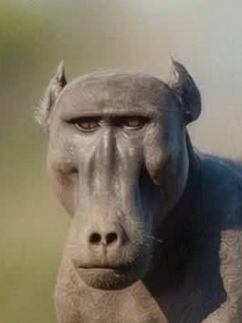
If the alien hypothesis seems unlikely (considering a thousand other complications it might entail), then pick any other theory, perhaps there's a link with those (chupa-cabras, goat-suckers
That's replacing one unlikely explanation with another unlikely explanation. Lots of people have reported seeing chupacabras, just as lots of people have seen UFOs, ghosts, Yetis and sasquatches, lake monsters. But there's no good photos or footage of chupacabras, no remains have ever been found. No DNA evidence. It's a bit like saying the Kelly-Hopkinsville families didn't see aliens, and rejecting the theory they misidentified owls, but saying it's more likely they saw actual goblins.
A "Resident Evil" plot is not on par with aliens in the realm of possibilities.
There have been times and places where grotesque experiments have been performed on humans, with no regard to the subject's consent, wellbeing or dignity. Non-human primates are used in medical experimentation, although great apes probably less so now than in the recent past.
But there are no quasi-human monsters, no human-animal hybrids, no super-intelligent apes. Using
Resident Evil as a comparator reminds us there are
no real-world equivalents.
However, the
concept of viable human-like animals or human-derived monsters resulting from medical experimentation is well-known from science fiction stories and horror films, and has been since H.G. Wells'
The Island of Doctor Moreau, 1896.
(Oops, nearly overlooked
Frankenstein, Or The New Prometheus, 1818).
It is a sort of trope which allows readers/ audiences, who largely no longer believe in the creatures/ beings of folklore, or in supernatural powers, to suspend disbelief and accept the possibility of present-day monsters/ intelligent animals/ superheroes and villains etc.
Mary Shelley, the young author of Frankenstein, had an extraordinarily powerful insight: At a time when educated people were increasingly aware of the importance of scientific evidence, and of increasingly widespread formal education, traditional beliefs and the monsters of folklore no longer held the terrors they once did for many. But the power of new technologies was indisputable.* Shelley realised that science and technology could be the basis for new tales of terror, new (and perhaps more believable) monsters.
As a metaphor, Frankenstein remains as valid as ever: From the industrialised horrors of World War I and II through the nuclear arms race, DDT, Thalidomide, CFCs, greenhouse gases, concerns about AI, our technologies can be dangerous. Medical research is often poorly understood, and sadly there are clear examples of unethical research involving humans post-WW2, e.g. the Tuskegee syphilis study 1932-1972 (Wikipedia
https://en.wikipedia.org/wiki/Tuskegee_Syphilis_Study).
But Frankenstein's monster
is a metaphor. The examples above are real. Humanoid mutants escaping from the crashes of revolutionary experimental aircraft are not.
It's a bit like Annie Jacobsen's "explanation" for the Roswell, 1947 events in her book
Area 51: An Uncensored History of America's Top Secret Military Base, 2011 (Wikipedia
https://en.wikipedia.org/wiki/Area_51:_An_Uncensored_History_of_America's_Top_Secret_Military_Base): Josef Stalin hired Josef Mengele to create large-headed human mutants "under five feet tall" to cause panic in America; they were flown in a remote-controlled aircraft that crashed.
Unless Mengele started working for Stalin
during World War II, which (ahem) seems unlikely, he would have had
2 years to develop the mutants post-war, assuming that the Soviets identified and contacted Mengele, and he agreed to work for them- as opposed to supporting their annihilation- as soon as the war in Europe ended. Mengele was undoubtedly a cruel sociopath who maimed and murdered many in his "research", but there is no evidence that he was any sort of scientific or medical genius. He was unusually callous, not unusually gifted.
And he did all this while living in Germany under an alias, working as a farmhand (he left Germany for Argentina in 1949).
It's absurd, utterly ahistorical, and distasteful.
Extraterrestrial beings might exist, but we have no convincing testable evidence of this. Lab-created humanoid, adult human-sized creatures with the features described in some of the Varginha accounts exist only in some of the more sensationalist explanations for those accounts, not elsewhere.
*Gas lighting of public streets was starting, power looms were revolutionising the production of textiles, steam engines were coming into use in agriculture and mining. The first steam locomotives were being built. Lightning was understood to be an electrical phenomenon; Frankenstein harnesses it to animate the monster.