
You are using an out of date browser. It may not display this or other websites correctly.
You should upgrade or use an alternative browser.
You should upgrade or use an alternative browser.
Rendlesham Forest UFO Incident
- Thread starter Eburacum
- Start date

Scaramanga
Senior Member
Why's this even worthy of discussion on metabunk, then? Have you read the posting guidelines? Yes, I know I can just "ignore thread", but if all you're doing is fighting noisily about noise, then perhaps that's the more pertinent issue.
Sorry...I thought the purpose of this site was to question the narrative on things. That ought to include questioning the skeptical narratives themselves that people have doggedly stuck to for 45 years. It's always worth taking a new perspective.....even if its complete baloney it opens up new questions that simply have not been asked before.
This process should not be something a person ends up finding utterly tiresome !
Scaramanga
Senior Member
And we have to remember the USAF personnel requested the attendance of the local police,
...who duly sent a car. This isn't compatible with an attempt at a cover-up, and is hardly a credible response to a nuclear weapon lost outside the airbase(s). In the event of a major incident, the command staff at RAF (effectively USAF) Bentwaters/ Woodbridge would presumably have lines of communication with more appropriate UK authorities.
Um, no...the police were called for the alleged Penniston/Burroughs incident ( not the Halt incident ) and their log states 'there was nothing to be seen' at the time ( 4am on 26th December 1980 ). Fancy that. There was nothing there at the time. Yet another clue that nothing actually happened on 26th December.
Last edited:
Scaramanga
Senior Member
My problem with creating a UFO story latter is it seems a solution in search of a problem. IF Holt was really called away from dinner because an errant aircraft had dropped a nuclear warhead in the forest, why record what was going on. Why involve Cabansag, Burroughs and a serial fantasizer like Penniston? What's the point.
If Halt gets called away he just says it's for official business, don't ask. He goes out to recover the bomb and does NOT record anything. The men involved are told what they are doing is classified. Bomb is returned and there is no story. No need to create a UFO cover-up that actually calls attention to what you're trying to keep quiet.
Except, as we now see from the Congressional hearings, there's always 'whistleblowers'. It has long since emerged via multiple sources that the Pentagon/CIA was quite happy to actively use UFOs as a cover for secret military tests, etc. So the idea that an event was deliberately smudged via a UFO story is neither a new or an unusual notion.
Halt has never said there were no nuclear weapons at Woodbridge. He's remained cagey and tight lipped on the issue ever since. 'Officially' there were none after 1979....but then, if they were still there that would be even more of an embarrassment as they'd be lying to the British government.
Also, we don't know the true order of events. Bear in mind that Halt's memo ( written 2 weeks after the incident ) supposedly has the 'wrong date' on it. And here's what ought to make people really suspicious......Penniston's notebook, allegedly written at the time ( i.e 26th December ) , has the same wrong date. To me this is clear evidence that the UFO story was invented later. Both Halt and Penniston get the date of the 1st incident wrong.
Mendel asked for evidence. There you have it.

Ann K
Senior Member.
I live in the woods. I frequently have animal porn outside my window."A dirty mind is a joy forever..."
Scaramanga
Senior Member
I'm surprised you didn't comment on the circular reasoning, or the use of "Occam's Razor" to discard evidence.
Lol....I'm not discarding evidence, I am using evidence to apply Occam's razor. Look...
1) Police turn up an hour after the alleged incident on 26th December and find 'nothing there'. No sign of the marks Halt later investigated.
2) Penniston's police notebook, supposedly written at the time on 26th December....says 27th December.
3) Halt's memo, written 2 weeks later, also gives the date of the 1st incident as 27th December.
There we have 3 separate and independent pieces of evidence for applying Occam's razor to 26th December.

NorCal Dave
Senior Member.
Um, no...the police were called for the alleged Penniston/Burroughs incident ( not the Halt incident ) and their log states 'there was nothing to be seen' at the time ( 4am on 26th December 1980 ). Fancy that. There was nothing there at the time. Yet another clue that nothing actually happened on 26th December.
Yes, but the police DID show up. And returned during the day where they were photographed by MS Ray Gulyas (see post #276). So, is Holt also a time traveler? When making up his UFO story sometime later in January or February how did Holt manage to get the police to show up on December 26th? And be in photos on the 26th? There was at least enough going on to get the police involved 2 days BEFORE Holt went out looking for a nuke. So, which is it:
1. By some strange coincidence, the police showed up in the early hours very near to where a nuke WAS GOING to fall 2 days before anything happened for unknown reasons. And returned during the day to survey the site with multiple US airmen. Holt at a later date, seizes on this convenient coincidence and incorporates it into his fake UFO story. Possibly creating fake call logs from the base to the police.
2. The police were never there and the photos of the following day are fake. The police logs are fake. The police are in on the cover-up. The problem here is you can't use the police logs as evidence that "there was nothing to be seen" on the 26th. Can't have it both ways. IF the police are all just part of the fake cover-up, they were never there on the 26th. IF the police were there, then they were there for a reason, meaning something happened. Likely not much, just some security personal running around confused by a light house. Something I would think the local police would consider "nothing to be seen". But enough to come back the next day.
3. A group of US security guys, especially Penniston, got confused about what they saw out in the forest and called the police out. The police showed up after a 4:10 am report from Bentwaters, and it appears they didn't see anything interesting, likely because if they saw the light house, they knew what it was. There is no indication that they went into the forest looking for the US airmen. They returned during the day (still December 26) when the airmen claimed to have found marks at the "landing site". The police determined the marks were likely made by animals and that was it. IF this all happened, it all happened BEFORE Holt went looking for a nuke. How did Holt make all this up at a later date? How did Holt fake this?
4. Sometime after Holt concocted his fake UFO cover story, he traveled back in time to get the police called out 2 nights before the nuke fell off an aircraft so as to lend evidence to the 26th being the start of the fake UFO encounter, even thought he police said nothing really happened.
I think bringing up the police really hurts your theory. They're an independent source about the US airmen running around on the 26th, in the dark and during the day, because they thought they saw a UFO, 2 days before Holt's nuke recovery. How did Holt fake this? If he didn't, it's one hell of a coincidence. A bunch of guys just happen to think they see a UFO in almost the exact place a nuke will get dropped 2 days later, providing the perfect cover story. If none of this happened, it's yet another layer of people in on a huge cover-up.
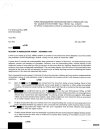
From the police, this letter. It confirms the basic details of the police involvement:
Yes, it's from a few years later, so I suppose it could all be fake, but at some point one starts to get into 9/11 sized conspiracies with multiple people and agencies all in on a cover-up.
Scaramanga
Senior Member
1. By some strange coincidence, the police showed up in the early hours very near to where a nuke WAS GOING to fall 2 days before anything happened for unknown reasons. And returned during the day to survey the site with multiple US airmen. Holt at a later date, seizes on this convenient coincidence and incorporates it into his fake UFO story. Possibly creating fake call logs from the base to the police.
We've already been shown that we can't trust the dates....and we know we can't trust some of the characters.
Read the Halt memo again. Nowhere does it say his event occurred on the 28th.
His 'next day' in paragraph two is the same day ( the 26th ).....the police showed up at 4am and 10.30am. So 'the following night' cannot have been the 29th as stated in the memo.
So Halt not only gets the initial sighting date wrong but also the alleged date of his own event. And Penniston was allegedly recording stuff as it happened yet he gets the date wrong too ! Which is all the more odd given that its supposedly the day after Christmas....I mean just how hard is that for a trained military policeman to remember ?
For all we know, the true order of events may be reversed, with Halt being first and then the fake Penniston/Burroughs event later. All I'm saying is that the little we do know does not paint a convincing picture of accurate dates !
And if the dates are suspicious....shouldn't the order of events be too ?
The entire Rendlesham story is full of conflicting accounts. That is precisely what happens when people can't remember what happened because it didn't actually happen....
"what a tangled web we weave, when first we practice to deceive" (Sir Walter Scott)
https://commons.wikimedia.org/wiki/File:Halt_Memorandum.jpg
Last edited:
Ann K
Senior Member.
Is that merely "before midnight or after midnight" confusion?2) Penniston's police notebook, supposedly written at the time on 26th December....says 27th December.
3) Halt's memo, written 2 weeks later, also gives the date of the 1st incident as 27th December
You seen to be unpleasantly insistent on the accusation of deliberate deception (on scanty evidence) when honest confusion seems more likely.
Scaramanga
Senior Member
Is that merely "before midnight or after midnight" confusion?
You seen to be unpleasantly insistent on the accusation of deliberate deception (on scanty evidence) when honest confusion seems more likely.
Well, sorry I am being 'unpleasant' for stating the actual facts. I can see why I took a break from here.
The ( alleged ) actual time of the Penniston/Burroughs incident was 3am on December 26th 1980. Effectively the night time of Christmas day...early Boxing Day. Penniston was a military police officer. It was his job to record things accurately. Yet his notes taken at the time record the incident as 27th December.
Ah yes, those are the same notes recorded in the notebook that has the 'binary codes'. Are those 'honest confusion' too ?
And note : Penniston doesn't only get the date wrong in his notebook. He also gets it wrong in his later sketch ( drawn on December 29th and not part of his actual 'statement' ).....
http://www.ianridpath.com/ufo/Penniston_sketch.jpg
Was Halt also 'honestly confused' when he also not only gave that date as 27th, but also gave the wrong date for his own encounter ? Two of them get the dates wrong and that doesn't raise any suspicion ?
And why are none of the official statements by Burroughs, Penniston, or Cabansag actually dated with when the statements were made ?
My Dad was in the military. You could not let off wind on deck without having to record the exact date and time. It is extremely odd for 3 servicemen to have an incident, and not only have some statements that do not include the date and time of the incident....but none of them include the date and time of the statement !
Last edited:
NorCal Dave
Senior Member.
We've already been shown that we can't trust the dates....and we know we can't trust some of the characters.
Read the Halt memo again. Nowhere does it say his event occurred on the 28th.
His 'next day' in paragraph two is the same day ( the 26th ).....the police showed up at 4am and 10.30am.
Now you have me thoroughly confused. So, the nuke was dropped on the 26th, Holt went looking for it and made his recordings. The police showed up sometime after 4:00-4:30 am and said there was nothing to see while the nuke is being recovered in the forest, then they show back up during the day, still the 26th, and examine the site where this 2000 pound nuke crashed at 150+ mph and concluded it was just animal diggings.
Holt's recording, the nuke recovery and 2 visits by the police ALL happen on the 26th. Sometime later, Holt gets or orders some security personal to write statements backing up his concocted fake UFO story. And to this day, those guys are still selling Holt's fake story, some more than others. To what end? IF Holt managed to safely recover the nuke, while making his confusing recording, and convince the local police there was "nothing to see here", it was 45 years ago. Who the hell cares now?
Here are the dates from the statements made by the security people. These were typed up a few days after the events and would normally be considered a form of primary evidence.
Lt. Fred Buran:
Airman 1st John Burroughs:
Airman Ed Cabansag:
MS J. D. Chandler:
To be clear, the above are all fabrications?
Penniston gave no date for the event. His revised date, the 27th is in his supposed notebook, as is the incorrect time of 12:20 am for the event. No other member with him saw the notebook at the time. The notebook first surfaces in the mid '90s after Penniston has undergone hypnosis. He later said that the 12/27 date and 12:20 time was NOT for the event, but when he began receiving the binary code he later introduced in 2010.
To be sure, Penniston is an unreliable witness with a grandiose imagination. His original statement is the most fantastical, while at the same time vague and he has continued to build on that tale ever since. He was repeatedly on TV and in magazines and through the '90s and the '00s his stories get bigger and more elaborate. I find this constant with many UFO experiencers.
IF the original tale he told is just what Holt concocted for him, why keep embellishing it to such a farcical extent? Just repeat the original encounter and stay the course. Is he just getting back at Holt for making him tell the story in the first place? Over the years did he become increasingly embittered at Holt for making him tell this story and draw sketches of things that never happened? Did Penniston just keep getting more and more elaborate with ever more nonsensical claims to see how far he could go before Holt finally spilled the beans about the nuke?
Or did he really believe all of it? Writing an obscure 700 page first volume with a crank like Osborne just to goad Holt seems like a lot of trouble with little result. It seems more like something a true believer would do.
I guess I still don't get the point of a UFO cover story, assuming your basic theory is correct. IF Holt went out to recover a dropped nuke, he should have left the tape recorder at home and recovered the nuke. If anyone asked him why he left the dinner party, he should have said official business and none of yours. There was no press about the incident at the time. It appears the police stopped by, twice, and were none the wiser. Just recover the nuke and shut the F*%& up! I believe the UK phrase is "keep calm and carry on". IF Holt successfully recover the nuke on the morning of the 26th, with not event he police knowing what was going on, WHY in the hell decide to create a fake UFO story that forces a number of enlisted men to lie about something that didn't happen? Makes no sense at all.

John J.
Senior Member.
And Penniston was allegedly recording stuff as it happened yet he gets the date wrong too !
Penniston claims he wrote notes as it happened, but Burroughs refuted this.
From @Ian Ridpath's excellent Rendlesham Forest UFO case website, "19 Jim Penniston's notebook" http://www.ianridpath.com/ufo/pennistonnotebook.html#updateExternal Quote:Even more damaging for Penniston are the statements made by his colleague John Burroughs, who was within a few yards of him throughout the incident. Burroughs told me in an email on 2006 March 22: 'Penniston was not keeping a notebook as it went down'. In a further email dated 2008 January 17 he emphasized: 'Penniston did not have time to make any sketches in a note book while this was going on and did not walk around it for 45 min.' Those statements would seem to disqualify most of the claims Penniston has subsequently made about the contents of the notebook
Penniston seems to have first made his notebook claims over 15 years after the event,
From "Jim Penniston's notebook," Ian Watson's Rendlesham Forest UFO Case website.External Quote:The first mention of them [contemporaneous notes] that I can find is in an interview with Penniston by Salley Rayl for Omni magazine – the date of the interview is not given but the website on which it appears is copyrighted 1996... ...Penniston showed this notebook publicly on the Sci Fi channel documentary UFO Invasion at Rendlesham broadcast in 2003 December.
Penniston also claims that he received a telepathic message composed of ASCII codes which he wrote in that same notebook a day after his encounter. He first thought to mention this on the 30th anniversary of the event, again described by @Ian Ridpath:
This also implies Penniston is not claiming that the events he witnessed were on the 27th.External Quote:At the same time [December 2010], he changed his explanation for the date and time shown in the notebook: he now says it was when he wrote down the binary, not when he encountered the craft. Unfortunately, as we can see for ourselves, the date and time is at the start of the description of the craft, and not at the start of the section with the binary codes. Hence Penniston's revised explanation for the wrong date and time is contradicted by the notebook itself.
For many years, Penniston had been claiming that he had got within touching distance- and touched- a landed, exotic flying craft.
In direct contradiction to his witness statement to his superiors, and in direct contradiction to the accounts given by Burroughs and Cabansag.
He then- after years of making his extraordinary and questionable claims- sort of remembers to mention he received a telepathic message which he wrote down at the time, but didn't think to bring to anyone's attention.
This was no suppressed memory; he had shown the notebook on camera for the Sci Fi Channel documentary in 2003.
Although there appear to be some errors in the ASCII-encoded text, the overall message is clear.
I'm not sure that Jim Penniston's version of events is entirely reliable. (
 )
)Lieutenant Fred Buran, officer in charge at the Central Security Control (CSC), RAF Bentwaters at the time of the first sightings gave a time and date of approx. 03:00, 26 December 1980 in his witness statement dated 12 January 1981. He documents that Burroughs had seen lights, and that Burroughs was joined by SSgt Penniston who also saw lights.
AFC John Burroughs records "..on the night of 25-26 Dec at around 0300..." in his (undated, but believed early Jan. 1981) witness statement.
Airman Edward Cabansag gives the date as "26 Dec 80". He describes entering the forest with Penniston and Burroughs in pursuit of the lights.
Master Sergeant J.D. Chandler was in radio communication with Penniston, acting as a relay between Penniston/ Burroughs/ Cabansag and CSC.
In his witness statement Chandler states "...approximately 0300 hrs, 26 December 1980...".
We know Halt's memo to the UK Ministry of Defence gave an incorrect date of 27 December for the initial sighting because (1) at the start of the memo he is clearly describing the events of the first night, which we know from the Suffolk Constabulary records was 26 December (see @NorCal Dave's post # 288) and (2) the four statements above.
Penniston's statement contained neither date or time, which seems a very strange omission for a service policeman.
Yet he didn't provide dates or timings in his witness statement. And Penniston's claim that his notes were contemporaneous is questionable.Penniston was a military police officer. It was his job to record things accurately. Yet his notes taken at the time record the incident as 27th December
(And he was a Staff Sergeant; the term "officer" is normally used to refer to commissioned officers in English-speaking militaries).
The broken arrow theory has no evidence to support it, other than the events concerned an airbase (well, two adjacent airbases).
(Incidentally, why specify a nuclear weapon? Why not a conventional store, of the type that the bases' A-10s carried?)
No USAF (or other service) military aircraft was lost.
There are no accounts of any aircraft getting into difficulty near the base(s) around this time.
The UK has both civil and military radar covering its airspace (we know Suffolk Constabulary contacted "West Drayton", meaning the London Terminal Control Centre air traffic control that was situated there).
I don't know what the protocols are (or were), but I wouldn't be surprised if RAF air traffic control routinely listened in / communicated with USAF aircraft using UK bases; the USAF "RAF" stations are not sovereign base areas.
There is no evidence of any American personnel, other than those we know about, entering Rendlesham forest during these events; no plant or vehicles are known to have attended the "landing site".
Suffolk police, attending the supposed landing site, note some depressions in the ground but thought they were probably made by animals.
No tyre or caterpillar tracks, no recently disturbed earth.
Of the personnel involved, there is a conspicuous absence of weapons technicians/ armourers or NBC instructors (remembering Halt's misinterpretation of the Geiger counter). Of the Security Police that we know were in the forest, none is a commissioned officer. It seems unlikely that the participants we know of constituted a team capable of assessing the state of a dropped munition.
No security cordon of any type was established by anyone.
At no time was any of the forest off-limits to the public.
If personnel from Woodbridge/ Bentwaters were involved in retrieving a nuclear weapon, or any other aircraft store that had been accidentally dropped, it is inconceivable that Deputy Base Commander Charles Halt would not be made aware in short order. (It must also be very unlikely that Lt. Buran in the CDC would be unaware.)
If there was a cover-up, and Halt was instrumental in arranging it, why has he repeatedly, voluntarily talked about the Rendlesham Forest events over the years? He isn't obliged to, and it just attracts more interest.
Equally, if there was a weapon drop or similar event, and Halt was ordered to arrange a cover-up to which he objected, why would he keep repeating the UFO narrative long after he was required to do so?
If it was decided that there would be a cover-up, why contact the local police?
And why would Halt send a memo to the UK Ministry of Defence over two weeks later? It would have been a fairly safe assumption by then that no local people had seen or suspected anything.
There was no need for a cover story, a cover-up, because there were no direct witnesses other than the USAF personnel involved.
If a cover story were required, mentioning UFOs seems an absurdly daft choice, guaranteed to attract attention where none previously existed- there wasn't any public knowledge of unusual events in Rendlesham Forest!
_____________________________________________________________________________________________________________________________________________________
Edited to add:
@NorCal Dave beat me to it, some dated their statements, some didn't. Penniston didn't.And why are none of the official statements by Burroughs, Penniston, or Cabansag actually dated with when the statements were made ?
Four USAF men- Buran, Burroughs, Cabansag, Chandler- ALL give the date as 26/12/80. Burroughs doesn't give a time, the other three say 03:00.Penniston was a military police officer. It was his job to record things accurately. Yet his notes taken at the time record the incident as 27th December.
Only Penniston doesn't state the date of the event in his witness statement. "It was his job to record things accurately." -Agreed. Penniston's witness statement lacks details which might reasonably have been expected from a service policeman.
Last edited:

Mendel
Senior Member.
@Scaramanga's version requires that a lot of people including the local police turned into conspirators engaged in a coverup, that there was an aircraft, a dropped ammunition, and a rescue operation likely involving heavy equipment, plus a nuclear element, that we have zero evidence for, and that the majority of evidence regarding the event is false.
Our version requires that some people remembered some dates wrong.
Occam's razor (wikipedia): "one should prefer the hypothesis that requires the fewest assumptions".
Our version requires that some people remembered some dates wrong.
Occam's razor (wikipedia): "one should prefer the hypothesis that requires the fewest assumptions".

FatPhil
Senior Member.
The sniff test is giving off a whole lot of odours. I started my career in imaging (both printers and scanners), and there's no way that can be a scan from the 1980s, and there's also no way that can be a more modern scan of something from the 1980s. What's its provenance?From the police, this letter. It confirms the basic details of the police involvement:
...
Yes, it's from a few years later, so I suppose it could all be fake, but at some point one starts to get into 9/11 sized conspiracies with multiple people and agencies all in on a cover-up.
Mendel
Senior Member.
letter looks like it was written on an electric typewriter on printed department letterheadthere's also no way that can be a more modern scan of something from the 1980s.
don't see why it can't be a modern scan
Scaramanga
Senior Member
Here are the dates from the statements made by the security people. These were typed up a few days after the events and would normally be considered a form of primary evidence.
Um...no. All the dated statements ( those where the date the statement was made is recorded ) were written a week ( not just a few days ) later by people who were not actually there in the forest.
None of the statements made by people who were there in the forest ( i.e Penniston, Burroughs, Cabansag ) have the date of the actual statement recorded. We have no idea when those statements were actually made.
Sheesh...I mean can you imagine a court case where the police have three star witnesses and their statements and it turns out there's no interview date on any of the statements ? A judge would throw the case out.
Scaramanga
Senior Member
Penniston claims he wrote notes as it happened, but Burroughs refuted this.
Penniston and Burroughs barely agree on anything. Their accounts vary so much that its hard to reconcile, and they differ from that of Cabansag.
Burroughs later claimed ( under hypnosis ) that he went inside the UFO....yet Penniston denies in his earlier statements that Burroughs went anywhere near the UFO.
https://www.metabunk.org/threads/rendlesham-forest-ufo-incident.13457/post-315320
Also, Burroughs claims to have been there for the Halt incident....a claim that Halt denies. Yet the much maligned Larry Warren backs up Burroughs claim ( which reminds me I must get to see Capel Green when it finally is public, as there's claims of more witnesses ).
Everyone claims Larry Warren is talking nonsense, yet there's ( allegedly ) new witnesses who confirm some of his story and that he was there ( which Halt denies ).
I think I am also right in saying Penniston and Halt had a years long disagreement on where the 'landing' site was. Which is very odd given that Halt supposedly went there in person and for years has been on interviewed tours of the forest saying 'here's where it happened'.
In fact there is barely an element of the story that you can find any two people to agree on ! The sheer level of disagreement, and people calling others liars, falling out with each other over different versions ( and that's not just with Larry Warren but between most of the witnesses ), and people adding 'binary codes', new witnesses who saw the UFO beam inside the weapons hanger ( though the base Commander Conrad denies there were ever any beams ).
To my mind, a story does not get to be such a complete and utter dog's dinner of a mess....without that being intentional.
Apparently the documentary Capel Green ( should be public around the end of the year ) is going to reveal new witnesses and facts. It's not just the much maligned Larry Warren but a bunch of others, if trailers are anything to go by.

JMartJr
Senior Member.
But the signature (with those blue dots) looks like an image dropped in on a word processor of sufficient advancement to be able to drop in such things.letter looks like it was written on an electric typewriter on printed department letterhead
I have no idea what time frame that ability implies -- but it implies one!
Scaramanga
Senior Member
letter looks like it was written on an electric typewriter on printed department letterhead
don't see why it can't be a modern scan
Actually the police letter is one of the few things in this case that I think is genuine. As such it provides the only 'anchor' we have for a date. Yes.....something happened in the early hours of 26th December to cause the police to be called out. But....the initial police report said 'negative result'. They could not find anything. The infamous 'marks in the forest' did not show up until later in the day.
The police revisited the site ( why ? ) 6 hours later....and now, mysteriously, there were marks, etc.
Consider this. Someone must have been there in the forest at 4am to show the police where the 'landing' occurred. Yet the police found nothing at that time. Hmm.
Scaramanga
Senior Member
@Scaramanga's version requires that a lot of people including the local police turned into conspirators engaged in a coverup, that there was an aircraft, a dropped ammunition, and a rescue operation likely involving heavy equipment, plus a nuclear element, that we have zero evidence for, and that the majority of evidence regarding the event is false.
Our version requires that some people remembered some dates wrong.
Lol....your version involves every single alleged witness disagreeing in fundamental aspects with every other witness, and changing their story multiple times! Just how many goes at changing the narrative do you want ?
Penniston and Burroughs don't even agree on the shape or colours of the craft. Burroughs now says he saw no detail in the craft itself, yet his statement contains a detailed craft. Penniston says Burroughs was some way behind him, yet Burroughs claimed to be inside the craft. Penniston says he took notes. Burroughs says he can't have had have time to.
And something very much worth noting. Most of the subsequent relating of the story in various accounts has Cabansag waiting quite some way behind. Yet Cabansag's own statement makes it clear he was right there with Penniston and Burroughs all the time ( something they deny ). Yet he makes zero reference to any downed craft and even says nothing was visible 'in' the forest !
http://www.ianridpath.com/ufo/Cabansag.PNG
So Cabansag completely refutes any landing site at all. You could not have three 'accounts' of allegedly the same event at greater odds with each other. If that's not a huge clue that the entire 'event' is made up....what is ?
Of course people have trouble remembering the date of things that never happened.
( In my thesis....the entire Penniston/Burroughs story is an attempt to create a false location for where some incident occurred. I even think Penniston embellishing his notebook with the 'binary codes' is not attention seeking but a subtle ' hey guys....the entire story is made up BS' )
Last edited:
Mendel
Senior Member.
The blue dots are part of the pre-printed letterhead.But the signature (with those blue dots) looks like an image dropped in on a word processor of sufficient advancement to be able to drop in such things.
I have no idea what time frame that ability implies -- but it implies one!
The signature shows evidence of varying pressure being applied.
I see no reason to doubt it's genuine.
Mendel
Senior Member.
First visit was in the night, looking for a UFO, there was no UFO.But....the initial police report said 'negative result'. They could not find anything. The infamous 'marks in the forest' did not show up until later in the day.
The police revisited the site ( why ? ) 6 hours later....and now, mysteriously, there were marks, etc.
Second visit was in broad daylight, still no UFO, but now rabbit holes are apparent, and identified as such, because someone had decided this was the "landing spot".
John J.
Senior Member.
"...why ?"The police revisited the site ( why ? ) 6 hours later
To have a better look in daylight. SOP, where time and resources allow I'd have thought.
I could be wrong about this, but if memory serves the original Suffolk police attendees were called away to check out a burglar alarm that had been triggered in a shop or sub post office in another village.
-Ah; Otley Post Office.
Last edited:
FatPhil
Senior Member.
It's too clean, you'd expect creases, dog-earing, and speckling. It could have been cleaned up, but that's manipulation.letter looks like it was written on an electric typewriter on printed department letterhead
don't see why it can't be a modern scan
Mendel
Senior Member.
"it appeared that all three officers were equally unimpressed with the nights events" is such a British way to throw shade with absolute precision and aplomb, it's delighting me no end"...why ?"
To have a better look in daylight. SOP, where time and resources allow I'd have thought.
I could be wrong about this, but if memory serves the original Suffolk police attendees were called away to check out a burglar alarm that had been triggered in a shop or sub post office in another village.
-Ah; Otley Post Office.
View attachment 84547View attachment 84547
NorCal Dave
Senior Member.
The sniff test is giving off a whole lot of odours. I started my career in imaging (both printers and scanners), and there's no way that can be a scan from the 1980s, and there's also no way that can be a more modern scan of something from the 1980s. What's its provenance?
It can be found in the FOIA documents from a 2005 release:
http://www.ianridpath.com/ufo/download/unusuallights.pdf
And the one I used was on @Ian Ridpath website:
http://www.ianridpath.com/ufo/police.html
It seems to cooperate the police log of December 26, 1980, also in the FOIA documents:
The call came in at 4:11 am on 12/26/1980. So, unless the police logs were generated at a later date as part of a cover up, we know the police showed up near the supposed landing site, or in the Fake UFO Scenario (FUS), near the crash site of a lost nuke. The log records Airman Arnold from the law enforcement desk at Bentwaters as reporting some "unusual lights" with "unarmed troops" investigating AND they were "terming it a U.F.O. at present".
Now if I understand @Scaramanga theory correctly, he suspects Holt is out in the forest on 12/26, not on 12/28, and is recovering a dropped nuke that has fallen off an aircraft. If we combine Holt in the forest with the call from Bentwaters and the subsequent police visit, it means Holt or others, had already created the UFO cover story as the recovery was happening.
It also means, Holt or others have called the police out to the same area where they were attempting to recover a 2000 pound bomb that had crashed into the forest. They would have needed some sort of lifting device, preferably an all terrain one, possibly an excavator/backhoe or a lot of guys with shovels and the needed truck to ferry the recovered weapon back to base.
Then they invite the police back out AGAIN during the day to have a look around:
Why?! Why repeatedly call the police out to the area a nuke has crashed into, while trying to keep the presence of the crashed nuke a secret? Is this a case of hiding in plain sight? IF anyone got wind of a crashed nuke in the forest, Holt and others can say the police were out there, twice no less, and never saw a nuke. But it also runs the risk that the police COULD have seen what was going on. The first police log is vague about how far into the forest or where the police actually went, just saying "search made of the area-negative".
However, this is not a "forest" like in the US or Canada, the area of concern is a small managed tree farm. Trees are planted in neat rows, they grow then are harvested and new ones planted again. From a likely entrance point to the infamous farmer's field, it's barely a kilometer or a 15 minute walk:
If there is a nuke recovery operation going on near here and the police are wandering around, they're going to notice. Maybe that's why Holt calls for the flood lights to be turned off
 .
.Again, why invite the police?
OK, I can maybe make it work. Holt is vague about when he leaves the dinner party. No mention in his memo:
Nor in his 2010 affidavit, though he does put the date to the traditional 12/27-28:
We are told Holt is called away from an officer's dinner, but not what time. Now what if it wasn't an officer's dinner? The nuke was lost sometime on 12/25, an unexpected Christmas present. It's Christmas dinner Holt gets called away from. It's the dead of winter in the UK, so anytime after 5:00 pm it's dark and it's nighttime. The nuke is lost late in the day on the 25th and Holt's team head out to recover it.
IF the tape recording is made during this time, late on the 25th into the first hour or so of the 26th (as Penniston's notebook claimed) then Holt is already working the "mysterious lights" angle. Holt's team successfully recovered the nuke and covered up any evidence of said crashed nuke. Then, to set the stage for the UFO story, Holt has Arnold call the police around 4:00 am so they can come out for a UFO investigation and find no evidence of anything, including a crashed nuke. They even invite them back out later in the day to see nothing again.
Still seems very convoluted.
Scaramanga
Senior Member
"...why ?"
To have a better look in daylight. SOP, where time and resources allow I'd have thought.
According to Lieutenant Fred A. Buran...he 'terminated the investigation' at 0354. The call to the police ( supposedly from Bentwaters ) was made at 0411. Just 17 minutes later. Suspiciously soon after.
None of those involved mention calling the police. It's not in any of the statements by anyone. Its somewhat bizarre for the police to be called after the investigation has been 'terminated' and thus for there to be nobody at the scene to speak to the police !
Then we have the curious claim that later ' a staff member at RAF Bentwaters' ( odd how the police report gives no names at all ) indicated to the police that a landing site had been found. But hold on. This is at 10.30am. Show me the bit in anyone's statements where it says Penniston or Burroughs went back out less than 5 hours after the original event to show the police the landing site.
They didn't ! Burroughs claims it was Captain Mike Verrano who 'found' the landing site.
http://www.ianridpath.com/ufo/rendlesham5.html
So the police are shown a 'landing site' with none of the original witnesses actually present to confirm it. I mean just how absurd does it all get. What was Captain Verrano even doing in the woods after the 'investigation had been terminated' ? Why were none of the alleged original witnesses present ? And why were the police called over a few markings in the ground ?
I suspect Penniston/Burroughs had served their purpose, no longer needed, and now they wanted to tie the bogus 'landing site' down to a specific time and location by making sure there was an official police report.
A diversion which seems to have worked well for 45 years !
Scaramanga
Senior Member
Now if I understand @Scaramanga theory correctly, he suspects Holt is out in the forest on 12/26, not on 12/28, and is recovering a dropped nuke that has fallen off an aircraft. If we combine Holt in the forest with the call from Bentwaters and the subsequent police visit, it means Holt or others, had already created the UFO cover story as the recovery was happening.
Yes. The real Halt incident is what occurred on 26th ( or before ). There was never more than one date. The Penniston/Burroughs 'incident' occurred a few hours later and was entirely a bogus cover story designed to draw attention away from date and location....as it is later presented as if Penniston/Burroughs occurred first...which of course gives Halt a prior 'landing site' to go to. How clever ! Someone even calls up the police to make sure the cover story date and location are recorded. They make damned sure the police know exactly 'where the UFO landed'.
'Over here, officer....no...don't look over there'.. Penniston/Burroughs is a diversion. Don't take my word for it. Cabansag ( who was right there with the two ) obviously didn't get the memo and claims NOTHING landed in the woods. You have it right there in one of the statements...that nothing happened.
And people spend 45 years thinking how silly US Airmen are for 'mis-identifying' lighthouses and stars. Mission accomplished.
Last edited:
Scaramanga
Senior Member
We are told Holt is called away from an officer's dinner, but not what time. Now what if it wasn't an officer's dinner? The nuke was lost sometime on 12/25, an unexpected Christmas present. It's Christmas dinner Holt gets called away from. It's the dead of winter in the UK, so anytime after 5:00 pm it's dark and it's nighttime. The nuke is lost late in the day on the 25th and Holt's team head out to recover it.
IF the tape recording is made during this time, late on the 25th into the first hour or so of the 26th (as Penniston's notebook claimed) then Holt is already working the "mysterious lights" angle. Holt's team successfully recovered the nuke and covered up any evidence of said crashed nuke. Then, to set the stage for the UFO story, Holt has Arnold call the police around 4:00 am so they can come out for a UFO investigation and find no evidence of anything, including a crashed nuke. They even invite them back out later in the day to see nothing again.
Still seems very convoluted.
The police are called just 17 minutes after Buran 'terminated the investigation'. And bizarrely, none of the witnesses are there to meet them. I mean what on earth is the point of that ? The ONLY thing it achieves is a date/time record on a police report....which I suspect is all it was intended to. Then the police are called again at 10.30am, once again by some anonymous person at Bentwaters, with a claim of a 'landing site' being found in the woods. A claim by someone who was not even there for the alleged sighting !
Why are people from Bentwaters looking for landing sites when the investigation has been 'terminated' ? Why is there absolutely zero documentation from the USAF on any of these police calls or relating to the 'landing site' ? Why were the original witnesses not even there ( yet again ! ) when the police showed up a second time for the 'landing site' ?
You don't find any of this suspicious ?
John J.
Senior Member.
Yes.....something happened in the early hours of 26th December to cause the police to be called out.
Suffolk Constabulary were contacted by (USAF) Central Security Control at RAF Bentwaters, concerning lights seen near the airbase.
The lights were not on the airbase (or neighbouring RAF Woodbridge); CSC did the right thing in alerting local police of their concerns.
That is why Suffolk Constabulary, the police force for that area, attended.
Although it doesn't seem to have been considered a likely problem by Suffolk police, who sent two unarmed officers, the airbases would have had legitimate security concerns. The Cold War was getting chillier, and there was a growing awareness that Soviet desant forces or locally recruited sympathisers could cause real disruption to military infrastructure with very few personnel, and at low cost.
Coincidentally, the USSR started deploying modernized MIRV-equipped SS-20s from December 1980, which would have made Bentwaters and Woodbridge (along with most other military installations in Western Europe) vulnerable to accurate strikes at very short notice for the first time, making the possibility of a surprise attack more likely (at least in the minds of some in the West).
If this wasn't the cause of some anxiety amongst some personnel at those bases, I would be surprised.
Suffolk Constabulary despatched two officers in one car, who were on a night-time rural policing detail.
I suspect (but do not know) that the marks in the forest were themselves regarded as a "negative result".But....the initial police report said 'negative result'. They could not find anything. The infamous 'marks in the forest' did not show up until later in the day.
They were not found by the Suffolk police officers on their first attendance, because it was dark, and their visit was cut short.
Forest floors are generally uneven and covered with leaf litter, twigs, pine needles etc. etc. depending on local flora.
Noticing the ground scrapings in daylight confirms that you can see more in daylight than at night (or maybe that the airmen had more time to look for "evidence" than the local police, who were called away).
Having established from air traffic control that no aircraft had crashed, and not finding anything of note in the forest- no partying youngsters who'd nicked stuff from mum and dad's Christmas drinks cabinet, no unauthorized camping/ caravanning, no signs of vehicles- and noticing the light from Orford Ness, which we know the USAF men were unfamiliar with- the attending officers came to their conclusions, and left when called away to a possible burglary.
Suffolk police returned in daylight because they had been contacted again. It was to ensure nothing had been missed, and might well have been seen as a courtesy to the USAF.
The conflicting stories of the claimed witnesses is one of several reasons to doubt the objective accuracy of any UFO narrative.
But "It's not aliens, therefore it's a nuclear bomb conspiracy" does not become a reasonable default theory as a result.
There is absolutely no evidence for it. None whatsoever. Not even any circumstantial evidence.
The twin bases' A-10s are unlikely to have been nuclear tasked. They certainly wouldn't be flying at night with a nuclear weapon.
IIRC (haven't checked) there's some evidence (from Halt? Col. Conrad?) ops at the bases were at a low tempo with minimum staffing over the festive season. There was no major exercise involving the bases at that time.
Even if a nuclear weapon were being ferried into or out of Bentwaters or Woodbridge as a scheduled move, it must be unlikely the most senior officer in the CSC would be a lieutenant and the deputy commander at a Christmas party. If a nuclear-armed (or any other) aircraft from elsewhere had to make an emergency landing, it is likely that appropriate responders (USAF firefighters, medics etc.) would be alerted.
Woken in the early hours after Christmas day, they would probably remember -there is no indication of scheduled night flights taking place 26-28 December 1980 (remembering A-10s were not night-ops capable) and no incidents for 67th ARRES to respond to as far as I know, so it's unlikely many crash responders were awake on standby.
It is unlikely that nuclear weapons were carried by US fighters/ attack aircraft for import or ferrying purposes around the UK in 1980.
Maybe transport aircraft (e.g. C-141s) were used, but they wouldn't drop a store unless they crashed.
Strategic bombers are also unlikely candidates: The USAF did not operate continuous airborne alert nuclear-armed flights from or over the UK (in the manner of Operation Chrome Dome, https://en.wikipedia.org/wiki/Operation_Chrome_Dome: B-52s patrolled over North America, Greenland and surrounding waters, and over Spain and the Mediterranean; discontinued in 1968 after a B-52 crashed with four nukes in Greenland); BBC Future, "The lost nuclear bombs that no one can find").
The RAF's alert flights of nuclear-armed V-bombers ceased c. 1970 as Polaris-armed submarines became operational.
As already pointed out, the known Rendlesham Forest witnesses do not include ordnance technicians or NBC specialists, and no vehicles seem to have been involved "on site" to retrieve a munition, several hundred kilograms and a few metres long, which might well have been damaged. Small non-descript depressions that might have been scrapings caused by rabbits or badgers were found, but no tyre or track impressions were recorded.
If the intent of someone organising a hypothetical cover-up was to show the Suffolk police officers evidence of a UFO landing site, it obviously failed miserably:
"I know what might look like alien landing marks to a local policeman on rural duties- let's just scuff up the ground a bit, something like a rabbit might."
If the intent was to explain indentations left by lifting gear, the rationale is flawed: The Suffolk police hadn't found the indentations on their first visit; contacting them again (ensuring another visit to the site) to show them marks left by lifting apparatus, whose presence you want to deny, so you can say "...this might have been caused by a UFO" is mental (to use a British colloquialism).
Maybe he wasn't on duty. Goes for a Boxing Day walk at the site of the earlier excitement, curious, and finds "landing marks".What was Captain Verrano even doing in the woods after the 'investigation had been terminated' ?
It does seem a bit ridiculous. Much of the whole narrative (and particularly later claims) might be similarly thought of.And why were the police called over a few markings in the ground ?
But these are by-and-large very young men, some who have been in the country for a short time, who think they saw, or have heard reports about, UFOs. The bases' personnel would have had legitimate security concerns and perhaps anxieties.
They have no jurisdiction to formally investigate off-base occurrences that might concern them, so they take the appropriate action.
The "physics package" of a nuclear weapon is unlikely to detonate if damaged, but a detonation of the conventional explosives is more likely (and happened in the case of the 1968 Greenland B-52 crash, requiring an extensive clean-up of radioactive material).
We have no evidence of specialists from RAF Lakenheath attending -the USAF had nuclear weapons facilities for its F-111s at Lakenheath, just 41.6 miles away (56.1 miles. 90.3 km by road). There are no witness reports or years-after-the-event disclosures from armourers or ordnance disposal (bomb squad) personnel, only from Security Police who were out and about on duty.
Halt, unfamiliar with his Geiger counter, and a number of Security Police (no matter how competent they were in their specialisation) are not candidates for a munition retrieval team, not for a nuclear or a conventional weapon.
When unexploded World War II bombs are unearthed in the UK and Europe, it often takes a couple of days or more to safely neutralize them.
A cordon is established to prevent unnecessary risk, and the munition- invariably of well-understood design- meticulously examined before any attempt at disarming or removal occurs. The weapon would not pose any radiological hazard.
In passing, an unexploded WW2 bomb would be an excellent cover story for a dropped contemporary store. Suffolk airfields were attacked in the war, the British public (and their European counterparts) are familiar with news stories of unexploded bombs being found and the disruption this causes for local people. UFO stories just gather more interest, and UFO spotters. And UFO-spotting conspiracy theorists.
This didn't happen for the Rendlesham Forest UFO reports because it only became known to the wider public following The News of the World's 1983 front page story.
But as a cover story (as in "cover up", not the NotW report) released nearly three years after the incident, an incident which no-one except the witnesses seem to be aware of, it makes no sense. It attracts attention where none existed- there was no need for a cover story.
"How do we keep the events in Rendlesham Forest, which no-one is talking about and hasn't talked about for three years, secret? I know, we'll talk to the most popular nationwide Sunday newspaper in the country with a story about UFOs. Larry, you're the man. This is important, so you guys involved in fabricating evidence, take time to get dates and timings right. You listening, Jim?"
If the Rendlesham Forest "witnesses" (including Halt) wanted to avoid investigation into events in Rendlesham Forest, they could have just said nothing at all. No-one would be any the wiser. Instead a few of them talk about UFOs, seeking publicity, year after year.
The evidence strongly suggests that the Penniston/ Burroughs/ Cabansag sightings were made on the 26th December:
The witness statements from Buran, Burroughs, Cabansag and Chandler say so. The Suffolk Constabulary Station Record Form states 26 December. Subsequent correspondence from a Suffolk Police Superintendent, October 1988, states 26 December.
Only Penniston didn't mention the date in his statement.
He has subsequently claimed that he wrote the 27th December in his notebook the day he wrote down the binary code- the day after the sighting (according to him).
Halt's memo to the MoD states 27th December, and it is almost certainly an error.
Supposition, for which there is no supporting evidence.A diversion which seems to have worked well for 45 years !
Last edited:
JMartJr
Senior Member.
I'm inclined to take your word for it, it's nothing I've ever seen before, though. If you had handy an example other than this one, that would be nice to have "on the record.The blue dots are part of the pre-printed letterhead.
That I find less convincing, as I'd expect that to carry over if it was printed from a "sample signature" in which such evidence was visible.The signature shows evidence of varying pressure being applied.
But as the blue dots are the only thing that might make me think it might not be era-authentic, if you can clinch that then there would be no further reason that I can see to wonder about it.
John J.
Senior Member.
They were off-duty, probably asleep.Why were the original witnesses not even there ( yet again ! ) when the police showed up a second time for the 'landing site' ?
They'd just done a night shift, and it wasn't a major incident: No injuries or allegations of serious crime. No evidence of hostile action.
Their seniors aren't going to give them time off in lieu so they can say hello to the local policemen.
Edited to add: It's worth remembering air traffic control had no knowledge of any aircraft in the area at the time of the sighting.
This is pre-"low observables" aircraft being deployed (F-117, the first stealth type, began manufacture in 1981 https://en.wikipedia.org/wiki/Lockheed_F-117_Nighthawk).
Last edited:
NorCal Dave
Senior Member.
Yes. The real Halt incident is what occurred on 26th ( or before ). There was never more than one date. The Penniston/Burroughs 'incident' occurred a few hours later and was entirely a bogus cover story designed to draw attention away from date and location....as it is later presented as if Penniston/Burroughs occurred first...which of course gives Halt a prior 'landing site' to go to. How clever ! Someone even calls up the police to make sure the cover story date and location are recorded. They make damned sure the police know exactly 'where the UFO landed'.
'Over here, officer....no...don't look over there'.. Penniston/Burroughs is a diversion. Don't take my word for it. Cabansag ( who was right there with the two ) obviously didn't get the memo and claims NOTHING landed in the woods. You have it right there in one of the statements...that nothing happened.
And people spend 45 years thinking how silly US Airmen are for 'mis-identifying' lighthouses and stars. Mission accomplished.
I don't know brother, I must admit, it's a fun idea. One of the big UFO stories isn't being covered-up, it IS the cover-up. There is a certain entertaining irony to it all
 . But as I noted earlier, it seems a solution in search of a problem.
That the USAF/CIA let UFO reports linger if it helped hide clandestine overflights by classified aircraft is a given. They may have even planted a few UFO stories here and there, but even in the case of Richard Doty, they were just some stories.
This theory postulates an entire acted out script with multiple actors that has carried on for 40+ years. Some of those actors, like Penniston, have been working for an Oscar in the ensuing years. Not only was the entire thing scripted, but IF the Holt recordings are genuine, he was already working up the script while still looking for the lost nuke. On the fly! Maybe that's why he and Penniston had a falling out, they both want that Oscar for best performance by a male in a lead roll.
I still come back to, what was the point. As there seems to be ZERO evidence for any kind of lost nuke or lost aircraft or really anything unusual in the Redlesham area at any time prior to the UFO event AND the UFO event, fake or otherwise, wasn't really heard of until 1983, why concoct a fake UFO cover story for a nuclear event no one was aware of? Again, the fake UFO story just called attention to the event Holt didn't want to call attention to.
I guess it becomes a matter of perspective. As there is no evidence for anything remotely like a Broken Arrow incident in Suffolk in the latter part of 1980, we're left to interpret the confusing mess that is the Rendlesham UFO case. You contribute the divergent witness accounts to a poorly and quickly scripted fake UFO cover story. I see the opposite. IF the story was concocted, one would think the accounts would be more aligned.
Lots of different accounts in UFO cases are exactly what I would expect. I'm reminded of the Stephenville TX case (link below) where we know what some of the witnesses were seeing, F16s on training runs, but he stories are all over the place. The stories then change and morph over the years as different people miss remember or confabulate or get hypnotized or just want in on the action. Rendlesham seems a rather standard UFO story to me. But that's just me.
https://www.metabunk.org/threads/stephenville-texas-ufo-2008.13446/
Mendel
Senior Member.
And not during Christmas. Operating aircraft requires a large amount of support crew to inspect and service the aircraft after each flight, and they'd mostly be on holiday.The twin bases' A-10s are unlikely to have been nuclear tasked. They certainly wouldn't be flying at night with a nuclear weapon.
A rabbit scratch is a small hole about the size of a small drink can, if not smaller (it's been a while since I've seen one). It's something a rabbit digs out in the sand if it wants to take a quick nap, so there is a very small chance that it wasn't actually there in the night, but there the next day because it was freshly dug. (But it likely went unnoticed.)"I know what might look like alien landing marks to a local policeman on rural duties- let's just scuff up the ground a bit, something like a rabbit might."
It's the exact shade of blue used for the letterhead at the top.But as the blue dots are the only thing that might make me think it might not be era-authentic, if you can clinch that then there would be no further reason that I can see to wonder about it.
I think the dots are there to tell the typist that the end of the page is coming up, and one of the dots indicates the middle of the page for aligning or folding the paper.
You're also looking at a scan of a document, arguing "the signature looks like a scan to me".
I looked through https://en.wikipedia.org/wiki/List_of_military_nuclear_accidents , and weapons lost from aircraft involved either aircraft in distress (fire on board, midair collision, etc.), or the ordnance exploded when it hit the ground, something the police would not miss. None of it involved an aircraft on short final that was essentially almost "home free".As there is no evidence for anything remotely like a Broken Arrow incident in Suffolk in the latter part of 1980
Ian Ridpath
Member
That letter was written to me, and it is my scan, from my website.The sniff test is giving off a whole lot of odours. I started my career in imaging (both printers and scanners), and there's no way that can be a scan from the 1980s, and there's also no way that can be a more modern scan of something from the 1980s. What's its provenance?
JMartJr
Senior Member.
See: Project Mogul secret spy balloon crash and the Roswell flying saucer story... in which the first explanation to explain what had crashed without revealing the actual program to be released by the military was that a crashed flying disk had been recovered! By the next day, it appears somebody had recognized that would create more problems than it solved and the saucer claim was withdrawn, to be replaced by the more plausible and boring explanation of a crashed weather balloon.I don't know brother, I must admit, it's a fun idea. One of the big UFO stories isn't being covered-up, it IS the cover-up.
Looking that up, I stumbled across this, which I had never known:
https://en.wikipedia.org/wiki/Roswell_incidentExternal Quote:...reporting on flying saucers declined rapidly after the Twin Falls saucer hoax. Just days after stories of the Roswell "flying disc", a widely reported crashed disc from Twin Falls, Idaho, was found to be a hoax created by four teenagers using parts from a jukebox.
So crashed disks were a thing there for a minute...
John J.
Senior Member.
External Quote:...a widely reported crashed disc from Twin Falls, Idaho, was found to be a hoax created by four teenagers using parts from a jukebox
So crashed disks were a thing there for a minute...
Took me a while...
Investigators must've been astounded to find 70 crashed discs in one place.
Cue The Black Hit of Space by the Human League...
FatPhil
Senior Member.
Unsurpassable provenance, thank you. And now I know it's not just a random piece of paperwork pulled out of historical files, but one delivered straight into the care of the person who scanned it, the other issues evapourate too.That letter was written to me, and it is my scan, from my website.
NorCal Dave
Senior Member.
Unsurpassable provenance, thank you. And now I know it's not just a random piece of paperwork pulled out of historical files, but one delivered straight into the care of the person who scanned it, the other issues evapourate too.
Unless of course Ian, like Mick, is a government disinfo shill trying to suppress the truth about UFOs.
Similar threads


- Replies
- 9
- Views
- 4K

- Replies
- 247
- Views
- 69K


- Replies
- 129
- Views
- 38K


