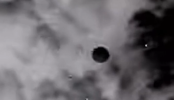
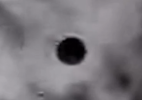
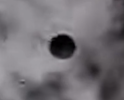
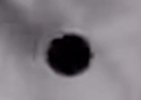
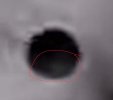
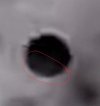
I've been analyzing PR055 and testing the main prosaic explanations (condensation/droplet on the dome and lens flare) against the observed kinematics and conditions, and wanted to share some points for discussion.
For the lens flare,
1. In the footage we see the target enter from the top of frame (Vertical Motion).
- This is inconsistent with known camera elevation changes. All demonstrations available show a lens flare would appear from the bottom of the screen.
2. The initial right to left motion of the target (Horizontal Motion).
- This would be consistent given the plane is in a left hand bank/ turn though out the video, increasing its rate of change during the video.
3. The left to right motion of the target (Horizontal Motion).
- This is inconsistent with known kinematics, and camera direction/ panning change occurring. All demonstrations available show a lens flare would, with the given parameters, should be moving right to left at a faster rate due to plane bank angle change.
Source: https://x.com/ZaineMichael1/status/2068950932814254375
top tweet - Reproducing the gps locations of the plane and the targeted spot on the earth, there is no point where the camera would be panning to the right. Red lines are the initial and end LOS.
bottom tweet - Plotting the onscreen values for the camera compass from the footage, JC release. Combined footage in the initial tweet.
For the water droplet theory,
At 21,000 ft the ISA temperature is approximately −27°C, a water droplet would
- be expected to freeze rapidly,
- demonstrate changing shape/ appearance/ streaking,
- and even being charitable, "aerodynamics around the pod can be complicated", I can't reconcile the motion, angle change to wind forces (for a water droplet to change directions) and or combined with gravity.
The only way I can put this, is a water droplet 220-240 knots winds would not adhere to the window of the pod and result in what we observe in the footage.
Does anyone have substantive examples of
- a lens flare changing direction due to the rate of same direction pan increasing?
- a lens flare, when the camera is panning up to a light source, of a flare entering from the top of the screen?
- comparable water interactions at high speeds for a partially shielded surface?