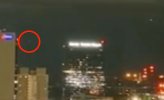
Not talking about blooming. I was talking about "sensor flare" aka "red dot flare" aka "green dot flare" aka "red dots in the lens flare."
I really should start a new thread about all this. A few issues...
What you are calling sensor reflection is a type of ghosting, and is a type of lens flare. But only if we define lens flare a certain way... the wrong way. Ack-choo-lee, "lens flare" should be restricted to describing a general scattering of light that reduces contrast. I was guilty of that misuse in my post as well, so mea culpa.
Is ghosting synonymous with lens flare? Ack-choo-lee... no. But it is a kind of flare. To get even more logic-choppy... Ghosting flare can be considered a specific type of lens flare that produces distinct, repeated shapes or images of the light source within the frame.
But, ghosting is only lens flare when it reduces the contrast of the image. That's what I was taught many moons ago.
To bring this to an actual point... Because of the inherent ambiguity of these generic terms, we really should always be specific when we talk about this kind of artifact.
The artifact in the OP video is a flare. (But what kind?) It shows marked optical ghosting drift as the camera pans. But why?
The problem we need to solve is standardizing the terminology. Which is not fully standardized in the field itself.
There are two flavors of camera artifacts caused by sensor reflections. There hasn't been any standardization of the terminology. I've seen both called sensor reflections.
Sensor Flare (the type also known as red dot/green dot flare) - is caused by specular reflections between the sensor and the internal surface of the rear lens element, or according to one source, between the sensor and the optical low pass filter which is between the lens and sensor. (Or sometimes all at the same time? Don't know. Does anyone know? This issue is still being worked out and there is a lot of speculation. What I'm saying here is an interpretation of different sources. The sources may be wrong or I may be interpreting them incorrectly. If there 's interest in this, we can work it out.)
This is akin to the barbershop mirror thing. There are reflections of reflections. The dots, apparently, are reflections of individual microlenses on the sensor. So they are not duplicate images of the light source, but are ghosts of a part of the camera.
The more illuminated areas on the sensor cause brighter dots to appear, but enough of the sensor can be bright enough to cause a visible grid pattern. And there are also reflections of reflections to consider... apparently.
The dots are more noticeable in cameras that have a shorter flange distance - the distance between the lens mount and the sensor. The luminosity of the reflections is higher at a short distance. If the flange distance is greater, the specular reflection images get too spread out to be as noticeable.
Result - Dots can appear close to the light source. And the dots can also appear across the optical axis from the light source... I guess. I think this can be called a true form of lens flare.
But I'm confident that this type of flare does not exhibit the kind of optical ghosting drift we see in the OP video. Because of that, I wanted to rule out sensor flare as an explanation for the artifact.
Aperture Ghosting - When a bright light source is in or near the frame, some of that light can reflect off the surfaces, the edges, of the aperture blades. The reflections bounce between the lens elements and form ghost images that mimic the shape of the diaphragm opening.
Result - Ghost images typically appear across the optical axis from the light source and take on the shape of the diaphragm opening. When the camera pans/tilts, the ghosts can move toward or away from the light source, depending on whether the light source is "moving" toward or away from the optical axis. Optical ghosting drift.
Ghost images are internal reflections, so they don't remain fixed in place like real objects. They drift in the frame because of
optical parallax.
This is the thing most likely to be called "lens flare". But it shouldn't be, without an awareness of what the terms really mean.
Filter Flare (an old fashioned term that may have dropped out of common parlance) - Ghost images are caused by specular reflections between the external surface of the first lens element and the (flat) internal surface of a filter... or a lens cover in phones. And/or the internal surface of the filter/lens cover. Especially bad with non-coated filters/lens covers.
Result - Ghost images appear close to/overlap the light source.
The ghost image gets farther away from the light source if a filter in an old fashioned filter holder, or the lens cover on a phone, is cattywampus. (The double Sun syndrome.)
Ghosting caused by Lens Element Reflections - When light passes through multiple lens elements in a camera, some of it may reflect off the external/internal surfaces of the lens elements and back into the camera. These reflections can then be re-imaged onto the sensor or film.
Result: Duplicate images of the light source. The ghost images
tend to appear close to the light source. But why? The reflections scatter inside the optical system, but the reflections are,
generally, less bright the farther away they are from the bright light source. But it's perfectly possible to have a single, bright ghost image of this type far away from the light source and across the optical axis. Complicated.
Ghosting caused by reflections between the sensor surface and the internal surface of the filter... or lens cover - What you're talking about. To be clear, I'm afraid you should always use this lengthy descriptor. Because simply calling it "sensor reflection" is ambiguous.
Your simulation does not include a diaphragm. Have you worked out what the effect of the size of the aperture would be?
The ghost images are across the optical axis and should exhibit marked optical ghosting drift as the camera pans/tilts, due to optical parallax effects. But I've never seen an example of this. We have seen "destabilized sensor reflections".
One big issue that should be considered. Do ghost images caused by reflections between the sensor surface and the internal surface of the filter... or lens cover often (or always) exhibit a color cast?
Reflectivity of the Sensor - the sensor surface may have different reflectivity for different wavelengths. I think this is why sensor reflections are known as red dot or green dot flares. So why would that not be a universal thing in sensor reflections?
https://www.dpreview.com/forums/thread/3698085
These ghost reflections are generally caused by having a filter on the lens and using a large aperture (small f number). The are caused by light reflected back by the sensor, then reflected again by the back surface of the filter which is just in front of the lens.
However, these reflections are generally very weak as good quality filters have an anti-reflection coating to reduce these ghost reflections. The ghost reflections in your image are a lot stronger than I would expect, suggesting that an uncoated filter was being used.
Good quality filters produce noticeable ghost reflections only in quite extreme lighting situations: extremely bright lights and a dark background against which the ghost reflections are made visible. See the example below:

Note the green cast. I don't think this is solely due to the color temperature of the lights but because of the quirks of the light reflecting off the sensor. Certain wavelengths of the light are being reflected more strongly.