
You are using an out of date browser. It may not display this or other websites correctly.
You should upgrade or use an alternative browser.
You should upgrade or use an alternative browser.
Paul Kevin Curtis, chemtrail believer accused of sending Ricin to Pres Obama
- Thread starter Jay Reynolds
- Start date
- Status
- Not open for further replies.



Jay Reynolds
Senior Member.
http://www.theblaze.com/stories/201...pect-arrested-in-connection-to-ricin-letters/
http://www.clarionledger.com/article/20130417/NEWS/130417027/Who-Paul-Kevin-Curtis-
http://www.clarionledger.com/article/20130417/NEWS/130417030
http://www.cbsnews.com/8301-504083_...ss-man-arrested-in-ricin-tainted-letter-case/
http://www.wptv.com/dpp/news/nation...ver-possible-obama-roger-wicker-ricin-letters
http://www.clarionledger.com/article/20130417/NEWS/130417027/Who-Paul-Kevin-Curtis-
http://www.clarionledger.com/article/20130417/NEWS/130417030
http://www.cbsnews.com/8301-504083_...ss-man-arrested-in-ricin-tainted-letter-case/
http://www.wptv.com/dpp/news/nation...ver-possible-obama-roger-wicker-ricin-letters

cloudspotter
Senior Member.
Good job it wasn't to a pilots house.

FreiZeitGeist
Senior Member

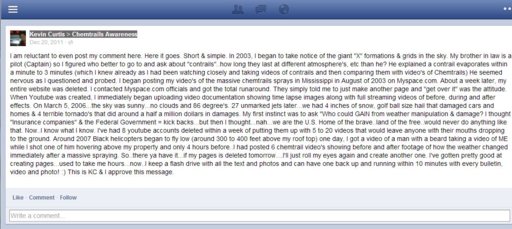

Cairenn
Senior Member
External Quote:Curtis believed in cover-ups, according to his ex-wife who reported him to police in 2007 for being "extremely delusional, anti-government, and (for feeling) the government was spying on him with drones," according to the affidavit.
He wrote on his Facebook profile that if the federal government were "using or monitoring/using this website or any of its associated websites, (they) do NOT have permission."

lotek
Active Member
holy shit, when i heard them say on npr they had a suspect, a man who regularly sent letters to his representatives, i laughed and mumbled chemmie on the way to work... arg. so can we say now this hoax has real repercussions? or no because its being reported on about the body part thing? man.

Drew
Active Member
What is it with this week? (And what is it with guys named Kevin?)
I was briefly beginning to jumble K. Curtis and K. Purfield with Kevin Harris, a Costa Mesa conspiracy theorist who lived in a foil-lined house and wrote an elaborate 17,000 words essay "The Pricker" (a fantastically articulate but manifestly paranoid blend of CIA-sponsored murder, 9/11 trutherism, and aliens.)
According to the LA Times, he blew himself up in his house on Monday with homemade explosives. Fortunately he wasn't outwardly violent, but he seems to have had the capacity to be. I feel bad that he never got the help he needed.
There is an interesting discussion to be had about the intersection of mental illness, propensity to believe conspiracy theories, and willingness to engage in violence. I don't think all conspiracy theorists are mentally ill, nor that all violent people are mentally ill, nor that most conspiracy theorists are prone to violence. But I'm sympathetic to the notion of CT belief as a "radicalizing multiplier" (discussed in a good policy paper from Demos UK here, although the authors don't explicitly discuss mental illness). In certain cases, these tendencies can all work in tandem to reinforce one another with tragic results.
I was briefly beginning to jumble K. Curtis and K. Purfield with Kevin Harris, a Costa Mesa conspiracy theorist who lived in a foil-lined house and wrote an elaborate 17,000 words essay "The Pricker" (a fantastically articulate but manifestly paranoid blend of CIA-sponsored murder, 9/11 trutherism, and aliens.)
According to the LA Times, he blew himself up in his house on Monday with homemade explosives. Fortunately he wasn't outwardly violent, but he seems to have had the capacity to be. I feel bad that he never got the help he needed.
There is an interesting discussion to be had about the intersection of mental illness, propensity to believe conspiracy theories, and willingness to engage in violence. I don't think all conspiracy theorists are mentally ill, nor that all violent people are mentally ill, nor that most conspiracy theorists are prone to violence. But I'm sympathetic to the notion of CT belief as a "radicalizing multiplier" (discussed in a good policy paper from Demos UK here, although the authors don't explicitly discuss mental illness). In certain cases, these tendencies can all work in tandem to reinforce one another with tragic results.
Drew
Active Member
But back to Curtis, consider this:
http://www.infowars.com/ricin-arrest-suspect-appears-to-be-mentally-unstable-democratic-supporter/
Fascinating how the InfoWars crew are in the odd position of having to distance themselves from somebody who seems to have shared similar beliefs (e.g. chemtrails, pervasive government surveillance and persecution, corrupt medical conspiracies) They do this by claiming he's a Democrat (it's not clear that he was or wasn't; their strongest evidence is a photo of him next to a bumper sticker). And claiming that he's "unstable"
And then below, some of the InfoWars commenters go on to express sympathy with Curtis's organ harvesting conspiracy and his attempted bioterrorism. Or they venture that he's a patsy. He even gets called a Zionist.
http://www.infowars.com/ricin-arrest-suspect-appears-to-be-mentally-unstable-democratic-supporter/
There's something charming in a conspiracy theorist calling another conspiracy theorist "weird" for believing in a conspiracy theory.External Quote:This is where it gets slightly weird, as Curtis' letters are mainly in reference to what he describes as "a secret war… that is making Billions of dollars for corrupt mafia related organizations and people."
Fascinating how the InfoWars crew are in the odd position of having to distance themselves from somebody who seems to have shared similar beliefs (e.g. chemtrails, pervasive government surveillance and persecution, corrupt medical conspiracies) They do this by claiming he's a Democrat (it's not clear that he was or wasn't; their strongest evidence is a photo of him next to a bumper sticker). And claiming that he's "unstable"
And then below, some of the InfoWars commenters go on to express sympathy with Curtis's organ harvesting conspiracy and his attempted bioterrorism. Or they venture that he's a patsy. He even gets called a Zionist.

JRBids
Senior Member
There is an interesting discussion to be had about the intersection of mental illness, propensity to believe conspiracy theories, and willingness to engage in violence. I don't think all conspiracy theorists are mentally ill, nor that all violent people are mentally ill, nor that most conspiracy theorists are prone to violence. But I'm sympathetic to the notion of CT belief as a "radicalizing multiplier" (discussed in a good policy paper from Demos UK here, although the authors don't explicitly discuss mental illness). In certain cases, these tendencies can all work in tandem to reinforce one another with tragic results.
Some people here don't think there's a connection.
Cairenn
Senior Member
One commenter there said that Kevin's FB included posts that 'Obama had stolen both elections" and the Ted Nugent should be President. Some of his religious commentary point a lot more to right wing, than to liberal.External Quote:The Clarion-Ledger reports that Curtis has a criminal history and mental issues.
"If it's Kevin Curtis, we've had him in our jail about 4 times, mostly misdemeanors like simple assault. But in 2008 for telephone harassment and stalking," Prentiss County Sheriff Randy Tolar said.
"I think he has some very serious psychological issues from my dealings with him. In the past I had read some of his Facebook postings and it was very far out there. He'll get down on you and bash you with everything he's got, even making up stuff, and I've seen that side of him." the Sheriff added.
lotek
Active Member
BThere's something charming in a conspiracy theorist calling another conspiracy theorist "weird" for believing in a conspiracy theory.
Must. Resist. Urge. To . Post. Picture. Of. Xzibit! Yo dawg
Jay Reynolds
Senior Member.
Anybody know where Kevin Curtis' videos or youtube pages can be found?
I've found one that seems to fit, but I'm not connecting it without some kind of secondary confirmation.

There is an interesting discussion to be had about the intersection of mental illness, propensity to believe conspiracy theories, and willingness to engage in violence. I don't think all conspiracy theorists are mentally ill, nor that all violent people are mentally ill, nor that most conspiracy theorists are prone to violence. But I'm sympathetic to the notion of CT belief as a "radicalizing multiplier" (discussed in a good policy paper from Demos UK here, although the authors don't explicitly discuss mental illness). In certain cases, these tendencies can all work in tandem to reinforce one another with tragic results.
Some people here don't think there's a connection.
One might make the argument that a mentally ill person is going to cause harm, regardless of which conspiracy theory or delusion he believes in. I think this raises questions:
1) Do particular theories make things worse? i.e., if there was no "theory X", that the guy subscribes to, then would his violent tendencies be reduced? Does the existence of the chemtrail theory had a net effect on the violence in the world? Or would he just move on to something else?
2) Regardless of the above, any given conspiracy theory will provide targets (say, pilots). Would anyone possibly argue that if pilots were not targeted then someone else would be, so there's no real harm in the chemtrail theory? Would they even argue that debunking is as bad as spreading bunk, as all it does is focus the crazy guy on another target?

George B
Extinct but not forgotten Staff Member
Seems political and religious fanaticism has caused far more violence and death than any marginal conspiracy I am aware of . . .One might make the argument that a mentally ill person is going to cause harm, regardless of which conspiracy theory or delusion he believes in. I think this raises questions:
1) Do particular theories make things worse? i.e., if there was no "theory X", that the guy subscribes to, then would his violent tendencies be reduced? Does the existence of the chemtrail theory had a net effect on the violence in the world? Or would he just move on to something else?
2) Regardless of the above, any given conspiracy theory will provide targets (say, pilots). Would anyone possibly argue that if pilots were not targeted then someone else would be, so there's no real harm in the chemtrail theory? Would they even argue that debunking is as bad as spreading bunk, as all it does is focus the crazy guy on another target?

F4Jock
Active Member
Seems political and religious fanaticism has caused far more violence and death than any marginal conspiracy I am aware of . . .
I think I'd be safe saying that more people have died in the name of someone's God than not.
George B
Extinct but not forgotten Staff Member
Hmmmm . . . WWII killed 60 Million . . . Stalin starved millions . . . Pol Pot . . . don't think they were religious types . . .http://en.wikipedia.org/wiki/World_War_II_casualtiesI think I'd be safe saying that more people have died in the name of someone's God than not.
External Quote:World War II casualties
From Wikipedia, the free encyclopedia
[Broken External Image]:[URL]http://bits.wikimedia.org/static-1.22wmf1/skins/common/images/magnify-clip.png[/URL]
American corpses sprawled on the beach of Tarawa. The Marines secured the island after 76 hours of intense fighting with around 6,000 dead in total. The Pacific Warclaimed the lives of more than 100,000 US military personnel.
World War II was the deadliest military conflict in history. Over 60 million people were killed, which was over 2.5% of the world population. The tables below give a detailed country-by-country count of human losses.

Last edited by a moderator:
F4Jock
Active Member
One might make the argument that a mentally ill person is going to cause harm, regardless of which conspiracy theory or delusion he believes in. I think this raises questions:
1) Do particular theories make things worse? i.e., if there was no "theory X", that the guy subscribes to, then would his violent tendencies be reduced? Does the existence of the chemtrail theory had a net effect on the violence in the world? Or would he just move on to something else?
2) Regardless of the above, any given conspiracy theory will provide targets (say, pilots). Would anyone possibly argue that if pilots were not targeted then someone else would be, so there's no real harm in the chemtrail theory? Would they even argue that debunking is as bad as spreading bunk, as all it does is focus the crazy guy on another target?
"Crazy people" will pick a target of some sort if their disease so dictates. The problem lies with the definition of "crazy." It also becomes what one actually then does with someone defined as "crazy" person. Presently there seems to be no answer except to wait for an overt act. We can't institutionalize everyone nor can we ban every possible instrument of destruction.
F4Jock
Active Member
hmmmm . . . Wwii killed 60 million . . . Stalin starved millions . . . Pol pot . . . Don't think they were religious types . . .http://en.wikipedia.org/wiki/world_war_ii_casualties
External Quote:world war ii casualties
from wikipedia, the free encyclopedia
[Broken External Image]:[URL]http://upload.wikimedia.org/wikipedia/commons/thumb/1/10/tarawa_beach_hd-sn-99-03001.jpeg/220px-tarawa_beach_hd-sn-99-03001.jpeg[/url]
[Broken External Image]:[URL]http://bits.wikimedia.org/static-1.22wmf1/skins/common/images/magnify-clip.png[/url]
american corpses sprawled on the beach of tarawa. The marines secured the island after 76 hours of intense fighting with around 6,000 dead in total. The pacific warclaimed the lives of more than 100,000 us military personnel.
world war ii was the deadliest military conflict in history. Over 60 million people were killed, which was over 2.5% of the world population. The tables below give a detailed country-by-country count of human losses.
Hirohito was considered a god. God was on our side. God was on hitler's side......you may be right with uncle joe and i haven't researched pol pot, but go back to biblical times as well as the inquisition. Wars aren't the only time that religious killing exists. Roman emperors were gods, pharaohs too.
[/ex][/quote]
F4Jock
Active Member
[/QUOTE][/ex]
Sorry. Screwed that up. Please see last paragraph in green zone above.
As well....
"Were Stalin, Hitler and Pol Pot atheists?
Theists hold up Communism and Nazism, along with the regime of the Cambodian tyrant Pol Pot, as evidence of murderous "atheist" tyrannies that have caused the deaths of tens of millions. While it may be true that Communism portrayed itself as "godless," it did not wage war in the name of atheism, nor were its founders and leaders raised as atheists. They were, in fact, preponderantly Jewish and Christian. Communist Manifesto writer Karl Marx was born a Jew, the grandson of two rabbis, and was converted to Christianity at age 6. Leon Trotsky, whose real name was Lev Bronstein, was born and raised a Jew but later declared himself "an internationalist."
Josef Stalin's "very religious" mother named him after St. Joseph, and wanted him to become a priest. Stalin himself supposedly claimed that his father had been a priest, and he was purportedly "damaged by violence" while being "raised in a poor priest-ridden household." As a youth, Stalin spent five years in a Greek Orthodox seminary, after which he purportedly renounced his religion. In his later years, Stalin apparently embraced Christianity once more. As Stalin biographer Edvard Radinsky remarks, "During his mysterious retreat [of June 1941] the ex-seminarist had decided to involve the aid of the God he had rejected." Radinsky likewise chronicles a number of religious comrades in Stalin's immediate circle. It is evident that, whether for good or bad, religion played a significant role in Stalin's life.
Adolf Hitler was raised a Catholic, and in a speech in 1922 he remarked, "My feeling as a Christian points me to my Lord and Saviour as a fighter..." In his autobiography Mein Kampf (1.2), Hitler stated:
Hence today I believe that I am acting in accordance with the will of the Almighty Creator: by defending myself against the Jew, I am fighting for the work of the Lord.
Throughout his life, Hitler invoked God and "the Lord," demonstrating his religious, not atheistic, nature. Pol Pot was raised a Buddhist and Catholic. In this regard, Dr. Ian Harris, a Reader in Religious Studies at the University College of St. Martin, relates: "In one of his early writings Pol Pot wrote approvingly that the 'democratic regime will bring back the Buddhist moralism because our great leader Buddha was the first to have taught [democracy].'" Although in comparison to the Abrahamic religions its history is far less violent, Buddhism has not been entirely devoid of atrocity in its spread and practice.
If we are to insist—as many people have done, including numerous theists and atheists alike—that religious human abuse is the cause of atheistic reaction against religion, we need look no further, it would seem, than to Josef Stalin's religiously abusive childhood to discover from where much of his rage appeared to emanate. His atheistic reaction therefore would be caused by religion. Hitler, who was also fascinated by mysticism, could not be deemed an "atheist" by any scientific standard, and Pol Pot also was not raised an atheist in a vacuum devoid of religion but was obviously affected and motivated by it.
If atheism is frequently but a reaction against human abuse by religion, then in itself such disbelief may not be the cause of malfeasance."
JRBids
Senior Member
Seems political and religious fanaticism has caused far more violence and death than any marginal conspiracy I am aware of . . .
Much conspiracy theory talk has to do with end times. Especially the NWO, Illuminatti. I find even chemtrailers are pretty close to cult like and religious. They isolate themselves in cocoons with others who believe as they do.
F4Jock
Active Member
Much conspiracy theory talk has to do with end times. Especially the NWO, Illuminatti. I find even chemtrailers are pretty close to cult like and religious. They isolate themselves in cocoons with others who believe as they do.
But if you think about it, don't we all?

Cairenn
Senior Member
Actually, several earlier wars killed a higher percentage of the population.
Warning text wall
http://reason.com/archives/2012/01/11/the-decline-of-violence
Warning text wall
http://reason.com/archives/2012/01/11/the-decline-of-violence
The article is long but well worth reading. I am going to put his book on my wish list.External Quote:You are less likely to die a violent death today than at any other time in human history. In fact, violence has been declining for centuries. That is the arresting claim made by Harvard University cognitive neuroscientist Steven Pinker in his new book, The Better Angels of Our Nature: Why Violence Has Declined (Viking)....
Pinker: [During] the transition from tribal societies to settled states, there was a reduction from about a 15 percent chance of dying violently down to about a 3 percent chance in the first states.
reason: One of the claims that I was most struck by is that rates of violence in Europe have dropped 30-fold from the medieval period.
Pinker: That's right. Rates of homicide can be estimated more accurately than crimes with fuzzier definitions, like assault and rape, because a dead body always gets people's attention, or a missing person. The homicide records go back in many parts of Europe to the 1200s. And they all show an astonishing trend. Namely, that the rates of homicide have plummeted, from anywhere from 30 to 100 per 100,000 per year down to the [current] European average, which is between one and two per 100,000 per year....
Pinker: Well, millions died in centuries before the 20th. People confuse a data point with the trend. They remember the horrific episodes of violence in the 20th century, but one occurrence is not a trend. And despite universal predictions that World War I to World War II was just the beginning of a sequence where World War III would be even worse, World War III didn't happen. And in fact, from the spike of the Second World War, there's been a historically unusual period of peace among developed countries. ...
eason: Going back to the pacifying effects of gentle commerce that you mentioned, you note that this period could be called the Capitalist Peace.
Pinker: This is a heretical idea coming out of, of all places, Scandinavia. There are war nerds who run regressions trying to predict what leads to escalation, military tensions, or de-escalation. There was a lot of statistical support for an idea called the Democratic Peace. The extreme form is that no two democracies have ever waged war on one another. There's a new movement to try to argue it's actually the capitalism, more than the democracy, that's doing the work in this correlation. And there seem to be data that capitalist countries are less likely to go to war with each other. They're less likely to go to war, period, including against noncapitalist countries, [and are] less likely to have civil wars, and less likely to have genocides.
reason: In other words, "Make money, not war." ....
Why is ideology so deadly? Pinker: There are two features of a lot of ideologies that make them deadly. One of them is demonizing. Namely, if the impediment to a better world is some defined group of people—the Jews, the rich peasants, the capitalists, the left-wingers, the communists—then you're justified in unlimited outlays of violence, because you're still ahead of the game. The costs are outweighed by the benefits. The other is if your ideology promotes some utopia—and often they're linked, because it's usually some demonic group that stands in the way of your utopia—then, at first you might think, well, utopia, who could be against that? Infinite good forever. If you hold out the hope of infinite good forever, then those that oppose it are arbitrarily evil, then you're justified in arbitrary punishment to eliminate them, and you're still doing much more good than harm. The amount of violence that you can perpetrate in pursuit of this utopia can be as high as you like, and you're still ahead of the game, including collateral damage among innocents. "You can't make an omelet without breaking the eggs" was the old slogan.
reason: When we think about ideologies, the vast ones over the 20th century, fascism and communism come to mind. Do you see others out there now that might pose a problem in the future?
Pinker: Well, radical religions, millennial religions, radical Islam, radical forms of Christianity, that say that there's some irredeemably evil group standing between the world and perfection: the crusaders, the infidels, the Jews, the polytheists, the nonbelievers, and so on. And in many of these ideologies, both religious and secular, there's the idea that there will be one final spasm of violence before we attain bliss for eternity, the worse the better. And as there's more violent chaos, it just means that utopia's around the corner. Now those are very dangerous ideologies, both religious and secular....

Pete Tar
Senior Member
Seems political and religious fanaticism has caused far more violence and death than any marginal conspiracy I am aware of . . .
But this IS political fanaticism! Isn't it?
George B
Extinct but not forgotten Staff Member
Chemtrails?But this IS political fanaticism! Isn't it?
Drew
Active Member
One might make the argument that a mentally ill person is going to cause harm, regardless of which conspiracy theory or delusion he believes in. I think this raises questions:
1) Do particular theories make things worse? i.e., if there was no "theory X", that the guy subscribes to, then would his violent tendencies be reduced? Does the existence of the chemtrail theory had a net effect on the violence in the world? Or would he just move on to something else?
2) Regardless of the above, any given conspiracy theory will provide targets (say, pilots). Would anyone possibly argue that if pilots were not targeted then someone else would be, so there's no real harm in the chemtrail theory? Would they even argue that debunking is as bad as spreading bunk, as all it does is focus the crazy guy on another target?
It's difficult to say, isn't it?
Again, I'd stress that I don't think all CT believers are mentally ill, that all mentally ill people are prone to violence, or that all people who employ violence are mentally ill. But in the case of Kevin Curtis (the ricin attacker) and Kevin Harris (the Costa Mesa guy who blew himself with a pipe bomb) these two people seem almost like textbook cases of paranoid schizophrenia, viz. the sense of themselves as being singled out and individually persecuted by big conspiracies. Harris's allusions to being spied upon, to radio mind control (in a 'hearing voices' vein) really stand out as suggesting paranoid schizophrenia or a related delusional disorder.
As for why paranoid schizophrenics seem to latch so strongly onto CT, it is tough to say because even now specific disease models for paranoid schizophrenia are still not that great. One interesting theory link that schizophrenia to a really messed up dopaminergic system. With too much dopamine, your brain is neurochemically disposed to assign more significance to random phenomena. For the moment I can only find a good summary of it in a crapola Psychology Today article;
[EX=http://www.psychologytoday.com/articles/200501/conspiracy-theories-explained]
Because the addict's dopamine-driven salience system keeps telling her that something very important is happening, ordinary events appear intensely meaningful. That police car? That song on the radio? That man with a cigarette walking by? They must be part of a massive international conspiracy.
Kapur calls it "biased inductive logic"—a top-down effort to explain the feeling that everything seems important. The cognitive parts of a schizophrenic's brain create the paranoid tale in an effort to explain the constant red alert blaring from the dopamine circuits, using any stimuli available. This is why delusions are culturally appropriate. African schizophrenics may fear they've fallen under the spell of a shaman, while Kapur's patients in Toronto think that the Mounties are after them.
[/EX]
Culturally conditioned as the particulars may be, a paranoid schizophrenia sufferer with these kinds of delusional tendencies is going to find a way to give expression to what their brain is doing and the disturbed way in which they're experiencing the world.
It reminds me of a fascinating story of James Tilly Matthews, one of the earliest well documented cases of paranoid schizophrenia type in the 19th c. He believed that a shadowy cabal of French revolutionaries were using a machine called an "air loom" to control his mind and influence world events.
[EX=http://www.nthposition.com/theairloomgangjames.php]
Matthews was convinced that outside the grounds of Bedlam, in a basement cellar by London Wall, a gang of villains were controlling and tormenting his mind with diabolical rays. They were using a machine called an 'Air Loom', of which Matthews was able to draw immaculate technical diagrams, and which combined recent developments in gas chemistry with the strange force of animal magnetism, or mesmerism. It incorporated keys, levers, barrels, batteries, sails, brass retorts and magnetic fluid, and worked by directing and modulating magnetically charged air currents, rather as the stops of an organ modulate its tones. It ran on a mixture of foul substances, including 'spermatic-animal-seminal rays', 'effluvia of dogs' and 'putrid human breath', and its discharges of magnetic fluid were focused to deliver thoughts, feelings and sensations directly into Matthews' brain. There were many of these mind-control settings, all classified by vivid names: 'fluid locking', 'stone making', 'thigh talking', 'lobster-cracking', 'bomb-bursting', and the dreaded 'brain-saying', whereby thoughts were forced into his brain against his will. To facilitate this process, the gang had implanted a magnet into his head. As a result of the Air Loom, Matthews was tormented constantly by delusions, physical agonies, fits of laughter and being forced to parrot whatever nonsense they chose to feed into his head. No wonder some people thought he was mad.
The Air Loom was being run by a gang of undercover Jacobin revolutionaries, bent on forcing Britain into a disastrous war with Revolutionary France. These characters, too, Matthews could describe with haunting precision. They were led by a puppet-master named 'Bill the King'; all details were recorded by his second-in-command, 'Jack the Schoolmaster'. The French liaison was accomplished by a woman called Charlotte, who seemed to Matthews to be as much a prisoner as himself, and was often chained up near-naked. 'Sir Archy' was a woman who dressed as a man and spoke in obscenities; the machine itself was operated by the sinister, pockmarked and nameless 'Glove Woman'. If Matthews were to see any of these characters in the street, they would grasp batons of magnetic metal which would cause them to disappear.
But all this activity wasn't directed solely at Matthews. There were many Air Loom gangs all over London, influencing the minds of politicians and public figures, and with a particularly firm grasp of the Prime Minister, William Pitt. They were lurking in streets, theatres and coffee-houses, where they tricked the unsuspecting into inhaling the magnetic fluid which would place them under the control of the Air Loom. By poisoning the minds of politicians on both sides of the Channel with paranoid 'brain-sayings', they were threatening national and international catastrophe.
[/EX]
Sound familiar?
Many of the the ingredients of a contemporary persecutory delusion/paranoid conspiracy theory are there even before the more modern technologies with which they're usually associated.
They're all expressed in language that fits technical, scientific, and cultural contexts of early 1800s Britain. It's fascinating that the idea of sinister foreign agents employing mind control through the air predates the development of the radio by 70 years(!)
So in answer to your questions:
1) In cases of paranoid schizophrenia, I'm not sure that the specific theory makes any difference. It seems that they'd probably find a way to fixate on something else.
2) I would not argue that. At the very least this is because I would tend to think that actual full-blown paranoid schizophrenics like Kevin Curtis or Kevin Harris make up a very small percentage of CT believers. I'm not sure debunking a given theory would really have any effect on somebody with delusional psychosis, but there remain very many non-schizophrenic CT believers and fencesitters who need to know that bunk is bunk.
JRBids
Senior Member
Originally Posted by JRBids
Much conspiracy theory talk has to do with end times. Especially the NWO, Illuminatti. I find even chemtrailers are pretty close to cult like and religious. They isolate themselves in cocoons with others who believe as they do.

But if you think about it, don't we all?
I don't think so, not totally. I don't delete people's posts on FB when they disagree with me and block them. Go to any chemtrail page and ask why a chemtrail persists and a contrail can't and see how long you last.
In real life, (rather than FB, LOL!) I had a close friend who got involved with a "white magic" cult back in the 70s. The leader encouraged them all to move to a farm out in the sticks and they were to have no contact with the outside world at all including family and friends. That was why he eventually left, he had difficulty cutting his family out. He was told if he left he would be dead to them, no contact with any of the members at all, no coming back to the group. That's how cults work.
Last edited by a moderator:
Jay Reynolds
Senior Member.
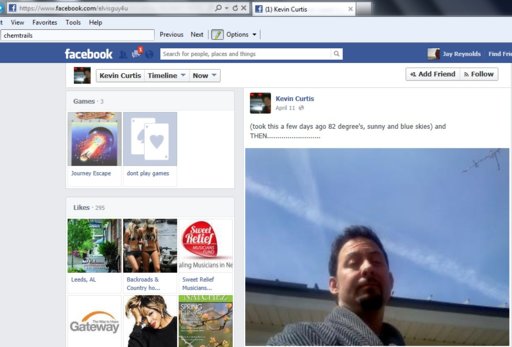
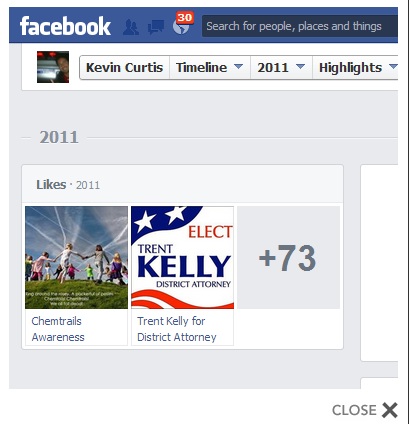
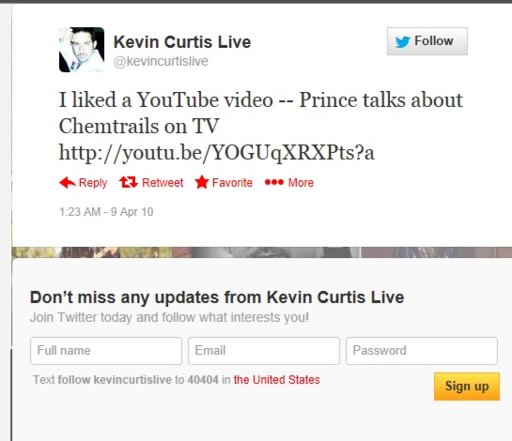
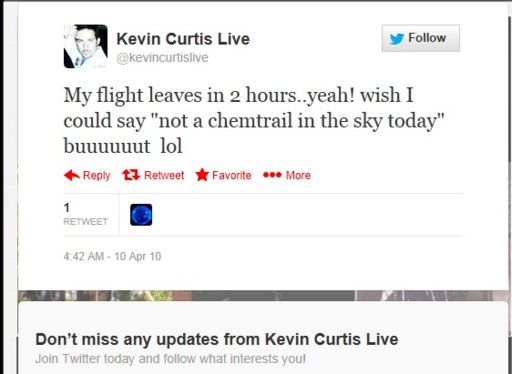
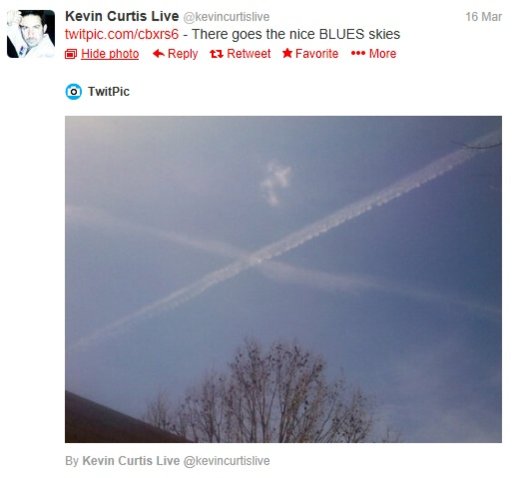
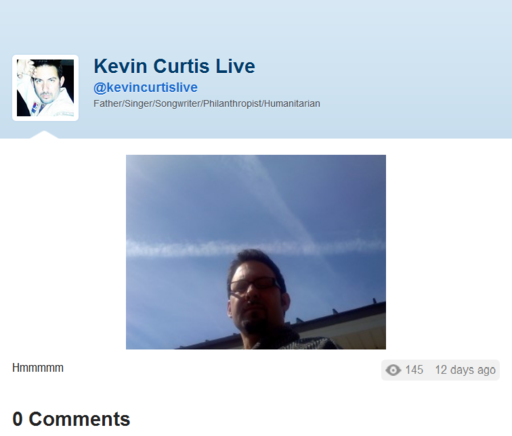
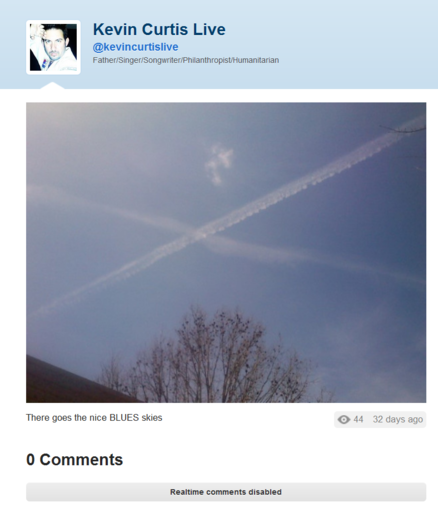
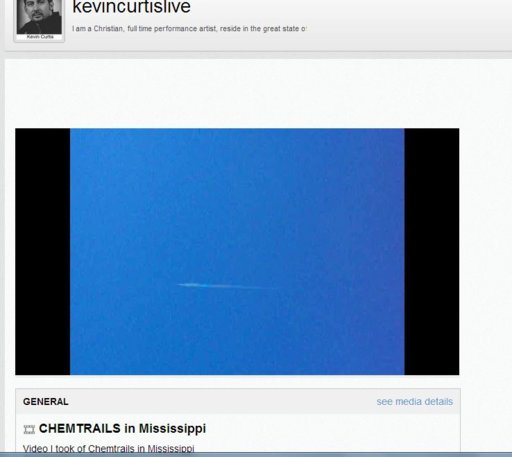
Ok, I didn't have any time yesterday but in the last two hours I've found a treasure trove of stuff on Paul kevin Curtis. A large presence on the web using a variety of alias on Myspace, Facebook, Youtube, Yahoogroups and probably much more. I'm sure there is much more, the guy left all kinds of tracks, and many more connections can be made I'm sure. This took about three hours.
This is (alias Billy Bobby)on Facebook which focuses on the body parts conspiracy:
https://www.facebook.com/blackmarketbodypartsinfo
This is a Myspace page #1 (alias Billy Bobby):
http://www.myspace.com/blackmarketbodypartsinfo
This is Myspace page #2 (alias "Dr. Paul Roberts")
http://www.myspace.com/ufocoverups
Causes Campaign against body parts trade (alias Billy Bobby):
http://www.causes.com/causes/470816...ssue-body-parts-black-market/about?m=6f3a30d4
Yahoo Group on Black Market Body Parts:
http://groups.yahoo.com/group/BlackMarketBodyParts/
Youtube Channel #1 (alias 1stConspiracyRealist) Focuses on chemtrail videos, helicopter flyovers and Corinth, MS police harassment, body parts):
http://www.youtube.com/user/1stConspiracyRealist
Youtube Channel #2 (alias MAC02134) Focuses on chemtrails, HAARP, weather, features WITWATS:
https://www.youtube.com/user/MAC02134
Youtube Channel #3 (alias Billybobby4u) One video on Body Parts:
http://www.youtube.com/user/BillyBobby4u/videos?view=0
Twitter: (alias billybobjustice):
https://twitter.com/billybobjustice
As you can see, Curtis has a large network of aliases and sock puppet accounts. I'm sure there are more to be found.
From what I can see, his main interests are the body parts and chemtrails conspiracy.
This is (alias Billy Bobby)on Facebook which focuses on the body parts conspiracy:
https://www.facebook.com/blackmarketbodypartsinfo
This is a Myspace page #1 (alias Billy Bobby):
http://www.myspace.com/blackmarketbodypartsinfo
This is Myspace page #2 (alias "Dr. Paul Roberts")
http://www.myspace.com/ufocoverups
Causes Campaign against body parts trade (alias Billy Bobby):
http://www.causes.com/causes/470816...ssue-body-parts-black-market/about?m=6f3a30d4
Yahoo Group on Black Market Body Parts:
http://groups.yahoo.com/group/BlackMarketBodyParts/
Youtube Channel #1 (alias 1stConspiracyRealist) Focuses on chemtrail videos, helicopter flyovers and Corinth, MS police harassment, body parts):
http://www.youtube.com/user/1stConspiracyRealist
Youtube Channel #2 (alias MAC02134) Focuses on chemtrails, HAARP, weather, features WITWATS:
https://www.youtube.com/user/MAC02134
Youtube Channel #3 (alias Billybobby4u) One video on Body Parts:
http://www.youtube.com/user/BillyBobby4u/videos?view=0
Twitter: (alias billybobjustice):
https://twitter.com/billybobjustice
As you can see, Curtis has a large network of aliases and sock puppet accounts. I'm sure there are more to be found.
From what I can see, his main interests are the body parts and chemtrails conspiracy.
Jay Reynolds
Senior Member.
Paul Kevin Curtis: Scant evidence in Mississippi ricin case, attorney says
April 20, 2013 - 07:44 am
OXFORD, Miss. (AP) - Federal authorities have scant evidence linking a Mississippi man to the mailing of ricin-laced letters to the president and a senator, his attorney says.
Paul Kevin Curtis' home searched by officers, makes court appearance
Paul Kevin Curtis conspiracy centered on body parts trafficking
Ricin scares reminiscent of anthrax attacks for mail handlers
Christi McCoy said after a court hearing Friday that the government has offered no evidence to prove her client, Paul Kevin Curtis, had possession of any ricin or the seed from which it is extracted - castor beans. An FBI agent testified during the hearing that he could not say if investigators had found ricin at Curtis' home, and McCoy said the evidence linking the 45-year-old to the crime so far has hinged on his writings posted online.
He is adamant that he did not do this, and she said she has seen nothing to prove him wrong.
Curtis was ushered into the courtroom before the hearing began in an orange jail jumpsuit and shackles. He turned to face a young woman in the audience before the hearing and whispered, "I didn't do it."
Prosecutors had wanted to delay the hearing because searches of Curtis home and car had not been completed and DNA and other tests are pending.
Curtis' brother Jack Curtis and 20-year-old daughter Madison Curtis watched the court proceeding and said afterward they are not convinced he did what he is accused of, even though they tried to keep an open mind about what would be presented.
"After hearing what I heard in this courtroom, it appears to me that the reason I haven't been provided any evidence is there appears to be none that would link my brother directly to the charges that have been made," Jack Curtis said after the hearing.
So far, Curtis is the primary focus for investigators and the only person arrested in connection with sending those letters and a third threatening letter mailed to a judge. But during a hearing Friday, FBI agent Brandon M. Grant testified that authorities were still trying to determine whether there were any co-conspirators.
As the hearing went on for roughly two hours, Grant said under questioning by Curtis' attorney that he could not say whether any ricin had been found at Curtis' home because the investigation was ongoing. Investigators had found a package they were interested in, but Grant said he did not know what was in it.
Grant also testified that there was one fingerprint on the letter sent to the judge, but that it didn't match Curtis. He said several people handled the letter, and DNA and other tests are pending.
Curtis' lawyer peppered the agent with questions in an attempt to show the government had little hard evidence, but Grant said people's lives were at risk and it wasn't like a fraud investigation in which authorities could gather more evidence before making an arrest.
Family and acquaintances have described Curtis as a caring father and enthusiastic musician who struggled for years with mental illness and who was consumed by trying to publicize his claims of a conspiracy to sell body parts on the black market.
Curtis is an Elvis impersonator and performed at parties. Friends and relatives also say he spiraled into emotional turmoil trying to get attention for his claims of uncovering a conspiracy to sell body parts on the black market.
Grant testified that Curtis' family had become increasingly concerned by his behavior.
Grant said Curtis' ex-wife told authorities that he fought with his daughter around Christmas and told her, "Maybe I should go ahead and kill you."
Madison Curtis said after the hearing that she loves her father and stands by him.
Grant also testified that Curtis' ex-wife said Curtis once told her that he was in hostage situation in Chicago after a breaking up with a former girlfriend, threatened suicide and shot a gun in the air.
However, the agent said they haven't been able to find a record of that.
Grant's testimony ended Friday evening, but the hearing is set to continue Monday morning.
In court documents, Curtis' attorney, Christi McCoy, gave some details of Curtis' arrest. Curtis had gone to get his mail outside his home and was planning to go to his ex-wife's home to cook dinner for her and their children when he was approached by officers in SWAT gear, she wrote. He was then interrogated at an FBI office for several hours, handcuffed and chained to a chair.
Curtis cooperated to the best of his ability, but when he suggested he might need a lawyer, an agent discouraged that, McCoy wrote.
According to an FBI affidavit, the letters he sent read: "Maybe I have your attention now even if that means someone must die."
Officials have confirmed that the letters contained ricin.
While the toxin can be extremely lethal in its purest form, experts say more crude forms are relatively easy to make.
The FBI has not yet revealed details about how the ricin was made or how lethal it may have been. It was in a powdered form inside the envelopes, but the FBI said no one has been sickened by it so far. A senate official said Thursday that the ricin was not weaponized, meaning it wasn't in a form that could easily enter the body.
More than a dozen officials, some wearing hazardous materials suits, were searching the home Friday where Curtis was arrested in Corinth, Miss. FBI spokeswoman Deborah Madden would not say if authorities have found ricin or materials used to make it in Curtis' home, and officials have not provided details about how Curtis may have either obtained or made the ricin.
Curtis' ex-wife has said he likely didn't have the know-how to make ricin, and she did not know where he would buy it because he was on disability. But Cohen said ricin was once known as "the poor man's bioterrorism" because the seeds are easy to obtain and the extraction process is relatively simple.
"Any kid that made it through high school science lab is more than equipped to successfully make a poison out of this stuff. Any fool can get recipes off the Internet and figure out how to do it," Cohen said.
Those seeds, which look a bit like coffee beans, are easy to buy online and are grown around the world; they are often used to make medicinal castor oil, among other things. However, using the seeds to make a highly concentrated form of ricin would require laboratory equipment and expertise to extract, said Raymond Zilinskas, a chemical and biological weapons expert.
"It's an elaborate process," he said.
Read more: http://www.wjla.com/articles/2013/0...n-case-attorney-says-87748.html#ixzz2R0yCI7w2
April 20, 2013 - 07:44 am
OXFORD, Miss. (AP) - Federal authorities have scant evidence linking a Mississippi man to the mailing of ricin-laced letters to the president and a senator, his attorney says.
Paul Kevin Curtis' home searched by officers, makes court appearance
Paul Kevin Curtis conspiracy centered on body parts trafficking
Ricin scares reminiscent of anthrax attacks for mail handlers
Christi McCoy said after a court hearing Friday that the government has offered no evidence to prove her client, Paul Kevin Curtis, had possession of any ricin or the seed from which it is extracted - castor beans. An FBI agent testified during the hearing that he could not say if investigators had found ricin at Curtis' home, and McCoy said the evidence linking the 45-year-old to the crime so far has hinged on his writings posted online.
He is adamant that he did not do this, and she said she has seen nothing to prove him wrong.
Curtis was ushered into the courtroom before the hearing began in an orange jail jumpsuit and shackles. He turned to face a young woman in the audience before the hearing and whispered, "I didn't do it."
Prosecutors had wanted to delay the hearing because searches of Curtis home and car had not been completed and DNA and other tests are pending.
Curtis' brother Jack Curtis and 20-year-old daughter Madison Curtis watched the court proceeding and said afterward they are not convinced he did what he is accused of, even though they tried to keep an open mind about what would be presented.
"After hearing what I heard in this courtroom, it appears to me that the reason I haven't been provided any evidence is there appears to be none that would link my brother directly to the charges that have been made," Jack Curtis said after the hearing.
So far, Curtis is the primary focus for investigators and the only person arrested in connection with sending those letters and a third threatening letter mailed to a judge. But during a hearing Friday, FBI agent Brandon M. Grant testified that authorities were still trying to determine whether there were any co-conspirators.
As the hearing went on for roughly two hours, Grant said under questioning by Curtis' attorney that he could not say whether any ricin had been found at Curtis' home because the investigation was ongoing. Investigators had found a package they were interested in, but Grant said he did not know what was in it.
Grant also testified that there was one fingerprint on the letter sent to the judge, but that it didn't match Curtis. He said several people handled the letter, and DNA and other tests are pending.
Curtis' lawyer peppered the agent with questions in an attempt to show the government had little hard evidence, but Grant said people's lives were at risk and it wasn't like a fraud investigation in which authorities could gather more evidence before making an arrest.
Family and acquaintances have described Curtis as a caring father and enthusiastic musician who struggled for years with mental illness and who was consumed by trying to publicize his claims of a conspiracy to sell body parts on the black market.
Curtis is an Elvis impersonator and performed at parties. Friends and relatives also say he spiraled into emotional turmoil trying to get attention for his claims of uncovering a conspiracy to sell body parts on the black market.
Grant testified that Curtis' family had become increasingly concerned by his behavior.
Grant said Curtis' ex-wife told authorities that he fought with his daughter around Christmas and told her, "Maybe I should go ahead and kill you."
Madison Curtis said after the hearing that she loves her father and stands by him.
Grant also testified that Curtis' ex-wife said Curtis once told her that he was in hostage situation in Chicago after a breaking up with a former girlfriend, threatened suicide and shot a gun in the air.
However, the agent said they haven't been able to find a record of that.
Grant's testimony ended Friday evening, but the hearing is set to continue Monday morning.
In court documents, Curtis' attorney, Christi McCoy, gave some details of Curtis' arrest. Curtis had gone to get his mail outside his home and was planning to go to his ex-wife's home to cook dinner for her and their children when he was approached by officers in SWAT gear, she wrote. He was then interrogated at an FBI office for several hours, handcuffed and chained to a chair.
Curtis cooperated to the best of his ability, but when he suggested he might need a lawyer, an agent discouraged that, McCoy wrote.
According to an FBI affidavit, the letters he sent read: "Maybe I have your attention now even if that means someone must die."
Officials have confirmed that the letters contained ricin.
While the toxin can be extremely lethal in its purest form, experts say more crude forms are relatively easy to make.
The FBI has not yet revealed details about how the ricin was made or how lethal it may have been. It was in a powdered form inside the envelopes, but the FBI said no one has been sickened by it so far. A senate official said Thursday that the ricin was not weaponized, meaning it wasn't in a form that could easily enter the body.
More than a dozen officials, some wearing hazardous materials suits, were searching the home Friday where Curtis was arrested in Corinth, Miss. FBI spokeswoman Deborah Madden would not say if authorities have found ricin or materials used to make it in Curtis' home, and officials have not provided details about how Curtis may have either obtained or made the ricin.
Curtis' ex-wife has said he likely didn't have the know-how to make ricin, and she did not know where he would buy it because he was on disability. But Cohen said ricin was once known as "the poor man's bioterrorism" because the seeds are easy to obtain and the extraction process is relatively simple.
"Any kid that made it through high school science lab is more than equipped to successfully make a poison out of this stuff. Any fool can get recipes off the Internet and figure out how to do it," Cohen said.
Those seeds, which look a bit like coffee beans, are easy to buy online and are grown around the world; they are often used to make medicinal castor oil, among other things. However, using the seeds to make a highly concentrated form of ricin would require laboratory equipment and expertise to extract, said Raymond Zilinskas, a chemical and biological weapons expert.
"It's an elaborate process," he said.
Read more: http://www.wjla.com/articles/2013/0...n-case-attorney-says-87748.html#ixzz2R0yCI7w2

M Bornong
Senior Member.
I think I'd be safe saying that more people have died in the name of someone's God than not.
Isn't religion the biggest conspiracy theory there is? What is the purpose of any religion except to coerce people into a belief with nothing but anecdotal evidence? Political affiliation is barely one step above.
Jay Reynolds
Senior Member.
What is the purpose of any religion except to coerce people into a belief with nothing but anecdotal evidence?
Hope.
M Bornong
Senior Member.
Hope.
It is a hope that as an individual we can not be that evil, but as long as our god is behind us, we will smite our enemy even though in his mind, his god is behind him.
Magnesium and Titanium discussion moved to:
https://www.metabunk.org/threads/1421-Magnesium-and-Titanium-levels-in-Rainwater
https://www.metabunk.org/threads/1421-Magnesium-and-Titanium-levels-in-Rainwater
Last edited:
J
Joe
Guest
[h=1]Attorney: Scant Evidence in Mississippi Ricin Case http://nation.time.com/2013/04/20/attorney-scant-evidence-in-mississippi-ricin-case/[/h]
Jay Reynolds
Senior Member.
I plan to be at the hearing tomorrow. I want to look him in the eye.[h=1]Attorney: Scant Evidence in Mississippi Ricin Case http://nation.time.com/2013/04/20/attorney-scant-evidence-in-mississippi-ricin-case/[/h]
J
Joe
Guest
Seems just like the Anthrax attack after 9/11. Who did that one ? Smells fishy to me .I plan to be at the hearing tomorrow. I want to look him in the eye.
- Status
- Not open for further replies.
Similar threads

- Replies
- 4
- Views
- 26K


- Replies
- 24
- Views
- 16K


- Replies
- 32
- Views
- 16K


- Replies
- 30
- Views
- 25K


