
You are using an out of date browser. It may not display this or other websites correctly.
You should upgrade or use an alternative browser.
You should upgrade or use an alternative browser.
Transients in the Palomar Observatory Sky Survey
- Thread starter Mick West
- Start date
"Why downsize the study to 10×10 arcmin?"
My guess would be to reduce the numbers of transients to be talked about.
If the frequency of them in that 10 x 10 is multiplied by the number of 10 x 10's in the entire sky suddenly there are billions and billions of flying saucers circling the Earth.
By just talking about them the readers might forget to do that math. Or the readers might think the researchers had stumbled upon the mother-load of flying saucers and there weren't any elsewhere in the sky.
Simple deception, or perhaps self-deception.
My guess would be to reduce the numbers of transients to be talked about.
If the frequency of them in that 10 x 10 is multiplied by the number of 10 x 10's in the entire sky suddenly there are billions and billions of flying saucers circling the Earth.
By just talking about them the readers might forget to do that math. Or the readers might think the researchers had stumbled upon the mother-load of flying saucers and there weren't any elsewhere in the sky.
Simple deception, or perhaps self-deception.

S
So essentially - the potential detection of ten flying saucers over a number of years is more believable than the detection of a thousand every day.
"Why downsize the study to 10×10 arcmin?"
My guess would be to reduce the numbers of transients to be talked about.
If the frequency of them in that 10 x 10 is multiplied by the number of 10 x 10's in the entire sky suddenly there are billions and billions of flying saucers circling the Earth.
So essentially - the potential detection of ten flying saucers over a number of years is more believable than the detection of a thousand every day.

jarlrmai
Senior Member.
In some ways it's similar to my favourite comparison I like to do in "it's probably a fly" videos where we see a 4 second video with a small black dot across it, I always ask for them to watch my 10 hour cows in a field video and ask if all of the black dots in there are UAP.
Source?In some ways it's similar to my favourite comparison I like to do in "it's probably a fly" videos where we see a 4 second video with a small black dot across it, I always ask for them to watch my 10 hour cows in a field video and ask if all of the black dots in there are UAP.
jarlrmai
Senior Member.

FatPhil
Senior Member.
If she can't specify the criterion used to distinguish between her 10 and the multitude of other trivially-findable datapoints in the source data set available to her, then we can deduce they are equivalent. (If there's no test to distinguish between things, they are definitionally indistinguishable, and indistinguishable things are equivalent as they can be used interchangably.) Her method has pointed us to thousands/millions of alien craft, whether she intended that or not. However, because she ignored those myriad other ones, we can deduce that they're instead uninteresting. Therefore we can deduce her 10 are uninteresting.So essentially - the potential detection of ten flying saucers over a number of years is more believable than the detection of a thousand every day.
Her own bad science is its own undoing.
So I'll happily stick the "Texas sharpshooter fallacy" label on this too: these points are the interesting ones only because they're the ones she selected.
I'd also argue the correlation with nuclear explosions is similar. There's no a priori reason to associate UAPs with nuclear test dates, only UFO lore that assumes it to be true. You also have to wonder at the association of the transients +/- 1 day of the tests being carried out (and in supposed geosynchronous orbits not related to the location of the tests), when the tests were occasionally postponed from the scheduled dates due to weather or other factors. So if the supposed aliens knew the schedules and were showing up in advance of the explosions, there should be other transient clusters associated with dates of scheduled tests.If she can't specify the criterion used to distinguish between her 10 and the multitude of other trivially-findable datapoints in the source data set available to her, then we can deduce they are equivalent. (If there's no test to distinguish between things, they are definitionally indistinguishable, and indistinguishable things are equivalent as they can be used interchangably.) Her method has pointed us to thousands/millions of alien craft, whether she intended that or not. However, because she ignored those myriad other ones, we can deduce that they're instead uninteresting. Therefore we can deduce her 10 are uninteresting.
Her own bad science is its own undoing.
So I'll happily stick the "Texas sharpshooter fallacy" label on this too: these points are the interesting ones only because they're the ones she selected.
Also, if proximity is at all important, why would these objects park in orbits so far from the planet, and on the opposite side of the earth from the Soviet tests in Kazakhstan and the Novaya Zemlya (since Palomar observations only see the night sky from California). And why wouldn't they be there all the time?
Last edited:
Phew haha I thought I was going crazy, missing something extremely obvious. But that's also my bad for not reading the linked medium article first.As far as I can tell they don't and neither could Izabela Melamed
The combination of using subsets and not explaining why you used those subsets is VERY alarming. Bad stats with no justification = very suspicious.
First off, welcome to the website! And second, your post still has value contributions on top of mine! It's great to have more stats folks around here.An analysis issue , aside from the technical aspects of the data, is a very basic stats point. When you have a very large sample size (i.e. < 2000 data points), you have massive statistical power to generate a small P-value. This means you can get low P (and reject the null hypothesis) even with small or modest effect sizes. While technically statistically significant, in real world terms the effect could be trivial. Look at their Mann-Whitney U tests for example. Huge U scores for a smallish effect size. I would not be surprised if you could pick many random events (e.g. UK bank holidays) and find an association with these and appearance of transients. P-values need to be interpreted with common sense. Could be a useful exercise for stats teaching if the dataset is released.
Update...oops @yoshy beat me to it. I agree with @yoshy
Releasing data and code should be the norm rather than the exception, as the world operates today sadly. (Except in cases where releasing data would be unethical, dangerous, etc, of course)Could be a useful exercise for stats teaching if the dataset is released.

Ann K
Senior Member.
All those tails are swishing for a reason...

Edward Current
Senior Member.
I was wondering about this myself.
Source: https://x.com/peachastro/status/1953506332671095071
External Quote:I had a read through this and word searched the Aug 2nd print a few times. There is not one single mention of cosmic ray strikes as a probable cause which i find astonishing in a paper where conclusions are being derived from photographic material.
Cosmic ray strikes produce exactly these kind of star-like objects. I've seen them many thousands of times in my ~30yrs as an astrophotographer. Typically you'll get between 1-10 per min though not all leave a defect in the image, but over long exposures you'll get plenty of them (and these POSS plates are 50min exposures.) Artificial alien objects have got to be right at the bottom of the list as a potential explanation.....yet here that seems to be at the top.
Source: https://x.com/peachastro/status/1953506332671095071

They do mention cosmic rays in the 2025 paper: "A Cost-Effective Search for Extraterrestrial Probes in the Solar System"
https://academic.oup.com/mnras/advance-article/doi/10.1093/mnras/staf1158/8221885?login=false

(this is (d), below)
However only "cosmic ray tracks", and not point sources. THey can appear as both:

https://www.astronomy.com/observing/tony-hallas-cosmic-imaging-getting-clean-images/
That example is from a CCD detector. I wonder how different it is with film.
https://academic.oup.com/mnras/advance-article/doi/10.1093/mnras/staf1158/8221885?login=false
(this is (d), below)
External Quote:
Figure 7. Examples of streaks found near the shadow center, from B/IV. The box sizes in the upper panels are (a) 46.3 ×
31.9 arcmin, and (b) 25.2 arcmin ×16.6; in the lower panels: (c) 1.7 ×1.4 arcmin and (d) 2.6 ×3.8 arcmin. The first three images (a)
through (c) are believed to be observations of real objects, while the fourth (d) is likely a cosmic ray due to the narrowness (FHWM of
∼1 arcsecond) and uniform width of the track in spite of brightness fluctuations.
However only "cosmic ray tracks", and not point sources. THey can appear as both:
https://www.astronomy.com/observing/tony-hallas-cosmic-imaging-getting-clean-images/
That example is from a CCD detector. I wonder how different it is with film.
Attachments
Last edited:
I was wondering about this myself.
External Quote:I had a read through this and word searched the Aug 2nd print a few times. There is not one single mention of cosmic ray strikes as a probable cause which i find astonishing in a paper where conclusions are being derived from photographic material.
Cosmic ray strikes produce exactly these kind of star-like objects. I've seen them many thousands of times in my ~30yrs as an astrophotographer. Typically you'll get between 1-10 per min though not all leave a defect in the image, but over long exposures you'll get plenty of them (and these POSS plates are 50min exposures.) Artificial alien objects have got to be right at the bottom of the list as a potential explanation.....yet here that seems to be at the top.
Source: https://x.com/peachastro/status/1953506332671095071
Goes to my concern that none of the authors appear to have much familiarity with the underlying technology (based on skimming their publication lists and the references to prior work in the papers), and certainly not enough expertise to dismiss the criticisms that have been brought up.
It's an increasing concern in the earth sciences that you have people crunching data gathered by other researchers and drawing conclusions without a hands-on familiarity with the physical processes involved.

NorCal Dave
Senior Member.
It's an increasing concern in the earth sciences that you have people crunching data gathered by other researchers and drawing conclusions without a hands-on familiarity with the physical processes involved.
I don't know about Earth Sciences, but that's not what these people are, they're UFOlogists. They believe the Earth is visited by alien UFOs on a regular basis, there are crashed UFOs being reverse engineered and the government is covering this all up. If a bad study that is based on old film plates they don't understand results in something suggesting alien UFOs are real, then so be it.
It's not a study to present to other knowledgeable astronomers, astro-photographers or other relevant experts. It's for lay people and Ross Coulthart. It's presented as a "published scientific paper" strongly suggesting alien UFOs are real. It would also seem to be part of an overall push by the UFOlogy community to generate "published scientific papers" on the subject of UFOs and aliens in an attempt to legitimize the alien narrative in the public sphere.
jarlrmai
Senior Member.
Aliens?All those tails are swishing for a reason...

John J.
Senior Member.
Aliens?
Dipteramorph pat-busters.


HoaxEye
Senior Member
The speculative nature and reliance on potentially flawed data make this paper unlikely to pass peer review without major revision.It doesn't matter where the artefacts come from at all, if you're cherry picking..
I wonder if the paper gets through the peer review.
IMO the paper doesn't meet the strict standards needed for an astrophysical study.
There is another paper, with Beatriz as first author. I believe this is the paper she has been primarily discussing online and in interviews.
Aligned, multiple-transient events in the First Palomar Sky Survey
https://www.researchgate.net/public...nsient_events_in_the_First_Palomar_Sky_Survey
Aligned, multiple-transient events in the First Palomar Sky Survey
https://www.researchgate.net/public...nsient_events_in_the_First_Palomar_Sky_Survey
Last edited:
John J.
Senior Member.
There is another paper, with Beatriz as first author. I believe this is the paper she has been primarily discussing online and in interviews.
Yes. Mentioned in post #13 above. PDF of the paper attached.
"Aligned, multiple-transient events in the First Palomar Sky Survey",
Beatriz Villarroel, Enrique Solano, Hichem Guergouri, Alina Streblyanska et al., dated as "Preprint July 2025", available via ResearchGate https://www.researchgate.net/public...nsient_events_in_the_First_Palomar_Sky_Survey,
PDF attached.
Beatriz Villarroel is a member of Gary Nolan's Sol Foundation...
NorCal Dave
Senior Member.
Just for background, this paper, and some others like the one mentioned in post #13 and post #60 are the result of the Vanishing and Appearing Sources during a Century of Observation, (VASCO) project based in Europe which is led by Dr. Beatriz Villarroel. Their website is a bit janky, but does note that alien probes could account for "glints" that might be found on old photographic plates:
They are also looking for lasers that the transients/probes use to communicate with:
And they're looking for "vanishing stars" that might be aliens:
Perhaps more intriguing, as we discussed a bit in the thread lined below, the VASCO team seems to be a strange mix of legit people, UFO enthusiast like Chris Mellon, Villarroel, and a number of unknowns, some of whom appear to just be stock photos. No names or affiliations are listed for anyone on the "team":

vascoproject.org/our-team/
The whole thing seems to be just one step above a crypto-scam type thing. I suspect VASCO consists of little more than Villarroel and maybe a few people. Villarroel got her PhD in Astronomy from Uppsala University in 2017, the same year VASCO supposedly started up.
A few more of the team members are identified in this thread:
https://www.metabunk.org/threads/new-science-of-uap-paper.14041/
/vascoproject.org/local-probes-and-asteroids/External Quote:
Some theories of the Milky Way Galaxy suggest that technological probes have been sent to stars to perform investigative functions, such as monitoring the local planets...
Traveling slower than 1% of light speed, probes could leisurely travel from one star to another. Robotic interstellar probes may be purposely stealthy, equipped with telescopes, and communicating with a Galactic Internet – at the speed of light.
This hypothetical model predicts that some probes may currently reside in the Solar System, either in orbit around the Sun or around the Earth (Benford 2019, Gertz 2018, 2021).
Probes may be detected by specular reflection of sunlight off any flat surfaces, as described by Lacki (2019) and Villarroel et al. (2022). Such "glints" are momentarily brilliant because the reflected light is concentrated into a narrow beam equal to the angular size of the Sun, roughly ½ degree across for mirrors at 1 AU. Probes as stand-alone machines may glint making them momentarily detectable at the Earth.
They are also looking for lasers that the transients/probes use to communicate with:
vascoproject.org/exo-lasers/External Quote:
Other advanced civilizations may also use powerful lasers. We are searching for such extraterrestrial lasers.
And they're looking for "vanishing stars" that might be aliens:
vascoproject.org/vanishing-stars/External Quote:
Second, vanishing stars may also be a sign of extra-terrestrial technology. For example, Dyson spheres could cause a star to vanish (for an overview see Villarroel al. 2016, Villarroel et al. 2020).
Since VASCO started up in 2017, we have been searching for vanishing stars in the Milky Way through citizen science and automated methods. We are comparing images from the 1950s with images from modern sky surveys. We have found thousands of objects visible in the 1950s that no longer are seen today. We ourselves, refer to these as "short-lived transients", as we think most represent the bright state of an astrophysical object that brightened up for a few minutes later to dim again, rather than a star that actually vanished.
Perhaps more intriguing, as we discussed a bit in the thread lined below, the VASCO team seems to be a strange mix of legit people, UFO enthusiast like Chris Mellon, Villarroel, and a number of unknowns, some of whom appear to just be stock photos. No names or affiliations are listed for anyone on the "team":
vascoproject.org/our-team/
The whole thing seems to be just one step above a crypto-scam type thing. I suspect VASCO consists of little more than Villarroel and maybe a few people. Villarroel got her PhD in Astronomy from Uppsala University in 2017, the same year VASCO supposedly started up.
A few more of the team members are identified in this thread:
https://www.metabunk.org/threads/new-science-of-uap-paper.14041/

purpleivan
Senior Member.
jarlrmai
Senior Member.
Because the website is not HTTPSI get a "not secure connection" warning from Chrome when I visit vascoproject.org.

Eburacum
Senior Member.
From here;
https://www.researchgate.net/public...nsient_events_in_the_First_Palomar_Sky_Survey
https://www.researchgate.net/public...nsient_events_in_the_First_Palomar_Sky_Survey
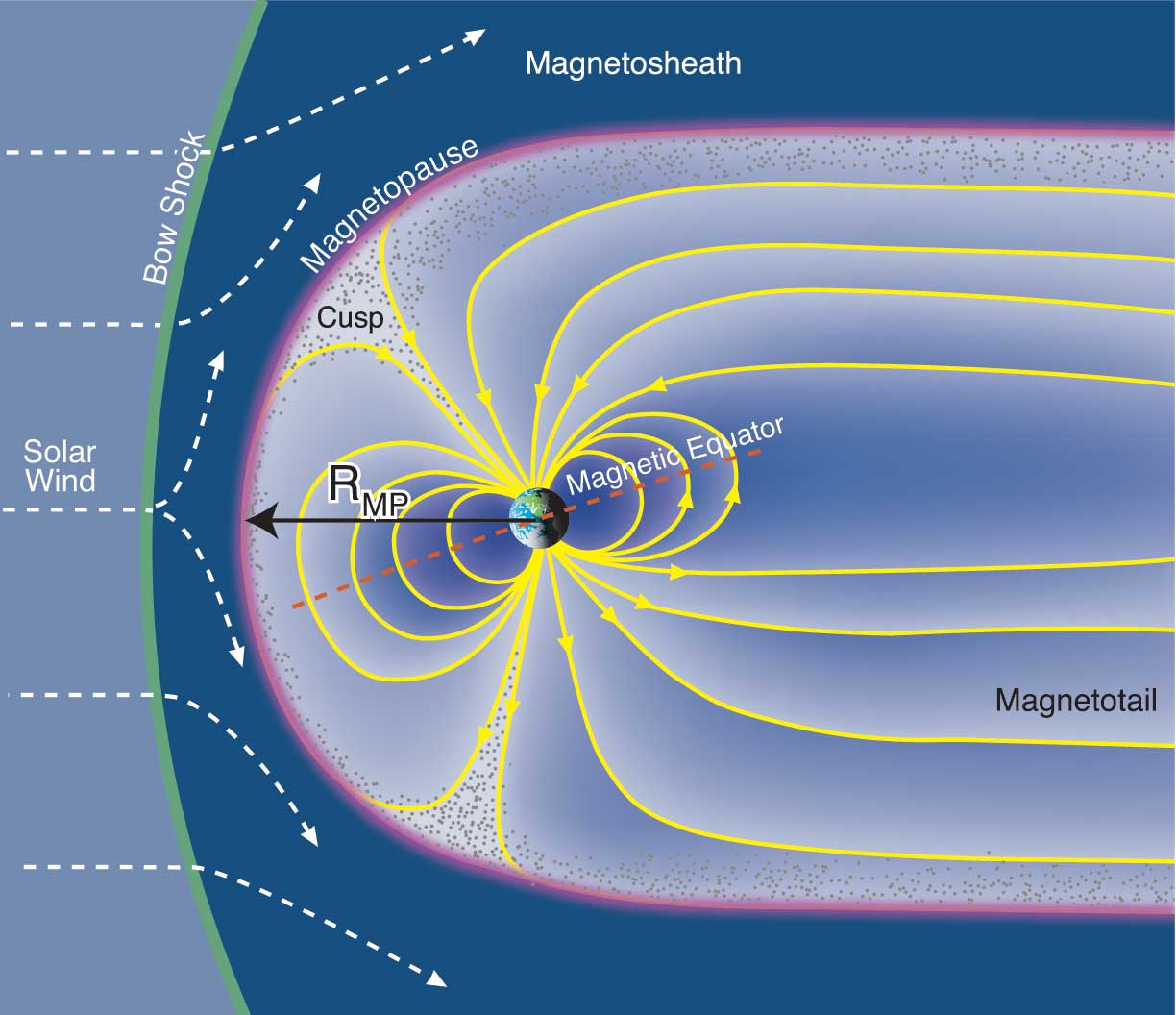
If these transients are (sometimes? often?) caused by cosmic ray events, might one expect to find fewer events in the dark side of the Earth's hemisphere, perhaps because the magnetosphere is elongated in that direction?We also find a highly significant (∼22σ) deficit of transients from Solano et al. 2022 within Earth's shadow, supporting the interpretation that sunlight reflection plays a key role in producing these events.
Last edited:

humanoid
New Member
might one expect to find fewer events in the dark side of the Earth's hemisphere, perhaps because the magnetosphere is elongated in that direction?
While that could explain it if the difference were small but very statistically significant, it's isn't small, I don't think it can explain this effect size.
In general, they're claiming a roughly 30% deficit of transients in the earth's shadow. Could the magnetotail do something like that? I wouldn't expect so.
Generally I'd like to see more discussion of the shadow deficit in this thread. It's the most interesting, most well evidenced claim being made.
Where is the evidence? I'd like to see the data and code that was used.Generally I'd like to see more discussion of the shadow deficit in this thread. It's the most interesting, most well evidenced claim being made.
boguesuser
Active Member
As far as I could find, they haven't released code, only their methodologies.Where is the evidence? I'd like to see the data and code that was used.
You might be able to convince them to share code if you email them however.
boguesuser
Active Member
As for the actual image data, I think this is where you get it.Where is the evidence? I'd like to see the data and code that was used.
I'm not entirely sure this is the data though and there doesn't seem to be a bulk download option. Again, you'd probably need to email someone to get access to the bulk data.
HoaxEye
Senior Member
I've downloaded all five candidate files using the DSS plate finder. You can download them from Google drive. They are all 60x60 arcmins. File name format: cn (candidate number) + palomar + date (dd-mm-yyyy) + epoch (first four digits) + 60x60 (arcmins) + nnnnnn (plate id). File size: 8,6 Mb each.As for the actual image data, I think this is where you get it.
I'm not entirely sure this is the data though and there doesn't seem to be a bulk download option. Again, you'd probably need to email someone to get access to the bulk data.
Candidates are listed in table 2 of this paper: https://www.researchgate.net/public...nsient_events_in_the_First_Palomar_Sky_Survey (Aligned, multiple-transient events in the First Palomar Sky Survey, July 2025, Villarroel et al.)
Candidate coordinates:
- RA: 21 02 52.28 DEC: +48 34 18.90
- RA: 03:05:42.48 DEC: +07:58:29.60
- RA: 03:08:27.13 DEC: +34:40:46.01
- RA: 21:24:39.71 DEC: +68:31:30.04
- RA: 19:16:45.76 DEC: +51:28:52.40
@Mick West as far as I know, they have not published detailed data or tools concerning the claims about transients within Earth's shadow. They have a new web page https://ghostsintheglass.com/, though.
I tried to find if POSS-I plates have been photographed during scanning and digitalisation. I couldn't find any information. That could be useful for initial visual inspection of the plates. Some other projects like APPLAUSE have done that, see https://www.plate-archive.org/objects/dr.4/plates/208_77001/ Edit: POSS photographs might be available (10 boxes), not sure about the format though: https://www.oac.cdlib.org/findaid/ark:/13030/kt5c603806#summary
I think the paper that was submitted for peer-review will not pass without major revision unless the POSS-I plates are checked like Hambly & Blair suggested. Even that might not be sufficient because the extraterrestrial UFO/UAP claim is extraordinary.
Last edited:
The methodology for determining whether or not the object is determined to be a defect or transient technosignature is given in this paper:
https://www.researchgate.net/public...nsient_events_in_the_First_Palomar_Sky_Survey
So it seems to be that transients are multiple, short, sharp points that are roughly in a line but less than 10x10arcmin apart (ie the maximum distance that a geosynchronous object would be expected to transit during the exposure time)
@HoaxEye said:
The Solar Reflection Hypothesis is also discussed therein:
So its essentially saying that (statistically) there's less defects/transients in the shadowed part of the sky - but if these were objects reflecting the Sun's light why would we expect any reflections in the shadow?
https://www.researchgate.net/public...nsient_events_in_the_First_Palomar_Sky_Survey
So it seems to be that transients are multiple, short, sharp points that are roughly in a line but less than 10x10arcmin apart (ie the maximum distance that a geosynchronous object would be expected to transit during the exposure time)
@HoaxEye said:
@Mick West as far as I know, they have not published detailed data or tools concerning the claims about transients within Earth's shadow.
The Solar Reflection Hypothesis is also discussed therein:
<snip>
So its essentially saying that (statistically) there's less defects/transients in the shadowed part of the sky - but if these were objects reflecting the Sun's light why would we expect any reflections in the shadow?
Last edited:
HoaxEye
Senior Member
This hypothesis has not been tested against modern datasets. Should similar sunlight-dependent transients be present?The methodology for determining whether or not the object is determined to be a defect or transient technosignature is given in this paper:
https://www.researchgate.net/public...nsient_events_in_the_First_Palomar_Sky_Survey
So it seems to be that transients are short, sharp points that are roughly in a line but less that 10x10arcmin (ie the distance that a geosynchrounous object would be expected to transit during the exposure time)
@HoaxEye said:
The Solar Reflection Hypothesis is also discussed therein:
<snip>
So its essentially saying that (statistically) there's less defects/transients in the shadowed part of the sky - but if these were objects reflecting the Sun's light why would we expect any reflections in the shadow?
In any case, I don't think they can dismiss potential plate defects with this hypothesis.
boguesuser
Active Member
As for the actual image data, I think this is where you get it.
I'm not entirely sure this is the data though and there doesn't seem to be a bulk download option. Again, you'd probably need to email someone to get access to the bulk data.
I sent an email to the archive hoster asking if a bulk download were possible.
Thank you for your question about DSS availability.
The agreement we made with the original observatories when it became possible to make the digitized survey plates publicly available, was to provide cutout access for the astronomical community for research and education. We are only allowed to bulk redistribute to other data centers who sign a formal agreement with the same conditions.
The way that the data is stored as tile-compressed data files requires a software layer to reconstruct the image for delivery.
Thanks for your understanding.
jarlrmai
Senior Member.
They want a formal Data Sharing Agreement (that stops us just sending the data to someone else)Hmmm... our community is dedicated to research and education, I suppose, but I guess we are not in the astronomical community. Unless one of y'all...?

JMartJr
Senior Member.
Is that normal? "Don't share the data" seems contrary to the way I was taught science should work, but admittedly that was a LONG time ago! Perhaps there is a "don't share the data widely until published" clause we were not taught back then!They want a formal Data Sharing Agreement (that stops us just sending the data to someone else)
Eburacum
Senior Member.
It seems my 'magnetotail' hypothesis is probably incorrect; it seems that cosmic rays are too energetic to be affected much by Earth's magnetosphere, whatever shape it is, and they are generally stopped by the Earth's atmosphere instead.
The magnetosphere, however, is effective against (the somewhat less energetic) solar protons, and one might expect to see a small effect of shadowing if any of these protons ever manage to get through to the photographic plates. Obviously solar protons would be less frequent within the Earth's shadow. However the Earth's atmosphere (our final line of defence) is even better at stopping protons than cosmic rays, so that probably isn't the answer either.
I suspect it is a sampling artifact, with fewer photos taken at certain times of day, or some other related effect. According to Hambly and Blair (mentioned in post #18 ) these 'transients' are qualitatively different to real stars and galaxies, so they are likely to be flaws in the photographic process rather than real objects.
https://arxiv.org/abs/2402.00497
The magnetosphere, however, is effective against (the somewhat less energetic) solar protons, and one might expect to see a small effect of shadowing if any of these protons ever manage to get through to the photographic plates. Obviously solar protons would be less frequent within the Earth's shadow. However the Earth's atmosphere (our final line of defence) is even better at stopping protons than cosmic rays, so that probably isn't the answer either.
I suspect it is a sampling artifact, with fewer photos taken at certain times of day, or some other related effect. According to Hambly and Blair (mentioned in post #18 ) these 'transients' are qualitatively different to real stars and galaxies, so they are likely to be flaws in the photographic process rather than real objects.
https://arxiv.org/abs/2402.00497
We find that a) the image profiles of the transients are significantly sharper than typical stellar images on the plates; b) that an ML decision–tree classifier badges the images as spurious with high probability; c) that similar examples of apparent transients are present on the copy plate of the adjacent field; and finally d) that there are many hundreds of similar images on both plates in the overlap region between the two fields. We suggest one likely mechanism for the origin of at least some of these apparent transients as being emulsion holes on the intermediate positive plates used during reproduction of the copy sets. We therefore caution that digitised all–sky survey catalogues derived from the POSSI glass copies are likely peppered with these isolated false detections and that great care must be exercised when interpreting the publicly available digitised images or when making samples of unpaired catalogue records derived from them.
Last edited:
I've asked. They said they are waiting for publicationAs far as I could find, they haven't released code, only their methodologies.
You might be able to convince them to share code if you email them however.
RobertBillyBob
Senior Member.
The point of the "less transients in the shadowed part of the sky" measure is to argue in favor of the "transients being real objects reflecting the sun rather than plate defects" hypothesis.if these were objects reflecting the Sun's light why would we expect any reflections in the shadow?
It's explained here :
If they had measured the same distribution of transient in and out of the shadow it would have disproved the reflection hypothesis. They argue that's not the case.
Similar threads


- Replies
- 134
- Views
- 22K

- Replies
- 42
- Views
- 13K
- Replies
- 10
- Views
- 2K


