

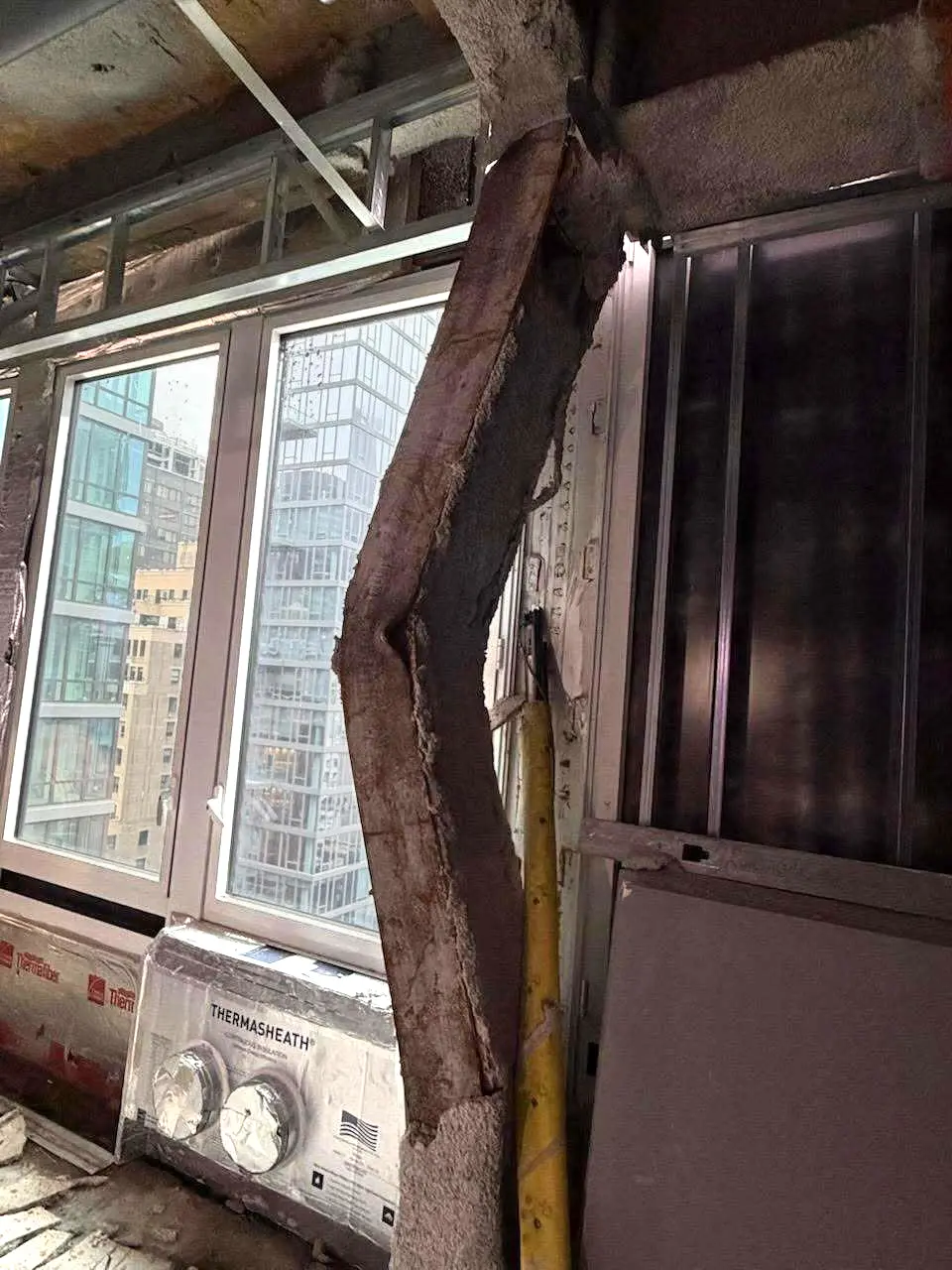
The old Pfizer building in New York is at risk of collapse after at least two structural columns buckled under the load of a building addition.
This is Metabunky for a couple of reasons, both grounded in 9/11 lore.
Firstly, if it does not collapse, or partially collapse, then it will be taken as a counterexample the WTC collapses, particulalry with statment like:
So that's going to be interpreted as a statement that the WTC building should not have collapsed, as they were also "steel-frame construction". Of course, the towers suffered significantly more damage from the plane impacts, and, as designed, do not collapse from that damage.
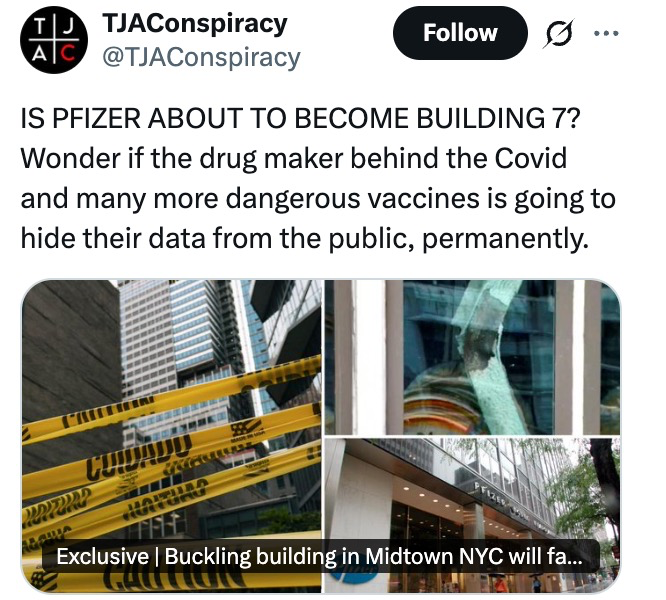
Secondly, but less likely to get traction, a few people are suggesting that the building is being deliberately destroyed to bury Pfizer's secrets, possibly regarding their COVID-19 vaccine. This reflects the belief that the destruction of WTC7 was to hide something. It's not at all clear how this would work.
The real reason is likely to be mundane, human error. But perhaps not without conspiracy, as there are already allegations that insufficient steel was used to support the new structure.
Looking at the top image, it seems like this is old steel. It's near the top floor of the old structure, so it seems weird that it would be expected to support a whole other building. Even if the load distribution calculations were correct, they assume specific values for the integrity of the old column. Those assumptions might not have been valid.
This is Metabunky for a couple of reasons, both grounded in 9/11 lore.
Firstly, if it does not collapse, or partially collapse, then it will be taken as a counterexample the WTC collapses, particulalry with statment like:
Article: The Fire Department shared photos from the building on social media that showed missing paneling on the building facade and a vertical beam bent like an elbow. Fire officials said there was no risk of a full building collapse because of its steel-frame construction
So that's going to be interpreted as a statement that the WTC building should not have collapsed, as they were also "steel-frame construction". Of course, the towers suffered significantly more damage from the plane impacts, and, as designed, do not collapse from that damage.
Secondly, but less likely to get traction, a few people are suggesting that the building is being deliberately destroyed to bury Pfizer's secrets, possibly regarding their COVID-19 vaccine. This reflects the belief that the destruction of WTC7 was to hide something. It's not at all clear how this would work.
The real reason is likely to be mundane, human error. But perhaps not without conspiracy, as there are already allegations that insufficient steel was used to support the new structure.
Article: "The beams started bending," said Cliff Johnsen, the business agent for the Local 638 steamfitters union, which had workers on site. Several floors were sagging.
The building seemed to be crumbling fast, he said.
[Johnsen] said the incident was highly unusual, and he claimed that the builders had not used enough steel to support the weight of the additional floors. His claim could not be verified.
"That's not something you see," he said, noting the union's role in building Hudson Yards, the World Trade Center, Yankee Stadium, Madison Square Garden and Barclays Center.
Abi Aghayere, a professor of structural engineering at Drexel University, likened office-to-residential renovations to "structural gymnastics." During those intermediate stages, a lot of work would be happening in the building that could give rise to potential problems.
For example, beams that support columns that bear vertical loads might be moved. Those types of problems could emerge because of a faulty design or because of an error by the construction workers.
Looking at the top image, it seems like this is old steel. It's near the top floor of the old structure, so it seems weird that it would be expected to support a whole other building. Even if the load distribution calculations were correct, they assume specific values for the integrity of the old column. Those assumptions might not have been valid.


