Grieves
Senior Member
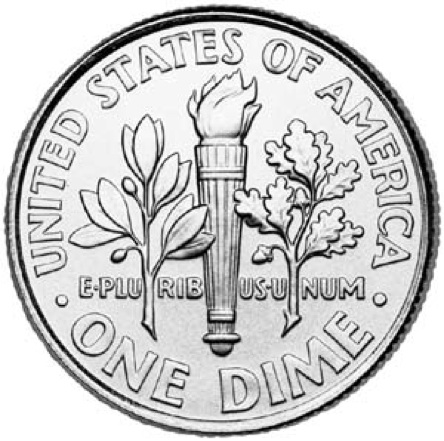
Nice looking coin. How many times in a day do those trade hands?Actually yes the Statue of Liberty is featured on the reverse side of the Presidential $1 coin.

Nice looking coin. How many times in a day do those trade hands?Actually yes the Statue of Liberty is featured on the reverse side of the Presidential $1 coin.

"but is the Statue of Liberty, Mount Rushmore, or the Golden Gate Bridge featured prominently on your currency?"
I'm not American, but I'm pretty sure the dollar bill was before the Statue of Liberty (which already had been built (albeit smaller in France), and before Mt. Rushmore, and obviously before the GG Bridge, or the Empire State Building).
Why do we see pyramids as a 'Pharaohistic' ideal when pyramids were built in South America, Central America, and Asia? I'm guessing that any kid messing around with sand will discover domes work best, and with wood or stone that pyramids work really well. We shouldn't be surprised that people figured out what worked a long time ago. The same peoples, across the planet, managed to read the movements of the planets, to predict the moon's phases, and the sun.
They had little else to do at night.
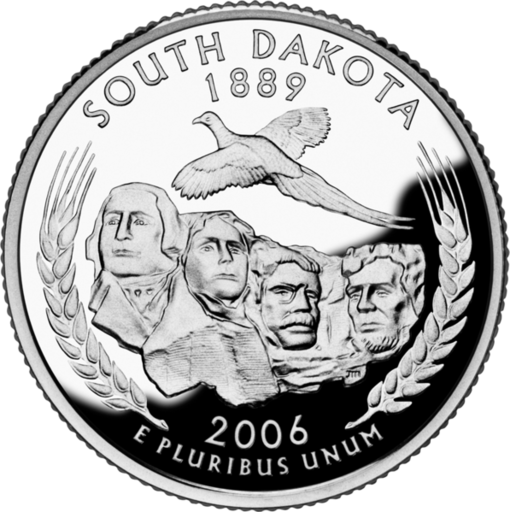

The one currently on your dollar bill unquestionably is.
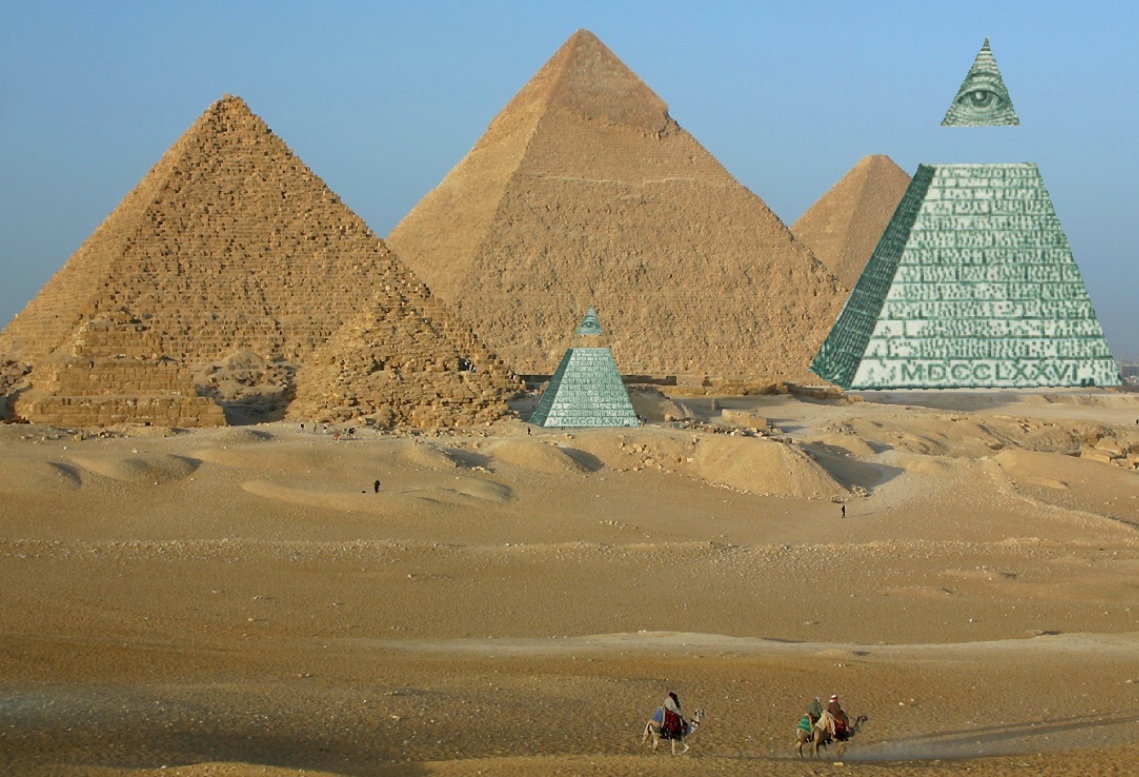

The original design did look a lot more like Chichen Itza:
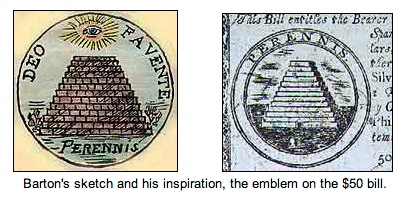
Really I think that strength and longevity are perfectly reasonable symbolic meanings that explain why it is there.

Perhaps. Maybe I am reading too much into the western 'pyramid fetish'. The symbolic depictions of pyramids within the culture of American power-structures, though undeniable, maybe is just an idle reference to cool old buildings, with no ideological reference or connection to the power-structures which saw them constructed. Maybe dismissing the generally hellish life-style that almost certainly accompanied their creation and simply appreciating what spectacular structures they are isn't the disconnect I perceive it as.
Maybe associations with magic and mystery aren't fabricated but natural, and the recent influx of occult and religious imagery in pop-culture just a widespread effort to be edgy, and not a coordinated attempt to drive the religious curiosity of the young away from traditional faiths and toward consumer-culture.
I'm sorry, but being granted the 'honor' of a pit next to your masters tomb, and the off chance, based on old beef-bones, that you occasionally got a bit of prime-rib (for all we know that's what the whip-wielders were eating, not the guys getting whipped) doesn't exactly equate to ideal working conditions in my mind. I've seen a bit of the 'evidence' that the laborers on the Pyramids actually had it good, one of which was an ancient 'attendance table'. "How," enthused the man presenting the theory in question, "could these have been slaves when its noted here when they got sick, and whether or not they received treatment?" I'm pretty sure prison-camps take attendance, treat their detainees, and feed them more-or-less decently as well. Look at where the rights of laborers are at today, and how inadequate they can often be. Do you imagine they were better thousands of years ago? In the middle of a vast and scalding desert? Pushing and hauling giant rocks across vast distances and forming them into building blocks with bronze-age tools, then stacking those massive blocks into a huge structure with a relatively small chamber in which often one guy and perhaps his family were to be buried? I'm sorry, but anyone who believes the pyramids were constructed without the blood, pain and torment of hundreds, if not thousands over many years is absolutely kidding themselves.
Nice looking coin. How many times in a day do those trade hands?

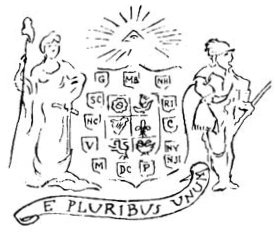
At one point, a pyramid (or incomplete pyramid) wasn't even supposed to be there:
View attachment 2111
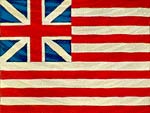
Here is the Grand Union Flag which was the unofficial flag on 4th July 1776 remained the unofficial national flag and ensign of the navy until 1777External Quote:The 1782 resolution adopting the seal blazons the image on the reverse as "A pyramid unfinished. In the zenith an eye in a triangle, surrounded by a glory, proper." The pyramid is conventionally shown as consisting of 13 layers to refer to the 13 original states. The adopting resolution provides that it is inscribed on its base with the date MDCCLXXVI (1776) in Roman numerals. Where the top of the pyramid should be, the Eye of Providence watches over it. Two mottos appear: Annuit cœptis signifies that Providence has "approved of (our) undertakings."[3] Novus ordo seclorum, freely taken from Virgil,[4] is Latin for "a new order of the ages."[5] The reverse has never been cut (as a seal) but appears, for example, on the back of the one-dollar bill.

Do you have any suggestions for why the reverse of the seal has never been cut?
External Quote:The 1782 resolution adopting the seal blazons the image on the reverse as "A pyramid unfinished. In the zenith an eye in a triangle, surrounded by a glory, proper." The pyramid is conventionally shown as consisting of 13 layers to refer to the 13 original states. The adopting resolution provides that it is inscribed on its base with the date MDCCLXXVI (1776) in Roman numerals. Where the top of the pyramid should be, the Eye of Providence watches over it. Two mottos appear: Annuit cœptis signifies that Providence has "approved of (our) undertakings."[3] Novus ordo seclorum, freely taken from Virgil,[4] is Latin for "a new order of the ages."[5] The reverse has never been cut (as a seal) but appears, for example, on the back of the one-dollar bill.
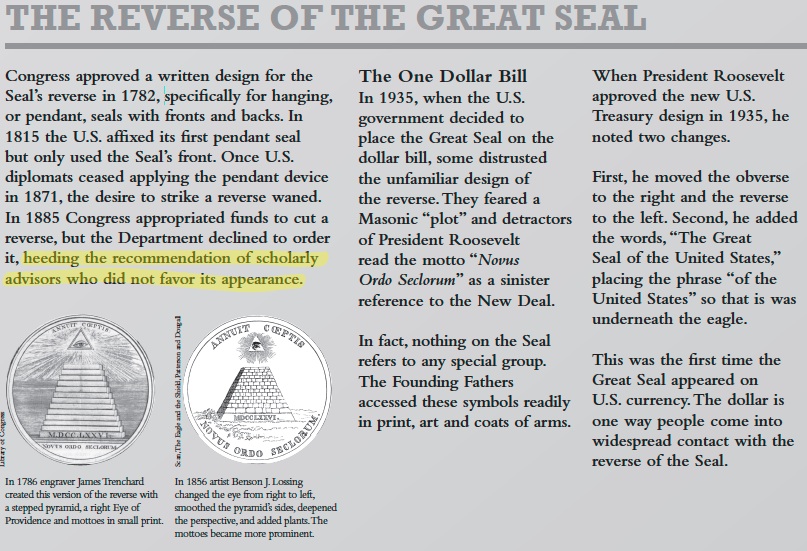
I'd imagine its masonic overtones had always been a problem, given the history of the anti-mason movement in the US. See:External Quote:Congress approved a written design for the Seal's reverse in 1782, specifically for hanging, or pendant, seals with fronts and backs. In 1815 the U.S. affixed its first pendant seal but only used the Seal's front. Once U.S. diplomats ceased applying the pendant device in 1871, the desire to strike a reverse waned. In 1885 Congress appropriated funds to cut a reverse, but the Department declined to order it, heeding the recommendation of scholarly advisors who did not favor its appearance.
It seems that you are dismissing the studies of the experts. Why do you HAVE to believe that the pyramids were built by slaves or near slaves?
They were being fed, and working in agriculture was no bed of roses either. I keep wondering if the pyramids doubled as 'work projects' to give folks a job. I would have to do more research on Egyptian history.
And today we build a different type of monument, the SPORTS stadium and then we blow it up, before it is even paid for.
Every age has had it's monuments, pyramids, temples, cathedrals, castles and on and on
I'd imagine its masonic overtones had always been a problem, given the history of the anti-mason movement in the US. See:
http://greatseal.com/dollar/hawfdr.html
and
http://en.wikipedia.org/wiki/Anti-Masonic_Party
The anti-mason and anti-masonic parties were active in 1885
External Quote:America is not complete and will not be complete and can not be complete until Mexico is part of America as she was long ago.
And when Mexico is once again part of the United States then will the capstone have been set on the pyramid and the reverse side of the United States seal will be cut.
Thus you will see that the soul science primer with its drawings is but the beginning of the article concerning the Seal of the United States. While the article on body, mind, spirt, and soul is the final thereof. May it not be long until the holy pyramid shall be completed and may it be completed without the shedding of blood.
Hungry bored folks without jobs make trouble for leaders. The amount of farm land in Egypt is very limited. If you have been working in that hot sun are you just going to give your food to someone that did nothing to earn it?
Wars have always been a good way of putting a lot of young men to 'work', but so are building projects.
They did do hard physical work, but that was true of most of the populace in those days.
War still puts a lot of young men to work. Gets them off benefits, stops them scrounging off the state, gives them a sense of purpose.
I think you are making a good argument C.

Or rather, pioneers to permaculturalize the landscape, planting trees up to the tree-line, hydrological management, the restoration of natural ecological systems, that sort of thing.Toxic waste cleanup puts people to work too. Maybe we should blow up a few power stations to provide more purpose and jobs for the young men.

War still puts a lot of young men to work. Gets them off benefits, stops them scrounging off the state, gives them a sense of purpose.
I think you are making a good argument C.

Hungry bored folks without jobs make trouble for leaders. The amount of farm land in Egypt is very limited. If you have been working in that hot sun are you just going to give your food to someone that did nothing to earn it?
Wars have always been a good way of putting a lot of young men to 'work', but so are building projects.
They did do hard physical work, but that was true of most of the populace in those days.
The landscape of Egypt was a lot different 6,000 to 4,000 years ago. It would have had a lot more arable land, and the Sahara's influence would have been more distant. I'm not disagreeing with your original point, that the pyramids were built by workers rather than slaves. But keep in mind that the north-east of Africa back then didn't look as it does now.
They get payed by the state, and cost more than welfare to train and outfit.
External Quote:Did the Jews Build the Pyramids?
Question: On Passover when we read that the Egyptians forced us to do back-breaking work isn't there the implication that the work was building the Egyptian pyramids? Not simply Pithom and Ramses? It certainly was implied when we studied this in school. Is it written anywhere specifically that we built them? At least some of them? Naturally I presume that other such structures were built, and that we didn't build them all. One might even suppose that some remaining today were built much later, and that those of which WE speak are now long gone. After all there are also pyramids in Mexico. However, don't we still have a claim on at least some of those spoken of, or at least referred to, or implied in the Torah?
Answer: First of all, I'm not sure that any claim we might have to the pyramids should be a source of pride: for one thing, it would have been as slave laborers and for another, the pyramids themselves seem to have been closely identified with idolatrous rites – something our exodus was meant to eliminate.
But in any case, to my knowledge, there doesn't seem to be any evidence connecting our slave activities to the pyramids. The Torah describes the building projects as "Arei Miskanos l'Paroh" (Exodus 1: 11) – which would either translate as storage cities or treasury cities for the king – a description that doesn't easily lend itself to the design and purpose of the pyramids.
So it would seem that we'll just have to resign ourselves to the existence of at least one major architectural project that had no Jewish input!
With my best regards,
Rabbi Boruch Clinton
http://skeptoid.com/episodes/4191External Quote:I've heard some Christians say the Bible is a literal historical document, thus Jewish slaves built the pyramids (the Bible actually doesn't mention pyramids at all, this came from Herodotus. See below. - BD);....
If Jews were not in Egypt at the time of the pyramids, what about Israelites or Hebrews? Israel itself did not exist until approximately 1100 BCE when various Semitic tribes joined in Canaan to form a single independent kingdom, at least 600 years after the completion of the last of Egypt's large pyramids. Thus it is not possible for any Israelites to have been in Egypt at the time, either slave or free; as there was not yet any such thing as an Israelite. It was about this same time in history that the earliest evidence of the Hebrew language appeared: The Gezer Calendar, inscribed in limestone, and discovered in 1908. And so the history of Israel is very closely tied to that of Hebrews, and for the past 3,000 years, they've been essentially one culture.
But if neither Jews nor Israelites nor Hebrews were in Egypt until so many centuries after the pyramids were built, how could such a gross historical error become so deeply ingrained in popular knowledge? The story of Jewish slaves building the pyramids originated with Herodotus of Greece in about 450 BCE. He's often called the "Father of History" as he was among the first historians to take the business seriously and thoroughly document his work. Herodotus reported in his Book II of The Histories that the pyramids were built in 30 years by 100,000 Jewish slaves [In point of fact, Herodotus only says 100,000 workers. He does not mention either Jews or slaves. So even this popular belief seems to be in error, and the origin of the idea of Jews building the pyramids remains a mystery - BD]. Unfortunately, in his time, the line between historical fact and historical fiction was a blurry one. The value of the study of history was not so much to preserve history, as it was to furnish material for great tales; and a result, Herodotus was also called the "Father of Lies" and other Greek historians of the period also grouped under the term "liars". Many of Herodotus' writings are considered to be fanciful by modern scholars. Coincidentally, the text of the Book of Exodus was finalized at just about exactly the same time as Herodotus wrote The Histories. Obviously, the same information about what had been going on in Egypt 2,000 years before was available to both authors.

It is strange though that it is only since around 2010 that this idea of there not being slaves building the pyramids has come about.
Cecil B DeMille and the Bible obviously have it all wrong. A few skeletons that show how people ate and an academic with airtime is all it takes to totally change history. Guess the Israelite s had a better offer out in the desert.
Exactly who actually labored on the Pyramids and why has been an open discussion for a longtime - and its only logical that continued study and exacvation would yield more info and new interpretation-External Quote:There are writings on the pyramid in Egyptian characters indicating how much was spent on radishes and onions and garlic for the workmen; and I am sure that, when he read me the writing, the interpreter said that sixteen hundred talents of silver had been paid. Now if that is so, how much must have been spent on the iron with which they worked, and the workmen's food and clothing
Who do you think can paint a more accurate picture- Cecil B DeMille/Hollywood...or actual scientists??External Quote:There's some evidence to suggest that people were rotated in and out of the raw labor force. So you could be a young man in a village, say, in Middle Egypt, and you had never seen more than a few hundred people in your village, maybe at market day or something. And the King's men come, and it may not have been entirely coercion, but it seems that everybody owed a labor tax. We don't know if it was entirely coercive, or if, in fact, part of it was a natural community donation as in the Incan Empire, for example, to building projects where they had a great party and so on. But, anyway, they started keeping track of people and their time on the royal labor project.....
....is it possible that we could find evidence that would bring Egypt into line with what we know of other traditional ancient societies? Like when the Inca build a bridge, and every household winds its twine together, and the twine of all the households in the village are wound into the villages' contribution to the rope. And the rope on the great day of bridge-building is wound into a great cable, and all the villages' cables are wound into this virtual bridge. Or in Mesopotamia we know that they built great mud-brick city walls by the clans turning out and giving their contribution, a kind of organic, natural community involvement in the building project. I wonder if that wasn't the case with the Great Pyramid of Khufu. You know, it's almost like an Amish barnraising—but, of course, the Great Pyramid of Khufu is one hell of a barn.
Yet another proof of man made climate change?
It is strange though that it is only since around 2010 that this idea of there not being slaves building the pyramids has come about.
Cecil B DeMille and the Bible obviously have it all wrong. A few skeletons that show how people ate and an academic with airtime is all it takes to totally change history. Guess the Israelite s had a better offer out in the desert.
I'd wager DeMille had little actual knowledge of Egypt, and the bible makes absolutely no mention of slaves building the pyramids. As it happens, the whole Exodus bit has been challenged by Israeli historians for quite some time. There's no proof that the Jews were ever in Egypt at all.
It's also not unusual for recent discoveries to change our perception of the past, or our understanding of the world. There's a word for it, in fact: "science".
Is there any proof that Moses existed?
External Quote:The existence of Moses as well as the veracity of the Exodus story is disputed amongst archaeologists and Egyptologists, with experts in the field of biblical criticism citing logical inconsistencies, new archaeological evidence, historical evidence, and related origin myths in Canaanite culture.[3][4][5] Other historians maintain that the biographical details, and Egyptian background, attributed to Moses imply the existence of a historical political and religious leader who was involved in the consolidation of the Hebrew tribes in Canaantowards the end of the Bronze Age.
You mean evidence? Not really, why?
I am wondering where the impetus for these apparent changes come from. It is not so much that they even co exist, it is as if one virtually obliterates the other, like a science/history fashion. Obviously there are exceptions but I am speaking 'in general terms'.External Quote:researchers prove the Red Sea really could have parted... How science backs the Bible's best stories
Yes I meant evidence, thanks. I am feeling that a lot of history is being re written lately. All this 'slaves didn't build the pyramids' is only a couple of years old. Up until then there was 'evidence' to the contrary and 'evidence' that this Bible event happened and that Bible event happened.
i.e http://www.dailymail.co.uk/sciencet...d--How-science-backs-Bibles-best-stories.html
External Quote:researchers prove the Red Sea really could have parted... How science backs the Bible's best stories
Is there any proof that Moses existed?
[/LEFT]
That's not new at all. People have been talking about what the underlying events for myths were for many years. Particularly the flood myths. But also all the other stuff in the bible.
Y All this 'slaves didn't build the pyramids' is only a couple of years old.
It was assumed that they were built by slaves...and that assumption was propagated into public myth through your buddy CBD and others...External Quote:Redding's faunal evidence dealt a serious blow to the Hollywood version of pyramid building, with Charlton Heston as Moses intoning, "Pharaoh, let my people go!" There were slaves in Egypt, says Lehner, but the discovery that pyramid workers were fed like royalty buttresses other evidence that they were not slaves at all, at least in the modern sense of the word
Well according to my source, Steven Spielberg, the proof that Moses existed is contained in the Ark of the Covenant which has been placed in a wooden crate somewhere in a government warehouse. Just like the Government, hiding all the evidence from us.

That's my point, it was all about this or that underpinning Bible stories, now it seems to have gone the other way... like trending.
why do you keep repeating this when its not true?
I showed you that they were calling into question the "slave" theory as far back as 1997...
This in-depth article is from a decade ago:
http://harvardmagazine.com/2003/07/who-built-the-pyramids-html?page=all
It was assumed that they were built by slaves...and that assumption was propagated into public myth through your buddy CBD and others...External Quote:Redding's faunal evidence dealt a serious blow to the Hollywood version of pyramid building, with Charlton Heston as Moses intoning, "Pharaoh, let my people go!" There were slaves in Egypt, says Lehner, but the discovery that pyramid workers were fed like royalty buttresses other evidence that they were not slaves at all, at least in the modern sense of the word
Isn't it logical that as new information becomes available that "history" will be updated?
I think it likely they were slaves.
Based on what?
Your extensive knowledge of ancient civilization's society and labor divisions?
or perhaps just your ancient Egyptian archaeology field work?

That's my point, it was all about this or that underpinning Bible stories, now it seems to have gone the other way... like trending.
Sorry, I didn't see your post.
CBD was obviously taking from the Bible, which for centuries has been 'the absolute truth', and even recently carries much credibility with anyone of 'faith'.
It is therefore unsurprising that 'where science backs it up', it will be touted.
The Bible is historically very accurate on many things.
There appears recently to be a trend, (even 1990's is recent), to undermine everything about the Bible, even on very flimsy evidence. It is the 'will to do that' that I am questioning.
There appears recently to be a trend, (even 1990's is recent), to undermine everything about the Bible, even on very flimsy evidence. It is the 'will to do that' that I am questioning.
External Quote:There had always been a critical tradition dating back to at least St Augustine of Hippo (354–430), with interpretations "plainly at variance with what are commonly perceived in evangelicalism as traditional views of Genesis."[17] The Jewish tradition has also maintained a critical thread in its approach to biblical primeval history.
[...]Galileo [1564-1642] is the name most closely associated with the first scientific assault on biblical authority, but the heliocentric universe was sufficiently peripheral to biblical ontology to be eventually accommodated.
[...]
It was in fact the birth of geology, marked by the publication ofJames Hutton's Theory of the Earth in 1788, which set in train the intellectual revolution that would dethrone Genesis as the ultimate authority on primeval earth and prehistory.