
To get away from all the recent UAP circus, I've been digging into some old ghost photographs. One of the most famous is undoubtedly the Newby Church Ghost.
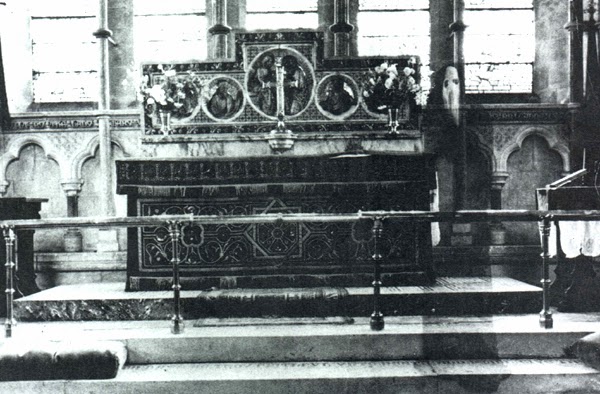
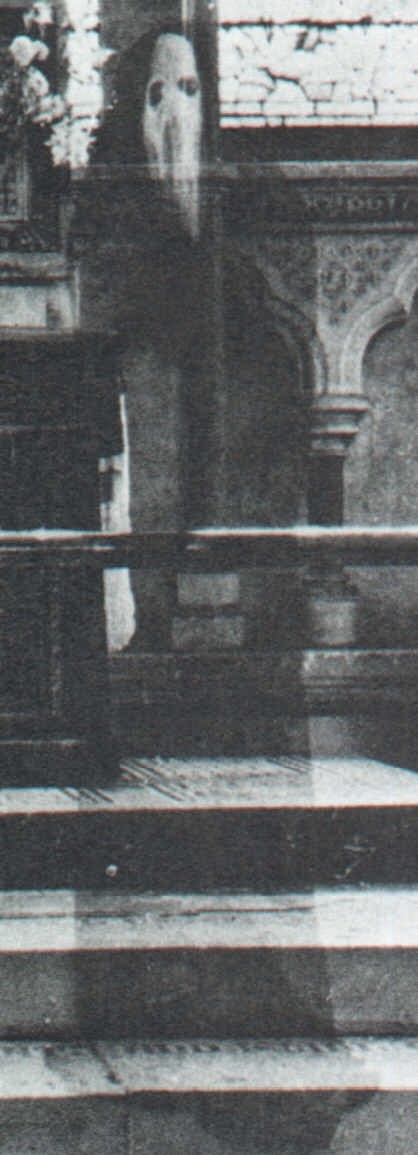 As far as I can tell, the first time the photograph appeared in print was in The Sunday People on August 13, 1967. In that article, the photographer, Reverend Kenneth F. Lord, is interviewed. He clearly states that the photograph was taken "seven years ago," which would place it around 1960. Other dates are sometimes given online, but I haven't found any primary source supporting them. From a skeptical perspective, all we can really say is that the photo was taken sometime in or before 1967.
Interestingly, Lord presents himself as a skeptic. He says in the article:
Lord reportedly used a Rolleicord IV. If that's correct, it's worth noting that the camera appears to have had a built-in multiple-exposure function, despite the article's claim that a double exposure was impossible because of a preventive mechanism. If that's true, one of the main technical arguments for the photograph's authenticity becomes much weaker.
I obviously don't believe the image shows a genuine ghost. Personally, I think the most likely explanation is a carefully executed double exposure. What do you think?
Interestingly, Lord presents himself as a skeptic. He says in the article:
The article also quotes "technical experts," who reportedly concluded that the image could not be the result of a double exposure "because of a preventive device on Mr. Lord's camera." Instead, the article suggests a possible long-exposure technique:External Quote:I'm not interested in spiritualism or ghost-hunting and am quite frankly skeptical of the picture.
Personally, though, I think a simple double exposure is the more likely explanation. My guess is that Lord used a tripod, made the first exposure of the empty church, then placed a clothes stand (or something similar) draped with a black cloak and a white hood in front of the camera before making the second exposure. That would produce a convincing "ghost" without requiring a second person.External Quote:Shut down the camera, say a Rolleicord, to a very small aperture (f/16). Place a cloaked figure in position and expose the film for five seconds—then cover the lens. Remove the figure and carry on with exposure for another 15 seconds. The result should be a 'ghost.'
Lord reportedly used a Rolleicord IV. If that's correct, it's worth noting that the camera appears to have had a built-in multiple-exposure function, despite the article's claim that a double exposure was impossible because of a preventive mechanism. If that's true, one of the main technical arguments for the photograph's authenticity becomes much weaker.
I obviously don't believe the image shows a genuine ghost. Personally, I think the most likely explanation is a carefully executed double exposure. What do you think?


