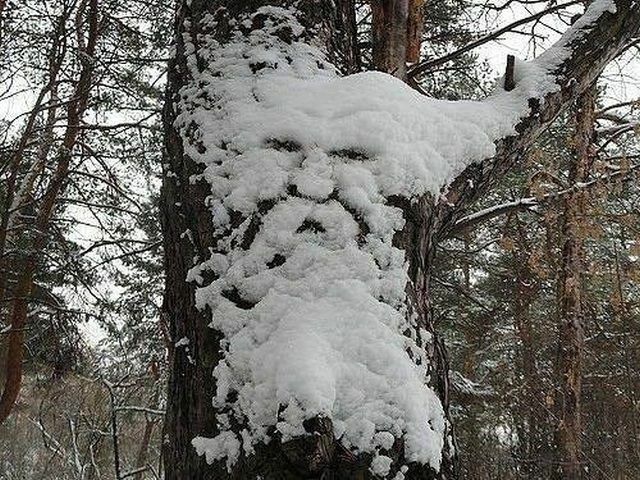
Claim: Pareidolia is bias

i could be wrong of course, but "public sector" usually means citizens.
yes. the military are not considered "public sector workers".
Article:
From librarians to paramedics, to your local headteacher, around 5.4 million people work in the public sector in the UK1.

The latest Office for National Statistics figures, covering December 2018, showed around one in six employed people worked in services or enterprises controlled by government,

people who are not employed by the government work in the private sector.

personally i dont think every jew captured was turned in by their neighbors, i assume the "ss"? pulled most people off the streets themselves.
It may surprise you to learn that the jews did not (and do not) live on the streets. They had homes, and the Gestapo went there to fetch them. A small minority managed to evade that and hide.
 
We won the war because we were able to outproduce Germany and Hitler kept making crazy strategic blunders, and not listening to his generals.
Hitler's main mistakes were conducting war against too many countries simultaneously (eastern front, western front, Afrika), and only being friends with other totalitarians.
This is inevitable; because totalitarians suppress criticism, they cannot remain grounded in reality.

It's interesting that, in the tweet we're discussing, much of Mao and Stalin's death toll was via letting people starve—not exactly murder, more like wilful negligence.

It's hard to watch that some peoples have not learned these lessons from history. (And I'm sure misrepresenting history does not help.)
 
Last edited:
Hitler's main mistakes were conducting war against too many countries simultaneously (eastern front, western front, Afrika), and only being friends with other totalitarians.
This is inevitable; because totalitarians suppress criticism, they cannot remain grounded in reality.

It's interesting that, in the tweet we're discussing, much of Mao and Stalin's death toll was via letting people starve—not exactly murder, more like wilful negligence.

It's hard to watch that some peoples have not learned these lessons from history. (And I'm sure misrepresenting history does not help.)
Terrifying your generals was another big one. The reports he received toward the end of the war were not accurate.
 
Ooh, just reading Strieber and Kripal's book The Super Natural (2016) and came across this example:
On the very morning
that I started writing about little blue men, Linda Moulton Howe, who is a long
time observer and professional reporter in the field of the paranormal, sent me a
group of three trail camera photographs of what appeared to be a classic garden
gnome, complete with red vest and tall, pointed hat. At first, of course, I
assumed that this was exactly what it was—a garden gnome suspended from a
string.
Work with a photography expert soon told a different story. First, the figure
was blurred and thus moving fast. It wasn't swinging in an arc but walking on
two spindly legs. It was forty-four inches tall, a typical height for all of these
small beings. It had stopped moving forward the moment the camera took its
first picture, then beat a retreat at a high rate of speed. The camera, activated by
movement and heat, takes a photo every second until the movement stops. There
was no evidence that the photo was hoaxed, or that the image on it was anything
known.
gnome_resized.gif

Source:
https://www.unknowncountry.com/out-there/the-pennsylvania-gnome-animated/
 
Last edited:
Last edited:
I'm fascinated by pareidolia as an explanation for ghosts. I myself have had some truly bizarre instances of 'figures' being generated. I recall, for example, sleeping on the sofa one day and when I awoke ( I was still lying on my side ) I could distinctly see the figure of a crouched person on the other side of the room. The figure rapidly melted away over a few seconds...yet at its best it looked truly human. The bizarre aspect is that on being fully awake there was incredibly little in the scene that looked like a person. My first thought was ' how on earth did my mind generate a person out of that ?'

That leads me to believe that in certain states, like half asleep, the tiniest little thing can induce pareidolia....and that most of the pareidolia that we recognise as obvious is from full waking state and overwhelms the fact that under certain mindstates the tiniest little thing can be a trigger.
 
I'm fascinated by pareidolia as an explanation for ghosts. I myself have had some truly bizarre instances of 'figures' being generated. I recall, for example, sleeping on the sofa one day and when I awoke ( I was still lying on my side ) I could distinctly see the figure of a crouched person on the other side of the room. The figure rapidly melted away over a few seconds...yet at its best it looked truly human. The bizarre aspect is that on being fully awake there was incredibly little in the scene that looked like a person. My first thought was ' how on earth did my mind generate a person out of that ?'

That leads me to believe that in certain states, like half asleep, the tiniest little thing can induce pareidolia....and that most of the pareidolia that we recognise as obvious is from full waking state and overwhelms the fact that under certain mindstates the tiniest little thing can be a trigger.
I have had several episodes of sleep paralysis through out my life. I've had it happened like maybe 20 times. I've never had visuals to go along with it, just a feeling of being unable to move or a weight on my chest holding me down and a feeling of panic. The first few times it happened when I was younger it was pretty scary but after learning what it was it's not as scary now. A few times I have had visual hallucinations similar to what you describe, where right after I woke up I saw a fuzzy black "thing" up in corner of the room where the walls and ceiling meet, that sort of melted away as I woke up more fully. My mind interpreted it as a giant spider or a person crouched with their knees tucked in. I can imagine how a visual hallucination like that during a sleep paralysis event could be even more scary and be interpreted as some kind of alien abduction event.
 
One for aircraft enthusiasts.

External Quote:
You wake up in the middle of the night screaming; your body is covered in a cold sweat, and you are shaking as if afflicted by the ague. Nine out of ten times you have just had a nightmare in which, through some indescribable manner, you have barely escaped with your life from some giant, prehistoric monster emitting flames and smoke from a gaping slit of a mouth.
A glance at this page will recall all these horrible nightmares... ...In reality, these pictures are nose shots of giant skyliners.
"Ah, thank you Miss Brown. Your writing is certainly evocative. Thank you for your interest in Pan American Airways' advertising department. We'll let you know if your application has been successful within the week."
 
I'm fascinated by pareidolia as an explanation for ghosts. I myself have had some truly bizarre instances of 'figures' being generated. I recall, for example, sleeping on the sofa one day and when I awoke ( I was still lying on my side ) I could distinctly see the figure of a crouched person on the other side of the room. The figure rapidly melted away over a few seconds...yet at its best it looked truly human. The bizarre aspect is that on being fully awake there was incredibly little in the scene that looked like a person. My first thought was ' how on earth did my mind generate a person out of that ?'

That leads me to believe that in certain states, like half asleep, the tiniest little thing can induce pareidolia....and that most of the pareidolia that we recognise as obvious is from full waking state and overwhelms the fact that under certain mindstates the tiniest little thing can be a trigger.
A similar thing happens to me all the time. However, the illusion is always static, so when I hear reports of animated (humanoid) figures I'm intrigued to know how that could be.
 
I'm fascinated by pareidolia as an explanation for ghosts.
I'm inclined to think that after-images are more explanatory, although pareidolia may take over in the interpretation. After-images allow the same thing to be seen by different people at different times in the same place, thus allowing legends to grow up about such things as "the red gnome" in the room with the green chair, or "the lady in the blue gown" in the room with the maroon curtains. They also allow for movement; if there is something interesting to focus on such as a painting to one side, then the after-image appears to glide away as one's eyes try to focus on it.
 
Back
Top