
ExclusionZon
New Member
So everyone probably remembers the clip that went around last September - the NARA upload with the crater shot and the dark shape people were calling an alien body. Mark Lee called it pareidolia in the Daily Mail at the time, which may well be right, but as far as I could tell nobody had actually analyzed the original file. Most discussion seemed to be based on screenshots that had already been compressed and reposted countless times.
That got me curious, so I pulled the actual NARA file (341.ROSWELL.41) instead of working from reposted clips. I ended up writing the full analysis here: https://www.theexclusionzone.com/roswell-341-viral-crater-video-forensic-analysis/
A few highlights, in case anyone wants to poke holes in it:
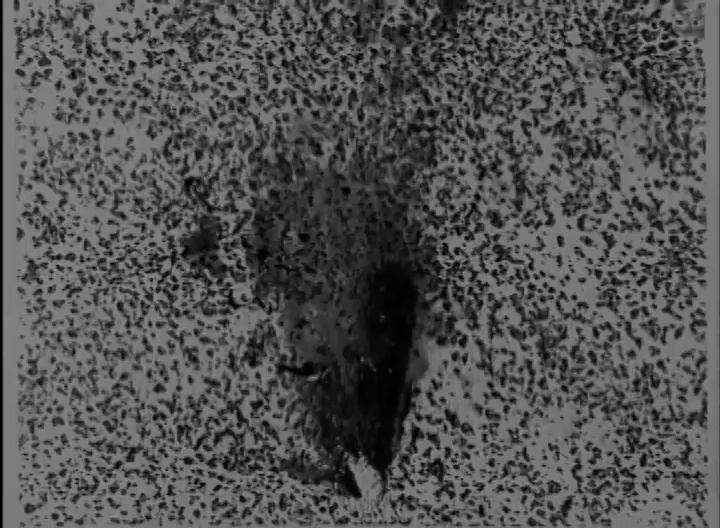
If anyone happens to recognize the original photograph (I've attached the cleanest frame I could extract), that would probably answer the last open question.
Happy to share raw frames, crops, ELA outputs or any of the intermediate results if anyone wants to dig into it themselves.
That got me curious, so I pulled the actual NARA file (341.ROSWELL.41) instead of working from reposted clips. I ended up writing the full analysis here: https://www.theexclusionzone.com/roswell-341-viral-crater-video-forensic-analysis/
A few highlights, in case anyone wants to poke holes in it:
- The file itself is a 2023 H.264 re-encode. NARA's own title card identifies the source as a Digital Betacam copy, so whatever we're looking at has already gone through at least film → Betacam → digital before reaching us. That's worth keeping in mind for the rest of the analysis.
- The first ~14 minutes are just 90s studio B-roll: pages from the Air Force Roswell report, classic Roswell books laid out on a table, the July 8, 1947 Roswell Daily Record front page, etc. The last 7 minutes are genuine archival balloon footage—instrument gondolas, crane rigs, suspension tests and launches. It's basically the same narrative presented in the 1997 Case Closed report (Project Mogul, high-altitude balloons and dummy-drop explanations).
- The crater sequence at the end is what caught my attention. I registered the first and last frame against each other and found about a 2% scale change with a small vertical drift, which is exactly what you'd expect from a camera panning across a flat printed image on a copy stand—not from someone filming an actual location. A few seconds later you can actually see it's a bordered plate with a caption underneath. Someone turns the page on camera, then the shot holds on the full plate for about 19 seconds.
- I also checked the dark "body" shape itself. The grain/noise inside it is essentially identical to the surrounding image, and the feature stays perfectly static during the entire hold. If something had been digitally composited into the image, I'd expect at least some difference in the noise pattern or edge behaviour. I couldn't find any. It looks like it's simply part of the original printed photograph that was filmed.
- I also checked whether the file itself showed signs of later digital editing—error level analysis, encoder structure, noise consistency between segments, that sort of thing. I didn't find anything suggesting a digital splice or insertion. There is an obvious tape splice around 12:34 where half the frame briefly goes black with vertical striping, but that looks exactly like a physical Betacam edit point rather than something introduced during the digital encode.
If anyone happens to recognize the original photograph (I've attached the cleanest frame I could extract), that would probably answer the last open question.
Happy to share raw frames, crops, ELA outputs or any of the intermediate results if anyone wants to dig into it themselves.


