

The task of creating quite complicated apps is remarkably easy now, and will become even easier over the next few years. Whether they work and how useful they are will be a mixed bag. AI coding agents suffer from an eagerness to please, occasional sycophantic acceptance of dubious design decisions, and variable quality. In part, you get what you pay for, and people using the free agents won't get much. Even the $200/mo plans are not unlimited - especially when you use the necessary multi-agent reviews with newer models.
Such apps are going to proliferate. Vibe coding (instructing AI with plain English to design apps and write code) gives the coder near-instant results that initially seem to validate what they are trying to do. As the barrier to entry is near zero, anyone can spin up an app, and hundreds of people will.
This is not a summary judgment on the usefulness of such apps. I used AI extensively in recent additions to Sitrec. If you understand what you are doing, then it can be a very powerful tool. I have a bit of an advantage in that I'm an experienced programmer and a former technical director. I spent years directing a team of programmers (of various abilities) to create highly complex mission-critical code. So sending Claude or Codex (or both) off to add a feature, fix a bug, or write documentation is something I feel familiar with. The differences are the speed at which they do it (minutes instead of hours, hours instead of weeks) and dealing with the variation in ability that the agents have. I still have to dive in and fix things, but the nuts and bolts of coding are largely automated, leaving me to take on the role of technical director again rather than coder.

But back to the proliferation of vibe-coded (or at least vibe-assisted) apps. Here are some examples:
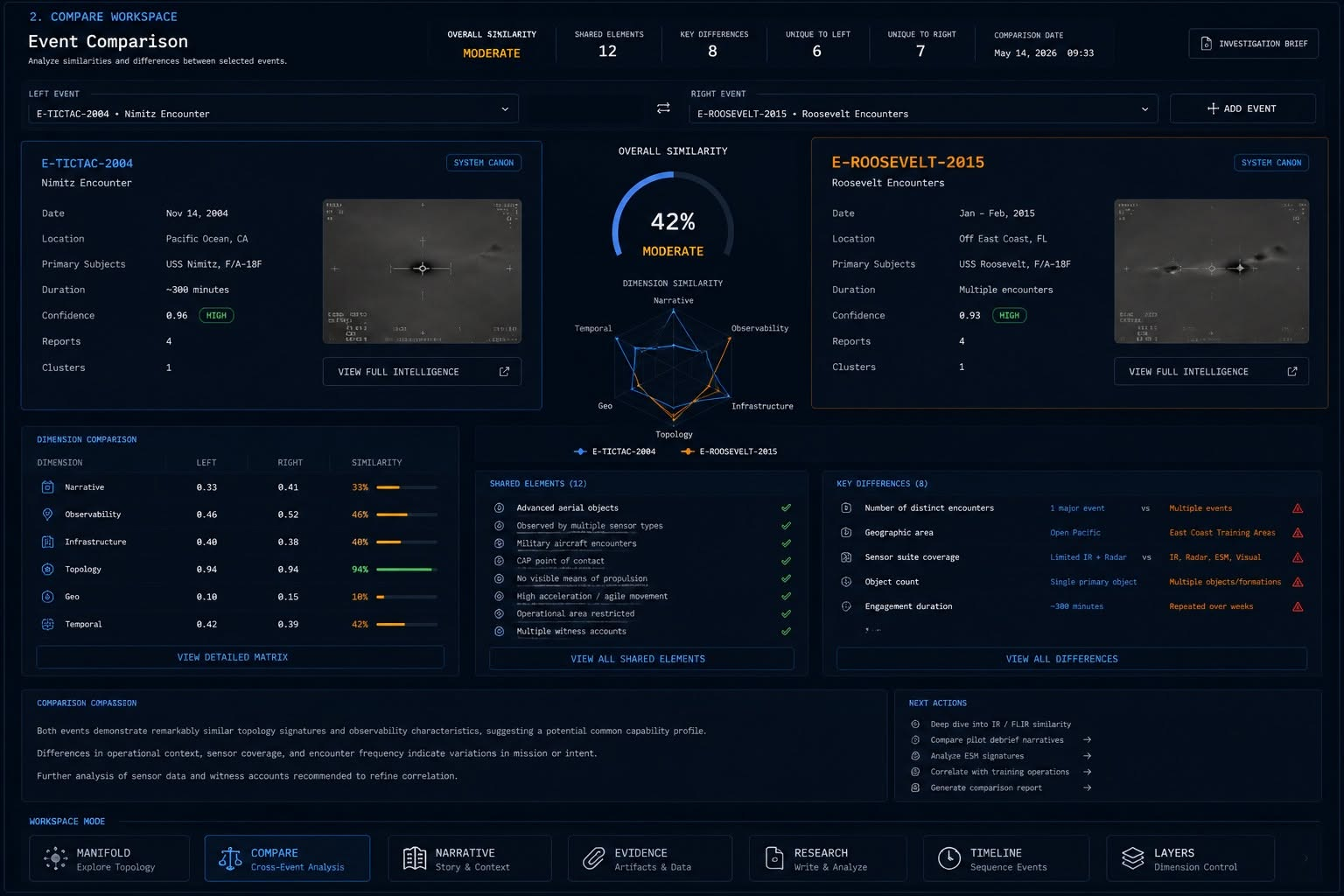
That's iSEES from Kevin Day (the radar chief during the Nimitz encounter). It appears to be a way of organizing his personal assessments of the evidence around the case.
I asked my robot its option, as it knows a lot about vibe coding, and it said:
https://alienalerts.com/usa/system/...34D4Nzvs9MarGLUq7R_aem_xWZbDeBM8mD80TEF1sv1tQ
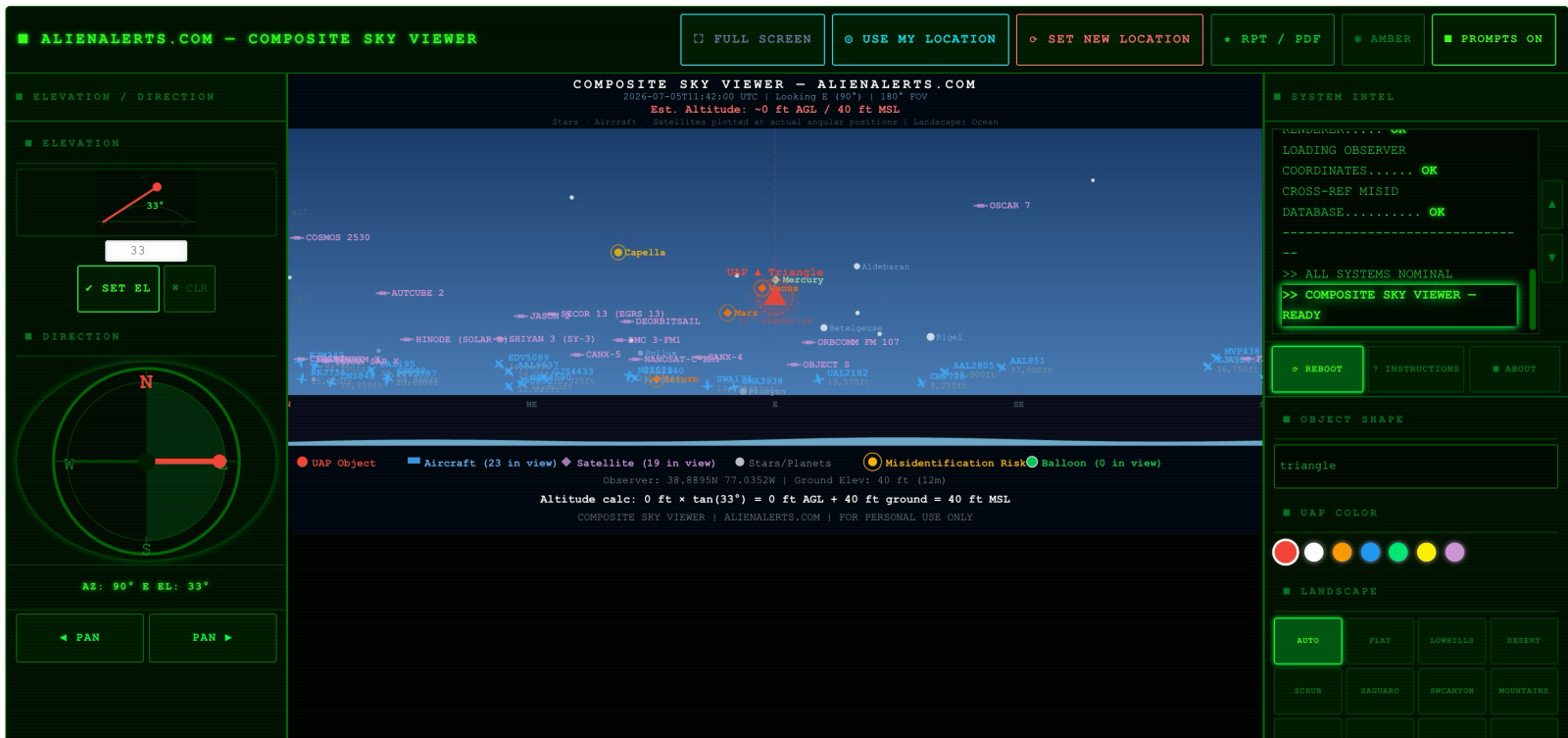
Looks cool, but I couldn't validate the view and gave up after a while.
There's more that I will add when I have time. But the basic point here is that we are in for a deluge of apps where "The fluency of the output creates a false signal of rigor". It is something we need to be careful about when assessing analyses, regardless of their source.
Such apps are going to proliferate. Vibe coding (instructing AI with plain English to design apps and write code) gives the coder near-instant results that initially seem to validate what they are trying to do. As the barrier to entry is near zero, anyone can spin up an app, and hundreds of people will.
This is not a summary judgment on the usefulness of such apps. I used AI extensively in recent additions to Sitrec. If you understand what you are doing, then it can be a very powerful tool. I have a bit of an advantage in that I'm an experienced programmer and a former technical director. I spent years directing a team of programmers (of various abilities) to create highly complex mission-critical code. So sending Claude or Codex (or both) off to add a feature, fix a bug, or write documentation is something I feel familiar with. The differences are the speed at which they do it (minutes instead of hours, hours instead of weeks) and dealing with the variation in ability that the agents have. I still have to dive in and fix things, but the nuts and bolts of coding are largely automated, leaving me to take on the role of technical director again rather than coder.
But back to the proliferation of vibe-coded (or at least vibe-assisted) apps. Here are some examples:
That's iSEES from Kevin Day (the radar chief during the Nimitz encounter). It appears to be a way of organizing his personal assessments of the evidence around the case.
I asked my robot its option, as it knows a lot about vibe coding, and it said:
Then another sky viewing app:External Quote:The artifact itself fits a recognizable and growing pattern that doesn't require any pathology to explain: current LLMs will happily vibe-code an interface this polished in an afternoon, complete with invented metrics, and will validate the conceptual framework at every step. The fluency of the output creates a false signal of rigor — the builder sees a professional-grade dashboard and reasonably infers professional-grade analysis, when the analysis layer is confabulated. That's sycophancy operating at the tool-building level rather than the conversation level. "Genius vs. psychosis" is probably the wrong axis; "impressive scaffolding around undefined quantities" covers it without speculating about the person.
https://alienalerts.com/usa/system/...34D4Nzvs9MarGLUq7R_aem_xWZbDeBM8mD80TEF1sv1tQ
Looks cool, but I couldn't validate the view and gave up after a while.
There's more that I will add when I have time. But the basic point here is that we are in for a deluge of apps where "The fluency of the output creates a false signal of rigor". It is something we need to be careful about when assessing analyses, regardless of their source.


