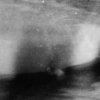
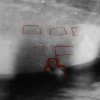
The 1933 Hugh Gray Loch Ness monster photo

Paleozoologist Darren Naish, one of the top 2 or 3 most qualified cryptozoology researchers that exist in the world, I think, did a Twitter mega thread back in 2021 on this topic.

Source: https://x.com/TetZoo/status/1424901450119925772?lang=en
(you have to keep expanding "more replies", it's VERY long).

He points out a number of details about the event, the camera, the inconsistencies, etc. But the big points are:
  • It's definately not a dog
  • Hugh Gray was not reliable as a witness. He claimed to see the monster six times.
  • Roland Watson is not a reliable commentator, as already suggested above. He believes the creature is a "pokemon" version of Nessie.
  • Naish is fairly certain it's a whooper swan with its head underwater and with motion blur. (Also in his 2017 Hunting Monsters book)
Here are two screen caps:
Ted Holiday's book The Great Orm of Loch Ness covered Gray's photo and Tim Dinsdale's subsequent infamous sightings.
Screenshot 2025-08-30 at 1.27.25 PM.png

This is Watson's ridiculous idea for it being a real "Nessie".

Screenshot 2025-08-30 at 1.31.47 PM.png
 
I'm just wondering how one becomes qualified in cryptozoology? If you get a degree in it /cum laude/, do they give you a diploma in tooth-fairy studies as a freebie?
obviously you pretend your degee in dinosaurs and their environments qualifies you to examine extremely blurry photographs taken in 1933 and qualifies you to psychoanalyze witnesses from 80 years ago.
 
(Summarizing Naish, in part...)
Hugh Gray was not reliable as a witness. He claimed to see the monster six times.
I'm not sure that criticism is valid. With UFOs, "repeaters"are generally regarded as unreliable -- UFOs, if they are indeed something like aliens ships, are rare and scattered widley, the odds of seeing them again and again are slim. With Nessie, though, assuming it is real it is one or more large animals in a tightly defined and enclosed space -- somebody looking for it there might well see it repeatedly.

That is not to say that I believe Nessie is real (sadly, wish it were, it was a favorite!) or that it is shown in the photograph. Just that I don't think that this particular point is strong in the case of this claimed phenomenon...
 
The sepia tone and the black-and-white versions of the photo look surprisingly different. Far less detail, contrast and sharpness in the b&w.
Newspapers back then, even respectable ones, would alter photographs to make them "clearer for publication" (as mentioned in #21 by @Z.W. Wolf), though I think that's being a bit charitable to avoid directly accusing the papers of altering the photos for a more exciting story. Another famous instance of this was the photo of the "Battle of Los Angeles". The famous version of the photo:
1756587283273.png

was in fact heavily altered.

External Quote:
As reported by Los Angeles Times bloggers Scott Harrison and Larry Harnisch, the version of the photo that ran in the paper in 1942 had been retouched in ways that would not be acceptable today. The skyline was darkened with ink; paint (similar to correction fluid) was used to brighten searchlight beams and to turn lens flare dots into antiaircraft bursts. The part of the image identified by UFO experts as an alien spacecraft was shaped by drops of paint on the print.
TV Skeptic: 'Fact or Faked: Paranormal Files' looks at the real 'Battle of L.A.' I bolded that last sentence because it's so egregious by today's standards. I suppose it is possible the employees who did that truly believed they were just making an actual object (likely assumed by those employees to be a Japanese attack craft of some sort rather than an alien craft) more visible to readers.
 
Hugh Gray was not reliable as a witness. He claimed to see the monster six times.
As so often happens with cryptid sightings, the witness wasn't exactly a neutral bystander. Hugh Gray was already a believer—he even claimed to have seen the creature once before the famous photo (according to the Daily Record, Dec 12, 1933). On top of that, Hugh had an older brother, Alexander, who worked as a chauffeur (per MyHeritage records). Interestingly, in the Inverness Courier (May 30, 1933), a bus driver named A. Gray pops up as someone trying to catch the Loch Ness "monster" with hooks and bait. Pretty safe bet that's Hugh's brother.

So we've got two brothers, both fascinated by the monster, both happy to have their names in print, and both directly involved in the story. (It was actually Alexander, not Hugh, who took the film to be developed in Inverness.) What we don't have are independent witnesses. And when you put the pieces together, it's not hard to imagine there might have been… let's say… a little enthusiasm shaping the story.

For me, the most likely explanation is still that the whole thing was a hoax cooked up by the Gray brothers. Runner-up: Hugh accidentally photographed something mundane (an otter, a wave, a dog, who knows), and the brothers' imaginations did the rest.

We'll probably never know the truth. But one thing's for sure—it's a shame the photo turned out so blurry. It would have been fascinating to see what was actually there.
 
Paleozoologist Darren Naish, one of the top 2 or 3 most qualified cryptozoology researchers that exist in the world...

Darren Naish comments on cryptozoological subjects and claims, but he's a professional palaeontologist, Wikipedia https://en.wikipedia.org/wiki/Darren_Naish
Like with Ufologists, I'm not quite sure how cryptozoologists qualify in their subject.
[Edited to add: Just noticed @FatPhil made the same observation while I was compiling this post].
If they actually gather conclusive evidence for one of their quarries, and formally publish it, I guess they become, er, just plain zoologists, and lose the exciting crypto- prefix.
Luckily for them this rarely seems to happen.

Hugh Gray was not reliable as a witness. He claimed to see the monster six times.
That's interesting. Kenneth Arnold, whose 1947 UFO sighting is often described as the first "modern" claim, later said he'd seen the same UFOs on three further occasions. For some reason I feel this makes his original account less credible (same with Gray).

[Paraphrasing Naish] Roland Watson... ... believes the creature is a "pokemon" version of Nessie.
Naish is a respected vertebrate palaeontologist who has contributed to the analysis, description and artistic recreation of fossil remains that might have difficult to interpret or previously ambiguous, so his views re. possible photographic evidence of an unidentified animal are relevant, I think.

But I'm not sure his description of Watson's interpretation of the picture as showing
External Quote:
...in apparent seriousness a cute, chubby-bodied, pokemon-like creature which is squeaking in surprise...
is very fair. Watson did not use those descriptors and of course didn't describe the subject of the photo as "squeaking"; Naish is using a sort of straw man argument to ridicule Watson's views.
(This doesn't affect my impression that Watson's 2022 "Empirical Analysis of the Hugh Gray 'Nessie' Photograph" is overly credulous in its apparent acceptance of a continuing zoological mystery in Loch Ness, and that it displays undeserved antipathy towards "skeptics").

Watson isn't responsible for what the photo shows (or doesn't show). Unlike Naish, I have no great knowledge of fish, reptile etc. anatomy, but the apparent "head" at the right side of the photo- if one chooses to see the photo in that way- does look a bit like that of maybe a turtle or large eel.

head.jpg


conga.jpg


(Conger eel at left, two moray eels... I think.) I don't think these are radically different to the proposed head in the 1933 photo, but I don't feel that the last two are likely to be "...squeaking in surprise".

Much eel DNA was found in a 2018 survey of the loch (which is a known eel habitat), see post #30; however, it's not really credible to interpret Gray's 1933 as showing an eel.

Incidentally the largest known eels aren't nearly as big as I thought they were,
External Quote:
European congers have an average adult length of 1.5 m (5 ft), a maximum known length of around 3 m (9.8 ft) and maximum weight of roughly 72 kg (159 lb), but possibly up to 160 kg (350 lb), making them the largest eels in the world by weight.
Wikipedia, European conger (moray eels may be a little longer but are lighter).
 
Last edited:
the apparent "head" at the right side of the photo- if one chooses to see the photo in that way- does look a bit like that of maybe a turtle or large eel.
If we're going to study any part of the photograph, I think the dark area on the "body" is by far the most interesting. The rest is almost completely overexposed, but here we can actually see a bit more detail. There seems to be a kind of geometric pattern, and something in front of the "object" that appears to be disappearing into the water. Are these just artifacts from the old box camera, or could they give us a real clue about what we're looking at?
IMG_5380.jpegIMG_5380.jpeg
The white spots seem to be just dirt on the negative, and once those are removed, we're left with something like this:
81BB6A84-8B37-4787-A2FF-E1A22C7BE6F1.jpeg
 
I'm just wondering how one becomes qualified in cryptozoology? If you get a degree in it /cum laude/, do they give you a diploma in tooth-fairy studies as a freebie?
obviously you pretend your degee in dinosaurs and their environments qualifies you to examine extremely blurry photographs taken in 1933 and qualifies you to psychoanalyze witnesses from 80 years ago.
The snarky tone is distasteful.

Naish is a PhD vertebrate paleontologist with numerous scientific publications and books. He has been publishing for some 25 years on all kinds of animals and has been a technical consultant for other books, museum exhibits (legitimate ones), and science TV shows. He does not promote belief in any cryptids whatsoever - it's not his primary research area, but animals are.

RE: the "qualifications" for cryptozoology [minus the mockery]...

If you consider cryptozoology in the modern sense* of figuring out the historic or modern claims about seeing strange creatures, this is a multidisciplinary approach. In this sense, it is similar to UFOlogy or ghost hunting.

There are different lenses to be applied to the various questions about, for this example, Loch Ness. You can apply a zoological or biological (paleo or wildlife) lens to examine any data for large animals living or visiting the loch and potential IDs. You can apply a historical lens to look at the development of sightings through time and what else was happening to affect the cultural view; an anthropological lens, a folklore lens, also psychological, media and art, socio-economic, etc. And some people view it as a spiritual or supernatural phenomenon. Cryptozoology is poorly defined and has no sound methodology. Contrary to claims of a few pro-cryptid, self-styled cryptozoologists (I can think of three who have some zoology background - Shuker, Freeman, and Coleman), no one has successfully used this nebulous methodology to discover new animals in the last 50 years or so. In that original sense*, it's useless. However, there is lots to be done to research WHY people still say they see monsters and what might really be happening.

*The original idea for cryptozoology was to look at the history, art, folklore, etc. with the intent of finding and identifying a new species. It was not well-thought-out. For the several years when the International Society for Cryptozoology existed, the core members could not agree on the rules, standards, norms, etc. Unsurprising. Heuvelmans (the founding "father") was not a good scientist and had an overall negative view of the scientific establishment.
 
Obviously not, but he is probably responsible for treating pareidolia as if it were actual features.

Personally, I think it's a faked photo. it's so damned blurry and with those odd areas of over-exposure, I wonder if it's been mashed together in a hobbyist's darkroom. I can't demonstrate this though (and I have no useful knowledge of photography).
I'm not overly persuaded by claims that Kodak or whoever found no signs of tampering; this is almost a trope of UFO photographs later shown to be fakes. And the Cottingley fairies, though admittedly they weren't the result of film (plate?) manipulation.

But if it is an authentic photo of a real scene, or we proceed with that as a possibility, then trying to describe what we think can be seen might be valid. Admittedly the chances of misidentification and/or pareidolia must be high, simply because the image is so indistinct and the object(s) in it difficult to recognise.
 
The snarky tone is distasteful.
Don't get upset, please. I think perhaps you (and he) inadvertently provoked what you call a "snarky tone" by referring to Naish as a "cryptozoology researcher". That's a phrase that is easily misunderstood to describe him as a believer in cryptids, so I think it best that some other term be used to describe his work. The same can also be said about "UFOlogy or ghost hunting", both of which phrases are used more to describe a believer than a debunker.
 
Personally, I think it's a faked photo. it's so damned blurry and with those odd areas of over-exposure, I wonder if it's been mashed together in a hobbyist's darkroom.
I guess that's a possibility. The fact that some experts at Kodak (M.C. Howard and C.L. Clarke) claimed in 1933 that the negative hadn't been tampered with doesn't necessarily mean it wasn't. Photo manipulation using primitive techniques had been around since the mid-19th century. Just take a look at some of the photos exhibited at this Metropolitan Museum exhibition:
https://www.metmuseum.org/exhibitions/listings/2012/faking-it

What puzzles me is why, if the photo was indeed manipulated by the Gray brothers, it looks so darn bad and doesn't convincingly show a lake monster. Maybe they simply weren't very good at photo manipulation, and this was the best they could do. Who knows?! Manipulation is certainly a possibility, but I think some of the odd features can also be explained by the Daily Record "enhancing" the image before publication. If that's the case, it could just as easily have been an otter, a dog, a boat, a wave, or even a small monster model.

What I also find interesting, from a psychological perspective, is Hugh's testimony and how it seems to grow over time. Naish points out in the thread cited above (https://threadreaderapp.com/thread/1424901450119925772.html) that Gray later claimed he had seen a "rounded back" and a "thick powerful tail", as well as smooth, glistening skin. This matches later interviews he gave in life. But in his very first interview—conducted by a Daily Record journalist (probably already on Monday, December 4, 1933)—his recollections are much vaguer: "I cannot give any definitive opinion as to its size or appearance except that it was of great size." He also told the reporter that he only got a "brief view" of the object, and explicitly stated that he "did not see any head." That's quite different from the "rounded neck" and "smooth glistening skin" he later described.
 
If you consider cryptozoology in the modern sense* of figuring out the historic or modern claims about seeing strange creatures, this is a multidisciplinary approach. In this sense, it is similar to UFOlogy or ghost hunting.
Were anyone to utter the phrase "... is one of the top 2 or 3 most qualified UFOlogists in the world", or "... is one of the top 2 or 3 most qualified ghost hunters in the world", I'd make exactly the same comment. These are not phrases that should be used, even if said people may be the best qualified to address the questions raised in those marginal fields - their qualifications are not in those fabulatory fields. What you perceived as snark is merely a humourously-worded call for precision; no offence was meant.
 
Last edited:
Don't get upset, please. I think perhaps you (and he) inadvertently provoked what you call a "snarky tone" by referring to Naish as a "cryptozoology researcher". That's a phrase that is easily misunderstood to describe him as a believer in cryptids, so I think it best that some other term be used to describe his work. The same can also be said about "UFOlogy or ghost hunting", both of which phrases are used more to describe a believer than a debunker.
personally my snarky tone was directed at Naish, not because she said "cryptozoology researcher" as i knew what she meant. He may be one of the "most qualified" people commenting on Loch Ness to say that the environment wouldnt support a large animal or bring up how many animals you need to have in order to see a plesiosaur in the Loch in 1933 etc.

But none of that qualifies him to comment on what the picture shows or whether Gray was intentionally lying that he thought he saw something strange. Lots of reliable people over the years have thought they've seen something odd on the Loch.

Naish was being snarky. And his snark was chosen to be presented in this thread. That attitude deserves the same in kind. (imo)
 
that Gray later claimed he had seen a "rounded back" and a "thick powerful tail", as well as smooth, glistening skin. This matches later interviews he gave in life. But in his very first interview—conducted by a Daily Record journalist (probably already on Monday, December 4, 1933)—his recollections are much vaguer:
i think he alluded to all that originally. obviously the tail would be powerful as it was thrashing about and causing all that hearable/noticeable spray 100 yards out. and he said he didnt see a head, so that implies he saw a back. etc. Did his memory, like happens to many people, become more detailed in his mind as he reenvisioned the scene over and over in his head over the years? it's likely.

but doesnt seem like a whole new story to me. The glistening skin is the only "new detail" to me. which jives with the otter idea, if we can believe his enhanced memory.. which i dont particularly.
 
obviously the tail would be powerful as it was thrashing about and causing all that hearable/noticeable spray 100 yards out.
The problem is that in the Daily Record interview, Gray had no idea of the distance to the "creature." The 100-yard estimate seems to have originated with a journalist at the Glasgow Herald. Gray himself told the Daily Record journalist, just a few days after the film was developed, that he couldn't estimate either the size or the distance. The article states: "He can only say that he was standing some distance off and at a certain height." He also admitted that he only got a "brief view" of the object and couldn't provide any details.

This version of events fits well with someone misidentifying a mundane animal—or even a wave. But later on, Gray's story changes. He begins offering size estimates and even details about the creature's appearance. In other words, the account grows over time, with new features and events added that weren't part of the initial report. This is something we see all the time when it comes to witness testimonies, and that's why testimonies aren't as reliable as some might think.
 
The 100-yard estimate seems to have originated with a journalist at the Glasgow Herald.
which the daily record quotes. according to your OP. (unfortunately i cant access the article myself so have to believe you)

Gray himself told the Daily Record journalist, just a few days after the film was developed, that he couldn't estimate either the size or the distance.
are you sure? the article bit you provided is here, it doesnt mention distance.
https://www.metabunk.org/threads/the-1933-hugh-gray-loch-ness-monster-photo.14400/post-350649
 
which the daily record quotes. according to your OP. (unfortunately i cant access the article myself so have to believe you)
Yes, the Daily Record quoted this, only to conclude that "the distance mentioned in the above report does not coincide with Mr. Gray's considered statement." In other words, the claims made by the Glasgow Herald are not accurate (according to the Daily Record journalist), since they do not reflect what Hugh actually reported when interviewed in person.
are you sure? the article bit you provided is here, it doesnt mention distance.
He could only say that he "was standing some distance off," nothing more specific than that. Interestingly, he also said it was "not so very far." Of course, "not very far" is a relative term, but it does sound as if the object was quite close.

My point is that Gray was rather vague in the Daily Record interview, and the journalist makes it clear that he never claimed the distance was 100 yards. Nor did he give any estimate of the creature's size ("I cannot give any definite opinion as to its size or appearance…"). And how could he? Without knowing the distance, size is obviously impossible to determine.
 

Attachments

  • IMG_5328.jpeg
    IMG_5328.jpeg
    428.4 KB · Views: 58
  • IMG_5327.jpeg
    IMG_5327.jpeg
    326 KB · Views: 58
IMG_5448.png
Found this random photo online showing a Labrador playing with a ball in the water. Seen from a slightly different angle, this scene could indeed resemble the Gray photo. (Obviously, a longer exposure time would make the scene smoother.) I'm not generally a fan of the dog hypothesis, but it is certainly much more plausible than a large, unknown creature lurking in the loch.
 
but it is certainly much more plausible than a large, unknown creature lurking in the loch.
not according to the guy who hosts "River Monsters". and the story that inspired Jaws. (unless by "lurking" you mean "living in the loch all its life and breeding"..in that case a dog would certainly be more plausible. especially if we group all the reports and decide to add in the story of the couple who thought they saw an alligator or giant beaver walking across the road.. then yea a dog is more plausible. )
 
He could only say that he "was standing some distance off,"
He WOULD only say -according to the reporter-in a sworn statement to the judge the Daily Record brought with them.
1756816638311.png


But thanks for supplying the rest of the article so we could read in full. I did find a copy last night -from the Daily Record Facebook page-that can be downloaded and enlarged/zoomed-in so people can read the article in full.

Source: https://www.facebook.com/photo.php?fbid=5676699872359850&id=187523381277554&set=a.208325705863988
 
Last edited:
...the story that inspired Jaws.
Ah, the Matawan Creek attacks in NJ in 1916, that incident almost merits a thread here (but, I think, not quite.) Three people were attacked (one attempting to rescue another) in the brackish creek, following 2 NJ deaths earlier that year in what are almost certainly unrelated attacks. The incident led to a switch in public perception of sharks from being harmless lumbering brutes that weren't brave enough to attack a person to ravening monster "man eaters" craving human flesh. (Neither is correct.) The species of the shark was popularly cited as a Great White (almost certainly wrong, as they do not normally venture into brackish water, while species like Bull Sharks do so frequently. The Matawan Creek incident was folded into the earlier attacks, which helped stimulate the now-discarded theory of the "rogue shark," (to which Hooper subscribes in "Jaws") who develops a taste for humans and lurks about a confined area eating anybody who happens into the water.

That's a fair amount of bunk to be associated with series of attacks in 1916! But as that's about all that can be said about it with anything approaching certainty, I guess a dedicated thread would be unnecessary...
 
Newspapers back then, even respectable ones, would alter photographs to make them "clearer for publication"
See GIF of the changes to the "Battle of LA" photo here: #65
1930s-level Photoshop (a.k.a. newspaper "enhancements" made to the negative).
Here's how the Gray photo looked in one newspaper in 1933.

The_Springfield_Daily_Republican_1933_12_27_7.jpg


and a photo captioned suggesting the location,
Daily_Record_1933_12_09_13.jpg
 
I finally managed to track down the article in the Inverness Courier (May 30, 1933), featuring the "project" by Hugh's older brother, Alexander Grey:

IMG_5461.jpeg


First of all, can we be certain the A. Gray mentioned in the article is Alexander? I believe so. For one thing, A. Gray lived in Foyers, and I doubt there were many potential A. Grays in the area. More importantly, according to MyHeritage, Hugh's brother Alexander was listed as a "chauffeur," while the person in the article was described as a "motor bus driver."

The article itself is quite interesting. A. Gray had constructed a kind of "Nessie-trap" using a floating barrel and 50–60 yards of wire with hooks attached. Hoping to catch the beast, he baited the hooks with dogfish and skate. Needless to say, his attempt failed.

I'm not sure how much direct relevance this has to Hugh's photograph, but it's certainly an important part of the story. It's clear that Alexander was rather obsessed with the "monster." Building a trap of that scale would have been a considerable effort—not something just anyone would do. And he was also willing to be publicly identified by name and occupation in the local paper, meaning everyone in the area would know he was involved. In other words, he clearly didn't mind being associated with the "monster" and the hunt for it.

Just five months later, his brother Hugh managed to capture his famous photograph of the "monster"—a photo that Alexander himself had developed. I'm not saying this undermines Hugh's testimony, but the circumstances are worth noting: Hugh admitted he was out looking for the monster when he took the photo, and his brother was already a documented "monster hunter." That context makes it very likely that Hugh was biased, and it also leaves open the possibility of a hoax.
 

Attachments

  • IMG_5499.jpeg
    IMG_5499.jpeg
    164.7 KB · Views: 64
Building a trap of that scale would have been a considerable effort—not something just anyone would do.
the only effort was taking wax to seal the barrel. Pretty much every male i've known before the age of 30 would have done it. And i was a kid in the 70s/80s so we had some tv at least!

I dont think believing your neighbors that they saw something in the Loch, and trying to catch it makes a person 'obsessed'. Seems a pretty normal reaction to me. well... the barrel idea wasnt a very good one if he didnt anchor it to land which it seems he didnt.. i certainly wouldnt call a big fish hook and bobber a "trap". weird reporting.
 
Hugh playing a prank on Alexander, maybe?
Or perhaps the two brothers, known for their interest in the monster, had spent years trying to capture it—either on film or in real life—and those around them began questioning their quest. A photo of the beast would have been a great form of revenge, disproving the skeptics. Whether real or staged may not have mattered so much. We've seen this countless times in the UFO community: people start out as true believers, determined to find proof of alien visitations, but in the absence of evidence, some eventually resort to hoaxes.
 
the only effort was taking wax to seal the barrel. Pretty much every male i've known before the age of 30 would have done it. And i was a kid in the 70s/80s so we had some tv at least!

I dont think believing your neighbors that they saw something in the Loch, and trying to catch it makes a person 'obsessed'. Seems a pretty normal reaction to me. well... the barrel idea wasnt a very good one if he didnt anchor it to land which it seems he didnt.. i certainly wouldnt call a big fish hook and bobber a "trap". weird reporting.
Absolutely—most people could have done it, but the fact remains that few actually did. And even fewer ended up featured in the local newspaper for their monster-hunting efforts. Alexander wasn't exactly a young man at the time either; he was 33 years old. That said, I agree we have no proof that either Alexander or Hugh were "obsessed" per se—poor choice of words on my part. But I do think it's fair to call it a deep interest in the monster, considering he went as far as building a trap to try and catch it.

I suppose the idea was that the trap would somehow wear the monster down until it no longer had the strength to fight against the barrel, eventually forcing it to the surface. But yeah, perhaps not the best of plans.
 
i'll ask my crystal ball later tonight if that is actually a fact and get back to you.
I'm not going to argue much further with you on that, but if grown men in the area were frequently building traps and other contraptions to catch the "monster" back in the 1930s, then why would the Inverness Courier bother reporting on Alexander's attempt? To me, that suggests the journalist found his project unusual enough to be newsworthy.
 
I'm not going to argue much further with you on that, but if grown men in the area were frequently building traps and other contraptions to catch the "monster" back in the 1930s, then why would the Inverness Courier bother reporting on Alexander's attempt? To me, that suggests the journalist found his project unusual enough to be newsworthy.
i'm sure it was unusual to a guy living in Iverness when someone maybe mentioned their bus driver was telling them he baited a barrel hunting the monster. I just think it would be MORE newsworthy to hear no other men were trying to catch the big ass fish seen in the loch. But i might be jaded from watching River Monsters, where it seems men are really into -for some odd testosterone reason-catching the biggest of the big ass fish.
 
i'm sure it was unusual to a guy living in Iverness when someone maybe mentioned their bus driver was telling them he baited a barrel hunting the monster. I just think it would be MORE newsworthy to hear no other men were trying to catch the big ass fish seen in the loch. But i might be jaded from watching River Monsters, where it seems men are really into -for some odd testosterone reason-catching the biggest of the big ass fish.
I'm thinking Alexander could have been (one of) the first to try this. We must remember that this was at the very beginning of the modern Nessie myth. There are legends about a kelpie in the loch, of course, but such stories exist around almost every body of water worldwide. In an Inverness Courier article (December 12, 1933), the reporter claimed he first heard of modern reports of something strange in the loch from a sighting published by the newspaper on May 3 of the same year. That was just a couple of weeks before Alexander's capture attempt.
 
This is just a detail, but still somewhat interesting. I came across an article in the Inverness Chroniclefrom December 12, 1933, claiming that the first time the reporter heard about modern reports of a large creature in the loch was in their article published on May 3 of the same year. I investigated further and found the original article. Interestingly, a couple traveling by car along the loch reported seeing a creature with a body "resembling that of a whale," while the surrounding water was "cascading and churning like a simmering cauldron." The rest of the loch was described as being "calm as the proverbial mill pound."

Here's where it gets somewhat intriguing: in the December 12 article, Hugh Gray used these words to describe the loch at the time of his observation—"The loch was still as a mill pond." It's worth noting that Gray used the very same simile. Though a common expression, it could suggest inspiration from the May 3 encounter.
IMG_5525.jpeg

It's also notable that the blurry dot in the Gray photo seems to show some kind of horizontal tail fins, somewhat resembling those of a whale. If the Gray photo was a hoax, the model used could have been inspired by the May 3 event. But if the "fins" were instead the result of enhancements made to the negative by the Daily Record editor, then once again the May 3 story could have been the inspiration. Of course, there remains the possibility that the same strange creature revealed itself on both occasions.
 
I'm thinking Alexander could have been (one of) the first to try this. We must remember that this was at the very beginning of the modern Nessie myth. There are legends about a kelpie in the loch, of course, but such stories exist around almost every body of water worldwide.

Indeed. And you don't even need bodies of water for shape-shifting spirit myths. Four legs useful on desert plains, fins/flippers useful in water, the folk tales will incorporate whatever device is situationally appropriate.

(I look forward to the first season of STV's /Kelpie Ha'/ (which would be Scottish Television's equivalent to /Skinwalker Ranch/). Not.)
 
Last edited:
I'm thinking Alexander could have been (one of) the first to try this. We must remember that this was at the very beginning of the modern Nessie myth.
External Quote:
The earliest written reference to a monster in Loch Ness is a 7th-century biography of Saint Columba, the Irish missionary who introduced Christianity to Scotland. In A.D. 565, according to the biographer, St. Columba was on his way to visit the king of the northern Picts near Inverness when he stopped at Loch Ness to confront a beast that had been killing people in the lake.
https://www.history.com/articles/loch-ness-monster
 
Indeed. And you don't even need bodies of water for shape-shifting spirit myths. Four legs useful on desert plains, fins/flippers useful in water, the folk tales will incorporate whatever device is situationally appropriate.
When they were turning the towpath along the Cuyahoga River into a bike trail, they laid down a black plastic sheet to keep weeds from growing through the crushed rock surface. After a very heavy rainfall, a section of the newly-laid trail washed away, leaving twenty feet or so of that plastic thrashing around in the turbulent river while it was still attached at one end to the bank. I thought at the time that if it came loose and floated away, Lake Erie could have had its own "monster".
 
Back
Top