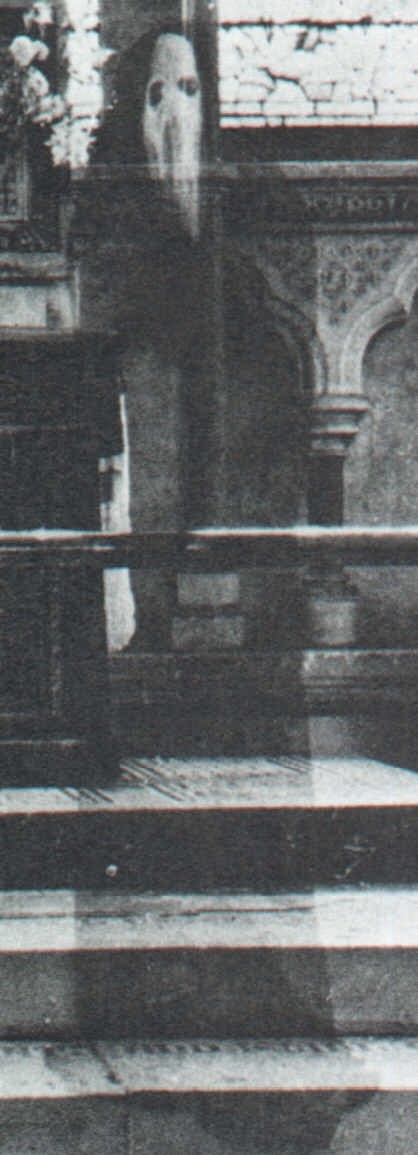
Claim: the Newby Church ghost is a long exposure

Andreas

Senior Member.
To get away from all the recent UAP circus, I've been digging into some old ghost photographs. One of the most famous is undoubtedly the Newby Church Ghost.
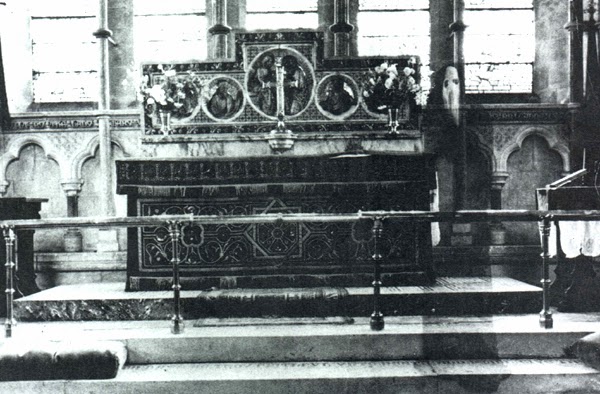
IMG_2415.jpeg

IMG_2414.jpeg
As far as I can tell, the first time the photograph appeared in print was in The Sunday People on August 13, 1967. In that article, the photographer, Reverend Kenneth F. Lord, is interviewed. He clearly states that the photograph was taken "seven years ago," which would place it around 1960. Other dates are sometimes given online, but I haven't found any primary source supporting them. From a skeptical perspective, all we can really say is that the photo was taken sometime in or before 1967.

Interestingly, Lord presents himself as a skeptic. He says in the article:

External Quote:
I'm not interested in spiritualism or ghost-hunting and am quite frankly skeptical of the picture.
The article also quotes "technical experts," who reportedly concluded that the image could not be the result of a double exposure "because of a preventive device on Mr. Lord's camera." Instead, the article suggests a possible long-exposure technique:

External Quote:
Shut down the camera, say a Rolleicord, to a very small aperture (f/16). Place a cloaked figure in position and expose the film for five seconds—then cover the lens. Remove the figure and carry on with exposure for another 15 seconds. The result should be a 'ghost.'
Personally, though, I think a simple double exposure is the more likely explanation. My guess is that Lord used a tripod, made the first exposure of the empty church, then placed a clothes stand (or something similar) draped with a black cloak and a white hood in front of the camera before making the second exposure. That would produce a convincing "ghost" without requiring a second person.

Lord reportedly used a Rolleicord IV. If that's correct, it's worth noting that the camera appears to have had a built-in multiple-exposure function, despite the article's claim that a double exposure was impossible because of a preventive mechanism. If that's true, one of the main technical arguments for the photograph's authenticity becomes much weaker.

I obviously don't believe the image shows a genuine ghost. Personally, I think the most likely explanation is a carefully executed double exposure. What do you think?
 
External Quote:
Shut down the camera, say a Rolleicord, to a very small aperture (f/16). Place a cloaked figure in position and expose the film for five seconds—then cover the lens. Remove the figure and carry on with exposure for another 15 seconds. The result should be a 'ghost.'
You don't even need to cover the lens. The "ghost" can just run off.

The end result is pretty much the same. So I don't really think it's that important which method was used.
 
The article also quotes "technical experts," who reportedly concluded that the image could not be the result of a double exposure "because of a preventive device on Mr. Lord's camera." Instead, the article suggests a possible long-exposure technique:

External Quote:
Shut down the camera, say a Rolleicord, to a very small aperture (f/16). Place a cloaked figure in position and expose the film for five seconds—then cover the lens. Remove the figure and carry on with exposure for another 15 seconds. The result should be a 'ghost.'

So some exposure, then some non-exposure, and then some more exposure, eh? Sounds like double exposure to me. Who cares if the occultation happens because of a mechanical shutter, or a subfusc gown? (Not that I'm saying that's how I did such things when I was younger. Oh, and a flash can help.)
 
In high school photography class in the 90's, I figured out a way to do a similar ghost effect without double exposing the film. You would put your intended "ghost" image negative in the enlarger, put your photographic paper face down on the bed, expose the paper through the back (could be repeated a couple of times with different negatives), then swap to the main negative, flip the paper over and then expose the front for slightly less time than normal. This resulted in a fainter ghostly image of the negative exposed through the back of the paper superimposed on the negative exposed on the front. I never created a "ghost" image using the technique, but I created a cool photo of a friend doing a skateboard trick where the main image was the pinnacle of trick and there were two faded images of the start of the trick and then the mid point, so it looked like a time lapse composite with "echos" of the past leading up to the main image.
 
You don't even need to cover the lens. The "ghost" can just run off.

The end result is pretty much the same. So I don't really think it's that important which method was used.
That sounds like a reasonable assumption. If it's a simple hoax orchestrated by the reverend himself, it's tempting to think he simply started the exposure, ran into the picture, and stood there for a moment wearing his old cassock. There would be no need for an accomplice. I suppose some people believe this method would leave a faint trace of movement, but I'm not so sure about that. The quality of the photo is indeed terrible.

This photo is often described as "trustworthy" by believers, mainly because:

1. The photographer was the reverend of the church.
2. The photo looks very old.
3. It's often claimed that it can't be a double exposure and that the negative was carefully examined by "experts" and ruled to be genuine.

But when you break these claims down one by one, there's really very little left.

1. Sure, Reverend Kenneth F. Lord claimed to have taken the photo. But the fact that he was a reverend doesn't really make him any more trustworthy than anyone else. More importantly, Lord appears to have been a fairly experienced photographer. In the 1967 article, it is clearly stated:

External Quote:
…all went well as he developed them. But when he began to make prints he was astonished to see in one picture what appeared to be the figure of a cowled monk on the steps of the altar.
In other words, the reverend had access to a darkroom and handled the developing and printing himself. Hardly the inexperienced amateur often portrayed by ghost hunters.

2. Absolutely, the photo looks old, but it's not as old as some people might think. The first time it was ever mentioned was in the 1967 article, where it was said to have been taken in 1960. In other words, the photo dates from the 1960s, and its poor quality is not simply the result of age.

3. The claim that the negative was examined and that a double exposure was deemed impossible can be traced back to the same 1967 article. But when you read the original text, that's not exactly what it says. Regarding the possibility of a double exposure, the article states:

External Quote:
After a series of tests their laboratories reported the negative had not been interfered with in any way. There was no fault in the emulsion layer or with the processing. A double exposure would have been impossible because of a preventive device on Mr. Lord's camera.
I interpret this as the photo lab ruling out a manufacturing defect, processing error, or other unintended effect that might have produced the ghostly figure. It also rules out an accidental double exposure. But if the image was a deliberate hoax, the camera could obviously still have intentionally been manipulated to produce a double exposure.

I really love this photo. It's ghostly creepy, and the fact that it was taken by a reverend is a nice touch that adds to the story. But when people post it on social media, claiming it's the ultimate proof of the paranormal, it's good to know the full backstory.

The The Sunday People, August 13, 1967:
IMG_2456.jpeg
 
Back
Top