U

You are using an out of date browser. It may not display this or other websites correctly.
You should upgrade or use an alternative browser.
You should upgrade or use an alternative browser.
WTC: Molten Steel - Was there any? Why? What About the Hot Spots?
- Thread starter joe24pack
- Start date
- Status
- Not open for further replies.

Grieves
Senior Member
Holy Quetzlqotl Jazzy, you're still resorting the the 'it's' thing? We've been through that. If you're going to resort to grammar/punctuation as a lame means of discrediting me, you should probably keep a much closer eye on your spelling/sentence structure. I'm not so petty as to start pointing out all your errors, but it certainly doesn't help your position.
As of your latest posts, I'm failing to see what that position is. Have you now resolved that there was no molten steel in the rubble? If so, what has been the point of your prior arguments that your calculations account for it's presence? You seemed pretty clear molten steel was the inherent result toward the start of the thread, now I'm not so sure where you stand.
So he believes he found molten steel and requested a better investigation, was denied a better investigation while NIST never reported any molten steel found/witnessed/evidenced. Not only that, they denied having even heard of molten steel as a possibility, in spite of the fact one of their own engineers, one of the earliest on the scene in fact, having reportedly witnessed some himself. Astaneh-Asl doesn't even believe explosives were used. So why would NIST continue to deny molten steel even as a possibility? Why is this thoroughly evidenced feature of the collapse so entirely and deliberately overlooked/downplayed?
As of your latest posts, I'm failing to see what that position is. Have you now resolved that there was no molten steel in the rubble? If so, what has been the point of your prior arguments that your calculations account for it's presence? You seemed pretty clear molten steel was the inherent result toward the start of the thread, now I'm not so sure where you stand.
He does believe he saw melted girders and does lament the quick dispersal of the wreckage
So he believes he found molten steel and requested a better investigation, was denied a better investigation while NIST never reported any molten steel found/witnessed/evidenced. Not only that, they denied having even heard of molten steel as a possibility, in spite of the fact one of their own engineers, one of the earliest on the scene in fact, having reportedly witnessed some himself. Astaneh-Asl doesn't even believe explosives were used. So why would NIST continue to deny molten steel even as a possibility? Why is this thoroughly evidenced feature of the collapse so entirely and deliberately overlooked/downplayed?

Dan Wilson
Senior Member
I have never seen it before . . .
Show me an example of structural steel in a controlled demolition showing significant (hundreds of degrees) heat generation because of deformation or collision . . . enough to cause hot spots lasting for days . . .
I think it would be more in a conspiracy theorist's interest to provide an example like that and to show consistency with a controlled demolition. I think what happened with the hot spot are simply basement fires. The basements did no cave in, as we know that people were rescued from them hours after the collapse, the last of which was Jenelle Guzman-McMillan rescued about 26 hours later. Where was the molten steel and temperatures when these people were trapped int he basements? It probably formed afterwards from a rubble fire. COntributors to the fire/temperatures could include flammables in the basement and melted metal from acetylene torches that were being used to cut steel. Once a fire started, it smoldered. Giving us the temperatures and fire that burned for five months.
http://en.wikipedia.org/wiki/Smoulder#cite_note-9
http://www.hristov.com/jordan/pdfs/G Rein-Review-Smouldering Combustion Phenomena.pdf
An unusual case of subsurface fire is the burning of the debris of the World Trade Center. After the attack, fire and subsequent collapse of the Twin Towers on September 11th, 2001, the immense pile of debris left on the site smouldered for more than five months with occasional burst of flames near the free surface [88]. It resisted attempts by the fire fighters to extinguish it until most of the rubble was removed. Outdoor pollutant levels in lower Manhattan returned to urban background levels after about 200 days [89]. The effects of the gaseous and aerosol combustion products on the health of the emergency workers were patent but the details are still a matter of debate. There is very little information on this fire.

SR1419
Senior Member.
they denied having even heard of molten steel as a possibility, in spite of the fact one of their own engineers, one of the earliest on the scene in fact, having reportedly witnessed some himself. Astaneh-Asl doesn't even believe explosives were used. So why would NIST continue to deny molten steel even as a possibility? Why is this thoroughly evidenced feature of the collapse so entirely and deliberately overlooked/downplayed?
Sorry- that is false.
They do not deny it was a possibility. They addressed it straight on. They said they found no evidence of melting steel prior to collapse but that it WAS a possibility- "concievable"- after collapse
http://www.nist.gov/el/disasterstudies/wtc/faqs_wtctowers.cfmExternal Quote:23. Why didn't the NIST investigation consider reports of molten steel in the wreckage from the WTC towers?
NIST investigators and experts from the American Society of Civil Engineers (ASCE) and the Structural Engineers Association of New York (SEONY)—who inspected the WTC steel at the WTC site and the salvage yards—found no evidence that would support the melting of steel in a jet-fuel ignited fire in the towers prior to collapse. The condition of the steel in the wreckage of the WTC towers (i.e., whether it was in a molten state or not) was irrelevant to the investigation of the collapse since it does not provide any conclusive information on the condition of the steel when the WTC towers were standing.
Under certain circumstances it is conceivable for some of the steel in the wreckage to have melted after the buildings collapsed. Any molten steel in the wreckage was more likely due to the high temperature resulting from long exposure to combustion within the pile than to short exposure to fires or explosions while the buildings were standing.
Again- I encourage you to reach out to Prof Astaneh for his opinion on the matter.

Hot spots in the rubble are entirely to be expected.
The collapse of the buildings liberated the potential energy put into them to raise them
This is easily calculable as an amount sufficient to raise one thousand seven hundred tons of steel to its melting point, in the case of a single tower. Knock off 5% for the noise, and the crushing of the concrete - gives you fifteen hundred tons of hot steel.
The potential energy of each and every building was sufficient to raise such temperatures.
A very high temperature just short of its melting point (1545 deg C).
[?!]It wouldn't melt without receiving extra latent heat energy from somewhere, .... Something burning in the pit would help.
As in appear to be molten but not actually be molten?!The steel would rapidly alloy itself at those temperatures.....then appear to be molten, but would no longer be steel, but iron sulfide.
The steel could remain hot for years if well insulated. Check the Earth...
ALL of that energy MUST be liberated, and the routes to draw off that energy are very limited. .......You get a lot of hot bent steel.
The bit no-one seems to get is that all of the energy used to raise the building has to be liberated as heat when it collapses, and that the only significant recipient of the energy is the steel itself.
Crushing concrete and heating air cannot remove more than around 5-10% of that energy, and the rest must remain in the steel.
The original thesis was instigated by a "truther" engineer with the false argument that because the PE couldn't melt ALL the steelwork (450,000 tons of it!) then the foundations couldn't have contained molten steel from that process.
There was approximately 80,000 tons of structural steel per tower. That figure is not disputed and a most basic fact. Maybe some of your other numbers are also grossly misrepresentative?
If the towers weighed 5*10^8 Kg (seems to be consensus here) then the amount of steel that could have been raised to melt temperature would be 1,270 tons
Inevitable."hot spots". Of course they were more than "just possible" as natural consequences of the collapses. They were inevitable.
Sparks, yes. Like when you hit a stone with a knife. Try welding something that way. Good luck.Wedding [sic] would take place AFTER things were stopped. Prior to that there would be flow. Hot iron moving in friction against itself will produce sparks.
Stuff? But you asked people to 'recall' the core, still standing 'all slagged up' - if you ask people to recall it, you must have seen it - where is that image?It has just had a hundred floors slide by it in an unfriendly manner. That will have melted stuff.
Yes.You shouldn't make claims beyond your means
What is 'energy in its loosest sense'?Energy, in the loosest sense, was being channeled to the foundations via the columns.
I'm bored now, but this seems a good place to finish. You must have far too much time on your hands - maybe you should use some of it by getting the basic tonnages of material correct before running round in circles wasting everyone's time?
I don't believe there was any molten steel to be seen

George B
Extinct but not forgotten Staff Member
Then forget the hot spots . . . show me smoldering super hot deformed beams lying around after any controlled demolition anywhere . . .I think it would be more in a conspiracy theorist's interest to provide an example like that and to show consistency with a controlled demolition. I think what happened with the hot spot are simply basement fires. The basements did no cave in, as we know that people were rescued from them hours after the collapse, the last of which was Jenelle Guzman-McMillan rescued about 26 hours later. Where was the molten steel and temperatures when these people were trapped int he basements? It probably formed afterwards from a rubble fire. COntributors to the fire/temperatures could include flammables in the basement and melted metal from acetylene torches that were being used to cut steel. Once a fire started, it smoldered. Giving us the temperatures and fire that burned for five months.
http://en.wikipedia.org/wiki/Smoulder#cite_note-9
http://www.hristov.com/jordan/pdfs/G Rein-Review-Smouldering Combustion Phenomena.pdf
George B
Extinct but not forgotten Staff Member
So if the Eiffle Tower somehow twisted itself into a heap of metal (puddle iron) in ten seconds . . . anyone within a few feet after its collapse would burst into flames???
External Quote:
The puddle iron (wrought iron) structure of the Eiffel Tower weighs 7,300 tonnes, while the entire structure, including non-metal components, is approximately 10,000 tonnes. As a demonstration of the economy of design, if the 7,300 tonnes of the metal structure were melted down it would fill the 125-metre-square base to a depth of only 6 cm (2.36 in), assuming the density of the metal to be 7.8 tonnes per cubic metre. Depending on the ambient temperature, the top of the tower may shift away from the sun by up to 18 cm (7.1 in) because of thermal expansion of the metal on the side facing the sun.
http://en.m.wikipedia.org/wiki/Eiffel_Tower
External Quote:
The cremation occurs in a crematory that is housed within a crematorium and comprises one or more furnaces. A cremator is an industrial furnace that is able to generate temperatures of 870–980 °C (1600–1800 °F) to ensure disintegration of the corpse. A crematorium may be part of a chapel or a funeral home or may be an independent facility or a service offered by a cemetery.
http://en.m.wikipedia.org/wiki/Cremation
External Quote:23. Why didn't the NIST investigation consider reports of molten steel in the wreckage from the WTC towers?
Any molten steel in the wreckage was more likely due to the high temperature resulting from long exposure to combustion within the pile than to short exposure to fires or explosions while the buildings were standing.
1. They are saying it's possible
2. But what sources of combustion within the pile could reach and sustain at 1500C?
Did anyone watch the video of wtc engineer Leslie Robertson saying what he was shown, in his own words, 'molten steel' on level B1?
Or the videos of molten metal pouring from the south tower just prior to collapse?
This is straightforward evidence of the presence of molten metal (probably iron or steel) at the wtc site. No physics needed, no maths; nor even a huge amount of common sense required. By good old observation and experience - it is, quite simply, evident.
Why (like so many other parts of this story) hasn't it been properly explained?
Or the videos of molten metal pouring from the south tower just prior to collapse?
This is straightforward evidence of the presence of molten metal (probably iron or steel) at the wtc site. No physics needed, no maths; nor even a huge amount of common sense required. By good old observation and experience - it is, quite simply, evident.
Why (like so many other parts of this story) hasn't it been properly explained?
SR1419
Senior Member.
Or the videos of molten metal pouring from the south tower just prior to collapse?
This is straightforward evidence of the presence of molten metal (probably iron or steel) at the wtc site. No physics needed, no maths; nor even a huge amount of common sense required. By good old observation and experience - it is, quite simply, evident.
Why (like so many other parts of this story) hasn't it been properly explained?
Perhaps it has and you just do not like the explanation:
External Quote:21. Why does NIST state that a yellow stream of molten metal seen in some photographs pouring down the side of WTC2 was aluminum from the crashed plane, even though aluminum burns with a white glow?
NIST reported (NIST NCSTAR 1-5A) that just before 9:52 a.m., a bright spot appeared at the top of a window on the 80th floor of WTC 2, four windows removed from the east edge on the north face, followed by the flow of a glowing liquid. This flow lasted approximately four seconds before subsiding. Many such liquid flows were observed from near this location in the seven minutes leading up to the collapse of this tower. There is no evidence of similar molten liquid pouring out from another location in WTC 2 or from anywhere within WTC 1.
Photographs, as well as NIST simulations of the aircraft impact, show large piles of debris in the 80th and 81st floors of WTC 2 near the site where the glowing liquid eventually appeared. Much of this debris came from the aircraft itself and from the office furnishings that the aircraft pushed forward as it tunneled to this far end of the building. Large fires developed on these piles shortly after the aircraft impact and continued to burn in the area until the tower collapsed.
NIST concluded that the source of the molten material was aluminum alloys from the aircraft, since these are known to melt between 475 degrees Celsius (900 degrees Fahrenheit) and 640 degrees Celsius (1,200 degrees Fahrenheit)—depending on the particular alloy—well below the expected temperatures (about 1,000 degrees Celsius or 1,800 degrees Fahrenheit) in the vicinity of the fires. Aluminum is not expected to ignite at normal fire temperatures and there is no visual indication that the material flowing from the tower was burning.
Pure liquid aluminum would be expected to appear silvery. However, the molten metal was very likely mixed with large amounts of hot, partially burned, solid organic materials (e.g., furniture, carpets, partitions and computers) which can display an orange glow, much like logs burning in a fireplace. The apparent color also would have been affected by slag formation on the surface.
http://www.nist.gov/el/disasterstudies/wtc/faqs_wtctowers.cfm
Perhaps it has and you just do not like the explanation:
External Quote:21. Why does NIST state that a yellow stream of molten metal seen in some photographs pouring down the side of WTC2 was aluminum from the crashed plane, even though aluminum burns with a white glow?
NIST reported (NIST NCSTAR 1-5A) that just before 9:52 a.m., a bright spot appeared at the top of a window on the 80th floor of WTC 2, four windows removed from the east edge on the north face, followed by the flow of a glowing liquid. This flow lasted approximately four seconds before subsiding. Many such liquid flows were observed from near this location in the seven minutes leading up to the collapse of this tower. There is no evidence of similar molten liquid pouring out from another location in WTC 2 or from anywhere within WTC 1.
Photographs, as well as NIST simulations of the aircraft impact, show large piles of debris in the 80th and 81st floors of WTC 2 near the site where the glowing liquid eventually appeared. Much of this debris came from the aircraft itself and from the office furnishings that the aircraft pushed forward as it tunneled to this far end of the building. Large fires developed on these piles shortly after the aircraft impact and continued to burn in the area until the tower collapsed.
NIST concluded that the source of the molten material was aluminum alloys from the aircraft, since these are known to melt between 475 degrees Celsius (900 degrees Fahrenheit) and 640 degrees Celsius (1,200 degrees Fahrenheit)—depending on the particular alloy—well below the expected temperatures (about 1,000 degrees Celsius or 1,800 degrees Fahrenheit) in the vicinity of the fires. Aluminum is not expected to ignite at normal fire temperatures and there is no visual indication that the material flowing from the tower was burning.
Pure liquid aluminum would be expected to appear silvery. However, the molten metal was very likely mixed with large amounts of hot, partially burned, solid organic materials (e.g., furniture, carpets, partitions and computers) which can display an orange glow, much like logs burning in a fireplace. The apparent color also would have been affected by slag formation on the surface.
http://www.nist.gov/el/disasterstudies/wtc/faqs_wtctowers.cfm
You're right. I don't like the explanation. Aluminium isn't expected to appear silver when molten, it is silver when molten. You can see from many videos (even here) and pictures orange molten metal pouring off the building and staying orange all the way. You accept that ^^^^^^^^explanation - the explanation that says:
Pure liquid aluminum would be expected to appear silvery. However, the molten metal was very likely mixed with large amounts of hot, partially burned, solid organic materials (e.g., furniture, carpets, partitions and computers) which can display an orange glow, much like logs burning in a fireplace. The apparent color also would have been affected by slag formation on the surface.
....which is utter bollocks! Do you really accept that as an explanation? The explanation says they were agglomerated molten materials consisting of what? Molten aluminium, office furniture, carpets, partitions and computers! What!!? The story used to avoid the possibility of molten steel is almost as unbelievable! Think about how all those different items react to heat and imagine them all coming together in a molten material - which looks just like molten steel/iron!!
If you heat Al further, beyond its melting point, it will become orange. But at melting point is silver. And still - that melting point is pretty high and must be sustained in the same place for quite a while to start melting metals and keeping them molten, molten enough to lose a few tons off the side of a building - carbon based office fires burn what's there and move on, they don't hang about to make sure the metal's all melted. Look at pictures of the exposed steel on the Windsor Tower, deformed but not melted after a 26 hour burn up. No molten metal, yet higher temperatures for longer....how did that happen?

Jazzy
Closed Account
An amusing bluff. I like it.Holy Quetzlqotl Jazzy, you're still resorting the the 'it's' thing? We've been through that. If you're going to resort to grammar/punctuation as a lame means of discrediting me, you should probably keep a much closer eye on your spelling/sentence structure. I'm not so petty as to start pointing out all your errors, but it certainly doesn't help your position.
I never resolved there was. "It's" means "it is".As of your latest posts, I'm failing to see what that position is. Have you now resolved that there was no molten steel in the rubble? If so, what has been the point of your prior arguments that your calculations account for it's presence? You seemed pretty clear molten steel was the inherent result toward the start of the thread, now I'm not so sure where you stand.
You should study what I write more carefully. If you do, then you'll have to admit you're wrong here.
Because I can prove the potential energy available was capable of raising x amount of steel to melt temperature does NOT mean I believe, or saw, or know someone who saw, molten steel.
The intent is to prove there was nothing surprising about hotspots in the basement. There are none so blind...
That's simply untrue.So why would NIST continue to deny molten steel even as a possibility?
Basement fires which couldn't ever melt steel.I think what happened with the hot spot are simply basement fires.
No. As in appear to be molten steel but not actually be molten steel.[?!]As in appear to be molten but not actually be molten?
Except that I have never said that was the weight of the steelwork. I said it was the weight of the towers.There was approximately 80,000 tons of structural steel per tower. That figure is not disputed and a most basic fact. Maybe some of your other numbers are also grossly misrepresentative?
Like Grieves, your reading skills are at fault once again.
Yes. Inevitable.Inevitable.
That's glib, even for you. Friction welding is a good business.Sparks, yes. Like when you hit a stone with a knife. Try welding something that way. Good luck.
Earlier in the thread, I believe. Don't you read the thread?Stuff? But you asked people to 'recall' the core, still standing 'all slagged up' - if you ask people to recall it, you must have seen it - where is that image?
Yes.Yes.
The way it is interpreted by intellectuals in the loosest sense.What is 'energy in its loosest sense'?
You read so well. Can I sell you a bridge? It only weighs 500,000 tons. It has 1000 offices on it that weigh nothing.I'm bored now, but this seems a good place to finish. You must have far too much time on your hands - maybe you should use some of it by getting the basic tonnages of material correct before running round in circles wasting everyone's time?
I will when they verinage a 110-storey building from 2/3 the way up.Then forget the hot spots . . . show me smoldering super hot deformed beams lying around after any controlled demolition anywhere . . .
Why?So if the Eiffle Tower somehow twisted itself into a heap of metal (puddle iron) in ten seconds . . . anyone within a few feet after its collapse would burst into flames?
By the way, it's "Eiffel".
Jazzy
Closed Account
Take this from someone who has melted it.You're right. I don't like the explanation. Aluminium isn't expected to appear silver when molten, it is silver when molten.
Aluminum is silvery when just at its melt temperature. As you raise its temperature it becomes red at around 1000 C, orange at around 1200 C, yellow at !400 C, and white at 1600 C, as do all materials.
Perhaps you had better check that for yourself. It might cause you to deflect yourself away from your insistence that the material falling beneath the burning aircraft wreckage must be molten iron.
I could point out that thermite produces molten iron at a blue/white temperature of 2,500 C, which would cut through everything in its way and NOT manage to fall outside of the structure, but I feel it's another time-waster for me.
George B
Extinct but not forgotten Staff Member
Seems your kinetic theory should be much easier to demonstrate than (the verinage of a 110-story building from 2/3 the way up.) and if it isn't . . . it is as worthless as proposing a controlled demolition of the towers . . . By-the-way, it is story not storey . . . two great people separated by a common language . . .An amusing bluff. I like it.I never resolved there was. "It's" means "it is".You should study what I write more carefully. If you do, then you'll have to admit you're wrong here.Because I can prove the potential energy available was capable of raising x amount of steel to melt temperature does NOT mean I believe, or saw, or know someone who saw, molten steel.The intent is to prove there was nothing surprising about hotspots in the basement. There are none so blind...That's simply untrue.Basement fires which couldn't ever melt steel.No. As in appear to be molten steel but not actually be molten steel.Except that I have never said that was the weight of the steelwork. I said it was the weight of the towers.Like Grieves, your reading skills are at fault once again.Yes. Inevitable.That's glib, even for you. Friction welding is a good business.Earlier in the thread, I believe. Don't you read the thread? Yes.The way it is interpreted by intellectuals in the loosest sense.You read so well. Can I sell you a bridge? It only weighs 500,000 tons. It has 1000 offices on it that weigh nothing.I will when they verinage a 110-storey building from 2/3 the way up.Why?By the way, it's "Eiffel".
There was approximately 80,000 tons of structural steel per tower. That figure is not disputed and a most basic fact. Maybe some of your other numbers are also grossly misrepresentative?
Except that I have never said that was the weight of the steelwork. I said it was the weight of the towers.
Like Grieves, your reading skills are at fault once again.
So when you said....
The original thesis was instigated by a "truther" engineer with the false argument that because the PE couldn't melt ALL the steelwork (450,000 tons of it!) then the foundations couldn't have contained molten steel from that process.
So when you said all the steelwork was 450000 tons you didn't say that the steelwork was 450000 tons? Is that about right?
[...]
Originally Posted by lee h oswald

You're right. I don't like the explanation. Aluminium isn't expected to appear silver when molten, it is silver when molten.
Aluminum is silvery when just at its melt temperature. As you raise its temperature it becomes red at around 1000 C, orange at around 1200 C, yellow at !400 C, and white at 1600 C, as do all materials.
Maybe that's why I said
If you heat Al further, beyond its melting point, it will become orange. But at melting point is silver.
So you say that 1200C molten metal poured out - orange wasn't it? Wonder what that was?
Last edited by a moderator:
SR1419
Senior Member.
If you heat Al further, beyond its melting point, it will become orange. But at melting point is silver. And still - that melting point is pretty high and must be sustained in the same place for quite a while to start melting metals and keeping them molten, molten enough to lose a few tons off the side of a building - carbon based office fires burn what's there and move on, they don't hang about to make sure the metal's all melted. Look at pictures of the exposed steel on the Windsor Tower, deformed but not melted after a 26 hour burn up. No molten metal, yet higher temperatures for longer....how did that happen?
It is plausible that aluminum alloys from the aircraft melted and were heated beyond their melting point. It is also plausible and indeed logical that if this occurred other material would have been mixed in with the molten aluminum.
Were there aluminum aircraft in the Windsor fire?
Interesting to note that part of the Windsor tower did collapse after only 1.5 hrs of burning.
http://www.mace.manchester.ac.uk/pr...Study/HistoricFires/BuildingFires/default.htm
another interesting note is the First Interstate Bank fire in 1988 had some issues with heated aluminum alloys:
External Quote:The heat of the fire caused some aluminium alloy valves in the occupant hose cabinets to fail, creating water leaks and causing water damage on floors below the fire.

MikeC
Closed Account
So you say that 1200C molten metal poured out - orange wasn't it? Wonder what that was?If you heat Al further, beyond its melting point, it will become orange. But at melting point is silver.
No he didn't say that 1200C molten metal poured out - he said that was the temperature at which aluminium glows that colour.
What "poured out" is not known for sure - but the most likely material, IMO, is that it was other material mixed with molten aluminium.
Eg see here - which part way down a long article has this that sums it up:
External Quote:Summary: The flow is not steel because the structural steel would fail well below the melting temperature. The flow is likely to be a mixture of aluminum, aluminum oxides, molten glass and coals of whatever trash the aluminum flowed over as it reached the open window. Such a flow would appear orange and cool to a dark color.
Stephen D. Chastain
Jazzy
Closed Account
Me said:The original thesis was instigated by a "truther" engineer with the false argument that because the PE couldn't melt ALL the steelwork (450,000 tons of it!) then the foundations couldn't have contained molten steel from that process.
So when you said all the steelwork was 450000 tons you didn't say that the steelwork was 450000 tons? Is that about right? [...].
The structural steel work isn't ALL the steelwork. The structural steelwork is comprised of the inner columns with their cross-bracing, the outer columns, all the floors, and the top hat truss.
There is much more ancillary steelwork in the lift systems, the heating systems, the ventilation systems, the emergency power systems, the fire suppression systems, the plumbing, and tankage. There were three floors devoted to service machinery.
Then there were architectural, furnishing, and office fittings for a hundred floors.
They all added their potential energy to that of the structural steel, and would have delivered a significant proportion to the column foundations. Helping to create hotspots.
Jazzy
Closed Account
It could only have been aluminum alloy from the nearby aircraft wreckage. The color gives the temperature, but you have to remember that video cam color is what you are seeing. You cannot pretend that much accuracy. It could be 1000 or 1300...So you say that 1200C molten metal poured out - orange wasn't it? Wonder what that was?
Steel doesn't melt till around 1535 deg C, and would appear bright yellowish white. Yellow sparks would cascade from it as its surface burned in air. It really looks and behaves differently from aluminum. It wasn't what we see falling from the tower.
MikeC's external source quote is spot on. Aluminum with glass and crud. Too cool to be liquid steel, FAR too cool for thermite iron.

RolandD
Active Member
It could only have been aluminum alloy from the nearby aircraft wreckage. The color gives the temperature, but you have to remember that video cam color is what you are seeing. You cannot pretend that much accuracy. It could be 1000 or 1300...
Steel doesn't melt till around 1535 deg C, and would appear bright yellowish white. Yellow sparks would cascade from it as its surface burned in air. It really looks and behaves differently from aluminum. It wasn't what we see falling from the tower.
MikeC's external source quote is spot on. Aluminum with glass and crud. Too cool to be liquid steel, FAR too cool for thermite iron.
A few points to add, steel can begin to lose a lot of strength at temperatures as low as 450C and the longer it is exposed to those temps, the weaker it gets. Steel will also rapidly oxidize, burn, at temperatures below its melting point unless a flux is used to create a barrier to oxygen. Without flux, steel looks like a sparkler when it gets close to melting temps.
Dan Wilson
Senior Member
Then forget the hot spots . . . show me smoldering super hot deformed beams lying around after any controlled demolition anywhere . . .
That's not the point, and I don't claim that it is to be expected in a controlled demolition. Explaining and pointing to a mechanism of how it probably happened is what I presented.
Jazzy
Closed Account
Why?Seems your kinetic theory should be much easier to demonstrate than (the verinage of a 110-story building from 2/3 the way up.)
No. It continues the story in the way that controlled demolition doesn't. It carries on the account of the motion of the building past failure to explain hot spots in the basement.and if it isn't . . . it is as worthless as proposing a controlled demolition of the towers
It does this without making you wonder how controlled demolition charges were arranged in advance to achieve a silent and asymmetric buckling collapse from an impact which had not yet been created.
Not so great. We were first. Don't flatter yourself.By-the-way, it is story not storey . . . two great people separated by a common language . . .
George B
Extinct but not forgotten Staff Member
Why?
No. It continues the story in the way that controlled demolition doesn't. It carries on the account of the motion of the building past failure to explain hot spots in the basement.
It does this without making you wonder how controlled demolition charges were arranged in advance to achieve a silent and asymmetric buckling collapse from an impact which had not yet been created.
Not so great. We were first. Don't flatter yourself.
Do you think for one minute that NIST would not have used the kinetic energy heat theory if it were plausible . . . simply doesn't fly . . .
As far as word use . . . I never said which spelling was better . . . I just said they were different . . .
Jazzy
Closed Account
I thought their focus was on the events preceding collapse.Do you think for one minute that NIST would not have used the kinetic energy heat theory if it were plausible . . . simply doesn't fly . . .
What theory is that? Do you mean physics. as in http://en.wikipedia.org/wiki/Kinetic_energy or as in http://en.wikipedia.org/wiki/Thermal_energy ?
You should answer my questions, George. I answer yours.As far as word use . . . I never said which spelling was better . . . I just said they were different . . .
Jazzy
Closed Account
A good suggestion. But gas doesn't burn hot when poorly-supplied with air. Steel requires a lot of air blowing to be performed in order to be made or melted.Random thought - What happened to the gas lines underground? Were they shut off or did they perhaps pump flammable gas into some areas and that caught fire, to continue to heat some areas?
This was much more likely to happen 1000 feet up in a 25 mph wind than it was down below surrounded by compacted insulation material.

Billzilla
Active Member
A good suggestion. But gas doesn't burn hot when poorly-supplied with air. Steel requires a lot of air blowing to be performed in order to be made or melted.
This was much more likely to happen 1000 feet up in a 25 mph wind than it was down below surrounded by compacted insulation material.
Sounds reasonable.
George B
Extinct but not forgotten Staff Member
IMO They tried to ignore the existence of molten metals . . . before and after the collapse . . . we are discussing these issues . . . they are in the title of this Thread. . . and if I am not mistaken YOU have presented a theory about the heat generated from the kinetic potential of the steel structure as it collapses (and the resultant heat generated) . . . you have also stated the only way to test your theory is to collapse a 110 story building . . . I call that useless and your theory as bunk . . . seems simple to me . . .I thought their focus was on the events preceding collapse.
What theory is that? Do you mean physics. as in http://en.wikipedia.org/wiki/Kinetic_energy or as in http://en.wikipedia.org/wiki/Thermal_energy ?
You should answer my questions, George. I answer yours.
Jazzy
Closed Account
The title of the thread is molten STEEL, and my purpose was to disabuse you of the notion that there could be any molten steel in the tower basements, and alert you to the possibility that hotspots were an inevitable natural consequence of the collapses due to the foundations reacting to the chopping action of every floor past the internal column junctions on every level.IMO They tried to ignore the existence of molten metals . . . before and after the collapse . . . we are discussing these issues . . . they are in the title of this Thread
I don't believe that your disingenuous "molten metals" claim springs from anything but an "inside job" agenda, involving the by-now-well-known theory involving thermite.
If you were to be free of that agenda, it would be quite normal to expect evidence of molten metal in a five-acre office fire caused by an impacting aircraft. But NOT evidence of molten steel. Only "truthers" have that agenda. And that agenda has no evidence behind it at all.
There wasn't any evidence of molten steel (except for the testimony of some firemen and Leslie Roberts, which still sounds to me like evidence of HOT molten zinc or aluminum, and not of molten steel, for reasons I and RolandD have already given).
That is NOT true. I said that I could show you those foundations if that occurred. I did NOT say it was "the only way".you have also stated the only way to test your theory is to collapse a 110 story building . . . I call that useless and your theory as bunk . . . seems simple to me.
Well this is where we part company.
At least until you open your physics book, practise your reading skills, and deign to answer my questions in the same spirit as I have answered yours. Until then you are wasting our time.
Seems simple to me too.
George B
Extinct but not forgotten Staff Member
You are very presumptuous . . . I never thought the thermite theory was correct nor have I ever indicated such . . . I never stated that molten steel was present . . . and while I do not know how the hot spots were produced or lasted as long as they did . . . I do think the kinetic energy theory is as much bunk as the thermite theory . . . simple . . . I also think NIST was negligent and incomplete in its investigation which should have addressed the origin, care and feeding of these phenomenon . . .The title of the thread is molten STEEL, and my purpose was to disabuse you of the notion that there could be any molten steel in the tower basements, and alert you to the possibility that hotspots were an inevitable natural consequence of the collapses due to the foundations reacting to the chopping action of every floor past the internal column junctions on every level.
I don't believe that your disingenuous "molten metals" claim springs from anything but an "inside job" agenda, involving the by-now-well-known theory involving thermite.
If you were to be free of that agenda, it would be quite normal to expect evidence of molten metal in a five-acre office fire caused by an impacting aircraft. But NOT evidence of molten steel. Only "truthers" have that agenda. And that agenda has no evidence behind it at all.
There wasn't any evidence of molten steel (except for the testimony of some firemen and Leslie Roberts, which still sounds to me like evidence of HOT molten zinc or aluminum, and not of molten steel, for reasons I and RolandD have already given).
That is NOT true. I said that I could show you those foundations if that occurred. I did NOT say it was "the only way".
Well this is where we part company.
At least until you open your physics book, practise your reading skills, and deign to answer my questions in the same spirit as I have answered yours. Until then you are wasting our time.
Seems simple to me too.
Jazzy
Closed Account
I presume nothing. I witness your failure to achieve mutuality in our conversation, or even accurate comprehension. It is you who presumes.You are very presumptuous . . . phenomenon
George B
Extinct but not forgotten Staff Member
I would love to see another poster here support your kinetic heat theory regarding the hotspots . . . I call it bunk . . . simple . . . mutuality is not necessary regarding fantasy . . .I presume nothing. I witness your failure to achieve mutuality in our conversation, or even accurate comprehension. It is you who presumes.
Yes. I'd like to see someone agree with Jazzy's 'friction welding', core sill standing 'all slagged up' (still waiting for that close-up shot which confirms the assertion) kinetic energy brought to melting point inevitable hot spot 'theory'.
Jazzy, you've said elsewhere 'I'm an engineer' - but you're not a structural engineer, are you? No need to answer. You keep complaining that no-one seems able to pass the reading comprehension test you set us - everyone else is at fault but you, ofcourse. Your 'appeal to authority' falls somewhat flat when (just one example) it's pointed out to you that you've made a serious error in your estimate of how much steel was present in the buildings. First you claim you never said such a thing (my poor reading skills, apparently), but when it's shown that you did say just such a thing, you try to bluff your way out by claiming that 450,000 tons of steel is correct. Let's go over those numbers again. Two towers with 80,000 tons of structural steel per tower = 160,000 tons. This figure is an approximation, but a generally accepted one (by most everyone but you, apparently). You make the claim that the total amount of steel for two towers is 450,000 when you include all the lifts, ducting, furniture. So, 450,000 - 160,000 = 290,000. That's 290,000 tons more steel in two towers - just steel, no wood, plasterboard, aluminium, zinc, ply etc etc - just steel, 290,000 more tons of it. So you think that the steel structure of each tower @ 80,000 tons was added to by another 145,000 tons of steel in the form of lifts, three floors of plant, ducting, furniture etc.? One doesn't really need to be any kind of engineer to understand that this is a gross misrepresentation of the reality. But maybe you'd like to share your source on this figure? I doubt that will be forthcoming. I always find it's best to own up when you've been caught making things up or denying you said certain things when they are right to hand for anyone who bothers to look - that type of thing.
You also said this
I think you're a bit confused about this - you've said it more than once. The potential energy of a building is not 'the energy put into it to raise it from ground level into its structural position'. No, the potential energy of a building, as is generally accepted, is gravitational potential energy - which isn't the same thing as all the energy put in to raise the building. I think the wording speaks for itself.
FEMA actually gave the calculation of PE in each building as 4 x 10^11 joules and that is equal to about 111,000 KWH (kilowatt hours) per tower. So your calculation on that wasn't bad, it's just that the words you attach often don't match the music.
I asked you - What is 'energy in its loosest sense'? Your answer:
Are you trying to hint to everyone that you're an intellectual? Obviously no-one here is bright enough to understand either your 'theory' or your replies. You make a comment about 'energy in the loosest sense', but when asked what you mean, can't give a sensible answer.
One other thing, you've also said that the energy required to break the concrete in each tower represents around 5% of the total PE available in each tower. You even said turning steel rc into dust was easy -
you said.
I've had to be put through the torture of your theory, so here's mine:
Jazzy, no disrespect, but if that's you in the pic, I reckon you'd struggle to give a proper piece of steel rc a hard time - I'd love to be right there and I'd even make you a nice piece (or better still find a forty-year-old bit) and I'd buy you a 16lb hammer. You'd swing it ten times (and six of those would be fuelled by pride alone), then you'd need a lie down. Most of the concrete was pulverised into the 10-60 micron range. You and sixteen pound hammer couldn't do that to one square metre 125mm thick w/1/a393 set in - not in a month of sundays! Prove me wrong - make a video and post it up. And while you're at it, get a desk/telephone/plasterboard/cable/computer terminal and do the same to it. Show us all how little energy it takes to reduce these things to 60 microns.
I've seen lots of figures thrown about for the amount of concrete in each of the towers - as much as '600,000 tons', commonly '400,000 cubic yards' - neither of those is even close. These are very simple calculations - even though we are missing some crucial design details about the towers, we do know the dimensions of the basic structure. The concrete floors are easily calculable because we know the values, but the core in relation to its concrete content is obfuscated - if anyone can point me to the original plans and specs for this element specifically (preferably the engineer's drawings, but architect might do), I'd be grateful. There was undoubtedly a lot of steel reinforced concrete in the core of each tower - but it's not easy to tell how much with the dimensions and system not clear.
All together, the concrete content of each tower based on my calculation (which itself is based on 110 floors *4,400 (sq m = 1 acre) *.12 (thickness+compacton) = 52,800M3 /0.6 = 88,000 tonnes in the main) and then estimates of core concrete and heavier concrete construction practises at lower levels (and I've been very conservative in those estimates in lieu of, er, concrete proof of original engineer's drawings on this).....and that comes to 90,000 tons of concrete per tower.
I previously asked you, Jazzy, to show the simple calculation (and it is) for the energy required for crushing the concrete - I presumed you must have done it to come up with the figure you came up with. As you refused, I'll show you the calculation. This calculation makes no allowance for the other items pulverised in the collapse, such as office equipment, glass, plasterboard (wallboard), asbestos etc. It's just for the concrete as quantified above - conservatively. The calculation also assumes the only force at work is gravity - as expressed in the potential energy of one wtc tower, which according to FEMA's building performance study = 111,000 kwh.
Fortunately, calculations and studies have been made of dust samples to assign aggregate dust size - this without accounting for separate constituents, but useful nonetheless. Paul J. Lioy, et al gives a conservative 60 micron size as an aggregate score on the dust as a whole. The size of the concrete dust is critical to the calculation ofcourse, but there are other sources showing concrete dust less than ten microns - creating an enormous energy sink if large quantities were indeed reduced to that size. For the sake of the calculation, I've erred on the conservative side again and assumed a 60 micron concrete dust size. Here http://www.911-strike.com/powder.htm you can find that someone has already gone to the trouble of calculating just how much energy (in its loosest sense, obviously) it takes to pulverize one ton of concrete to 60 microns, and the answer is 1.5kwh. Now the calculation is very simple - 90,000*1.5 = 135,000kwh. Can you see the problem? The PE of one tower is calculated at 111,000 kwh - pulverizing 90,000 tons of concrete (don't forget there was loads of other stuff pulverized too - I just haven't included it in this sum) uses a full 24,000kwh more than the energy available through gravity alone, which is potential energy. That hardly represents the 5% you so confidently expressed in words, but not numbers.
Obviously you'll claim you're right, I can't read etc., all the usual, but when you've got through that, we'll have a look at the next energy sink in line - the pyroclastic cloud volume, temperature, speed and required energy to create it.
Jazzy, you've said elsewhere 'I'm an engineer' - but you're not a structural engineer, are you? No need to answer. You keep complaining that no-one seems able to pass the reading comprehension test you set us - everyone else is at fault but you, ofcourse. Your 'appeal to authority' falls somewhat flat when (just one example) it's pointed out to you that you've made a serious error in your estimate of how much steel was present in the buildings. First you claim you never said such a thing (my poor reading skills, apparently), but when it's shown that you did say just such a thing, you try to bluff your way out by claiming that 450,000 tons of steel is correct. Let's go over those numbers again. Two towers with 80,000 tons of structural steel per tower = 160,000 tons. This figure is an approximation, but a generally accepted one (by most everyone but you, apparently). You make the claim that the total amount of steel for two towers is 450,000 when you include all the lifts, ducting, furniture. So, 450,000 - 160,000 = 290,000. That's 290,000 tons more steel in two towers - just steel, no wood, plasterboard, aluminium, zinc, ply etc etc - just steel, 290,000 more tons of it. So you think that the steel structure of each tower @ 80,000 tons was added to by another 145,000 tons of steel in the form of lifts, three floors of plant, ducting, furniture etc.? One doesn't really need to be any kind of engineer to understand that this is a gross misrepresentation of the reality. But maybe you'd like to share your source on this figure? I doubt that will be forthcoming. I always find it's best to own up when you've been caught making things up or denying you said certain things when they are right to hand for anyone who bothers to look - that type of thing.
You also said this
The potential energy of any building is the energy put into it to raise it from ground level into its structural position. This must be released when the building falls.
I think you're a bit confused about this - you've said it more than once. The potential energy of a building is not 'the energy put into it to raise it from ground level into its structural position'. No, the potential energy of a building, as is generally accepted, is gravitational potential energy - which isn't the same thing as all the energy put in to raise the building. I think the wording speaks for itself.
FEMA actually gave the calculation of PE in each building as 4 x 10^11 joules and that is equal to about 111,000 KWH (kilowatt hours) per tower. So your calculation on that wasn't bad, it's just that the words you attach often don't match the music.
I asked you - What is 'energy in its loosest sense'? Your answer:
The way it is interpreted by intellectuals in the loosest sense.
Are you trying to hint to everyone that you're an intellectual? Obviously no-one here is bright enough to understand either your 'theory' or your replies. You make a comment about 'energy in the loosest sense', but when asked what you mean, can't give a sensible answer.
One other thing, you've also said that the energy required to break the concrete in each tower represents around 5% of the total PE available in each tower. You even said turning steel rc into dust was easy -
Just give me a sledgehammer
you said.
I've had to be put through the torture of your theory, so here's mine:
Jazzy, no disrespect, but if that's you in the pic, I reckon you'd struggle to give a proper piece of steel rc a hard time - I'd love to be right there and I'd even make you a nice piece (or better still find a forty-year-old bit) and I'd buy you a 16lb hammer. You'd swing it ten times (and six of those would be fuelled by pride alone), then you'd need a lie down. Most of the concrete was pulverised into the 10-60 micron range. You and sixteen pound hammer couldn't do that to one square metre 125mm thick w/1/a393 set in - not in a month of sundays! Prove me wrong - make a video and post it up. And while you're at it, get a desk/telephone/plasterboard/cable/computer terminal and do the same to it. Show us all how little energy it takes to reduce these things to 60 microns.
I've seen lots of figures thrown about for the amount of concrete in each of the towers - as much as '600,000 tons', commonly '400,000 cubic yards' - neither of those is even close. These are very simple calculations - even though we are missing some crucial design details about the towers, we do know the dimensions of the basic structure. The concrete floors are easily calculable because we know the values, but the core in relation to its concrete content is obfuscated - if anyone can point me to the original plans and specs for this element specifically (preferably the engineer's drawings, but architect might do), I'd be grateful. There was undoubtedly a lot of steel reinforced concrete in the core of each tower - but it's not easy to tell how much with the dimensions and system not clear.
All together, the concrete content of each tower based on my calculation (which itself is based on 110 floors *4,400 (sq m = 1 acre) *.12 (thickness+compacton) = 52,800M3 /0.6 = 88,000 tonnes in the main) and then estimates of core concrete and heavier concrete construction practises at lower levels (and I've been very conservative in those estimates in lieu of, er, concrete proof of original engineer's drawings on this).....and that comes to 90,000 tons of concrete per tower.
I previously asked you, Jazzy, to show the simple calculation (and it is) for the energy required for crushing the concrete - I presumed you must have done it to come up with the figure you came up with. As you refused, I'll show you the calculation. This calculation makes no allowance for the other items pulverised in the collapse, such as office equipment, glass, plasterboard (wallboard), asbestos etc. It's just for the concrete as quantified above - conservatively. The calculation also assumes the only force at work is gravity - as expressed in the potential energy of one wtc tower, which according to FEMA's building performance study = 111,000 kwh.
Fortunately, calculations and studies have been made of dust samples to assign aggregate dust size - this without accounting for separate constituents, but useful nonetheless. Paul J. Lioy, et al gives a conservative 60 micron size as an aggregate score on the dust as a whole. The size of the concrete dust is critical to the calculation ofcourse, but there are other sources showing concrete dust less than ten microns - creating an enormous energy sink if large quantities were indeed reduced to that size. For the sake of the calculation, I've erred on the conservative side again and assumed a 60 micron concrete dust size. Here http://www.911-strike.com/powder.htm you can find that someone has already gone to the trouble of calculating just how much energy (in its loosest sense, obviously) it takes to pulverize one ton of concrete to 60 microns, and the answer is 1.5kwh. Now the calculation is very simple - 90,000*1.5 = 135,000kwh. Can you see the problem? The PE of one tower is calculated at 111,000 kwh - pulverizing 90,000 tons of concrete (don't forget there was loads of other stuff pulverized too - I just haven't included it in this sum) uses a full 24,000kwh more than the energy available through gravity alone, which is potential energy. That hardly represents the 5% you so confidently expressed in words, but not numbers.
Obviously you'll claim you're right, I can't read etc., all the usual, but when you've got through that, we'll have a look at the next energy sink in line - the pyroclastic cloud volume, temperature, speed and required energy to create it.

Maybe you should have started that new thread you promised.
The "pyroclastic cloud" did not seem to differ (accounting for scale) from the dust clouds in verinage demolitions. And in what way is it "pyroclastic"?
All the concrete did not turn to dust. Pretty much all the wallboard probably did, but that does not really take much energy. Dust takes longer to settle, so initially the pile would have had a layer of dust over it. There were many slabs that were simply broken up, and a lot of the debris was in quite large chunks, like here:
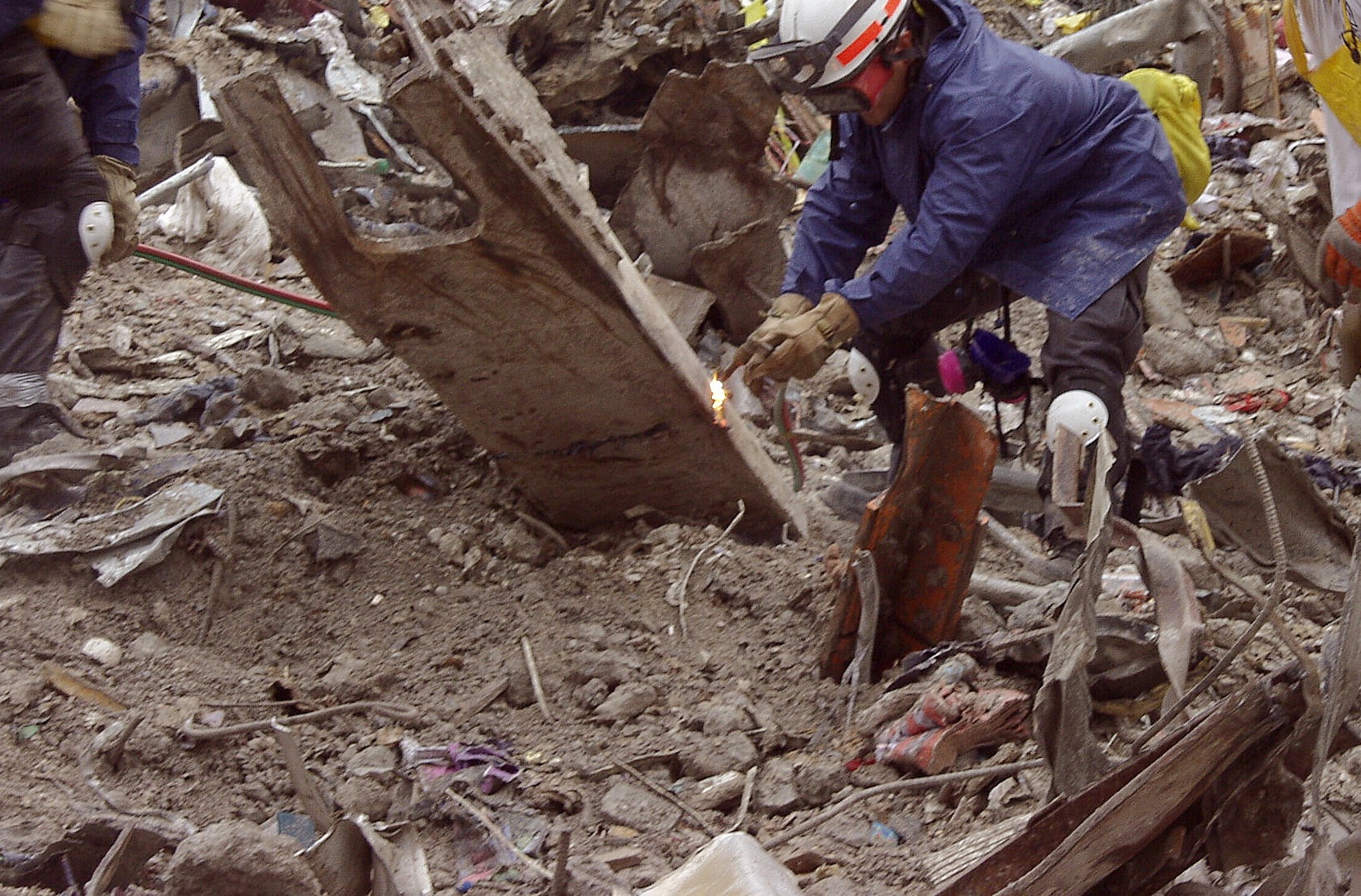
Or (US&R-Dog on pile-e3380.jpg):
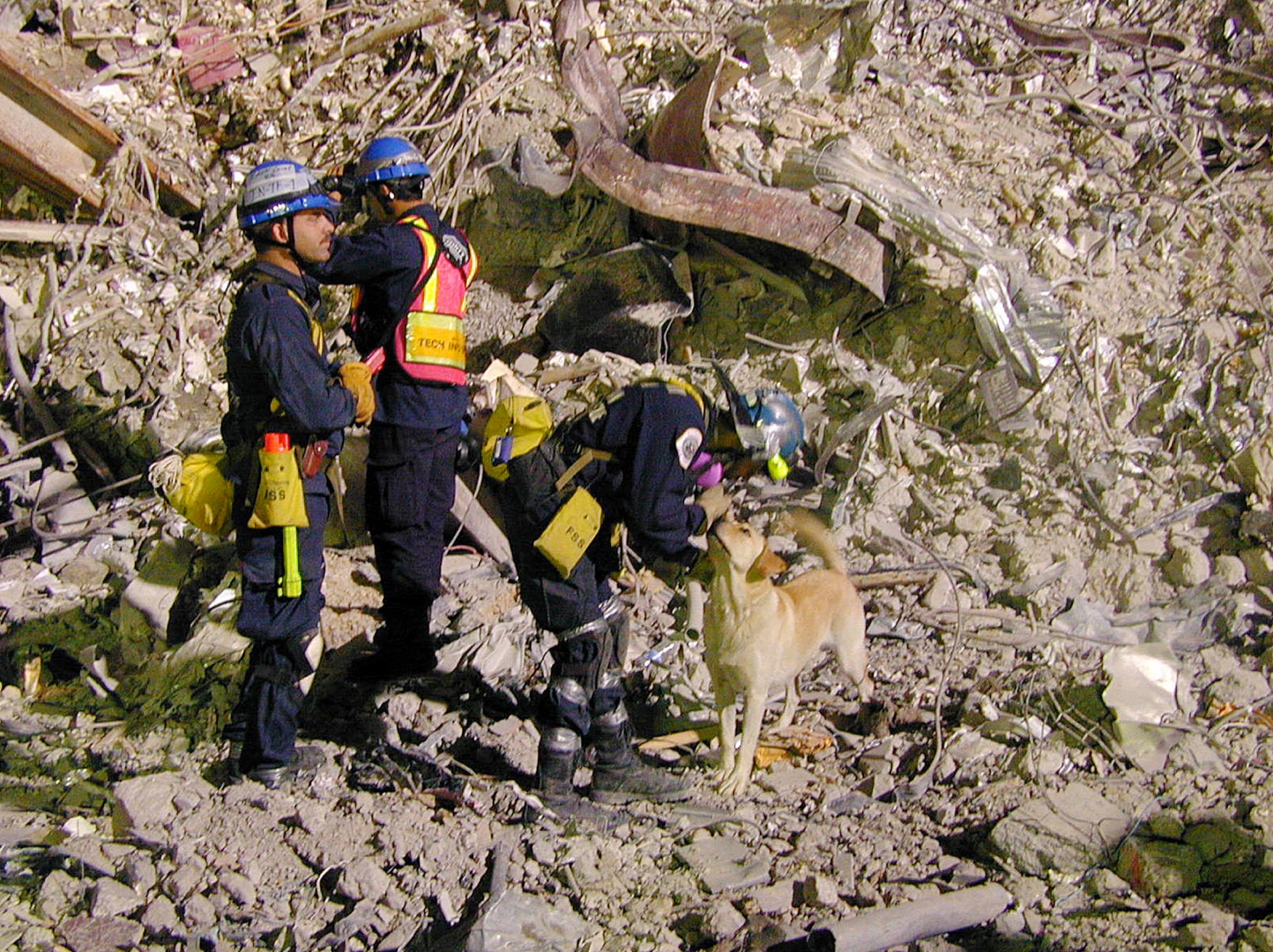
FEMAphoto_WTC - 109.jpg
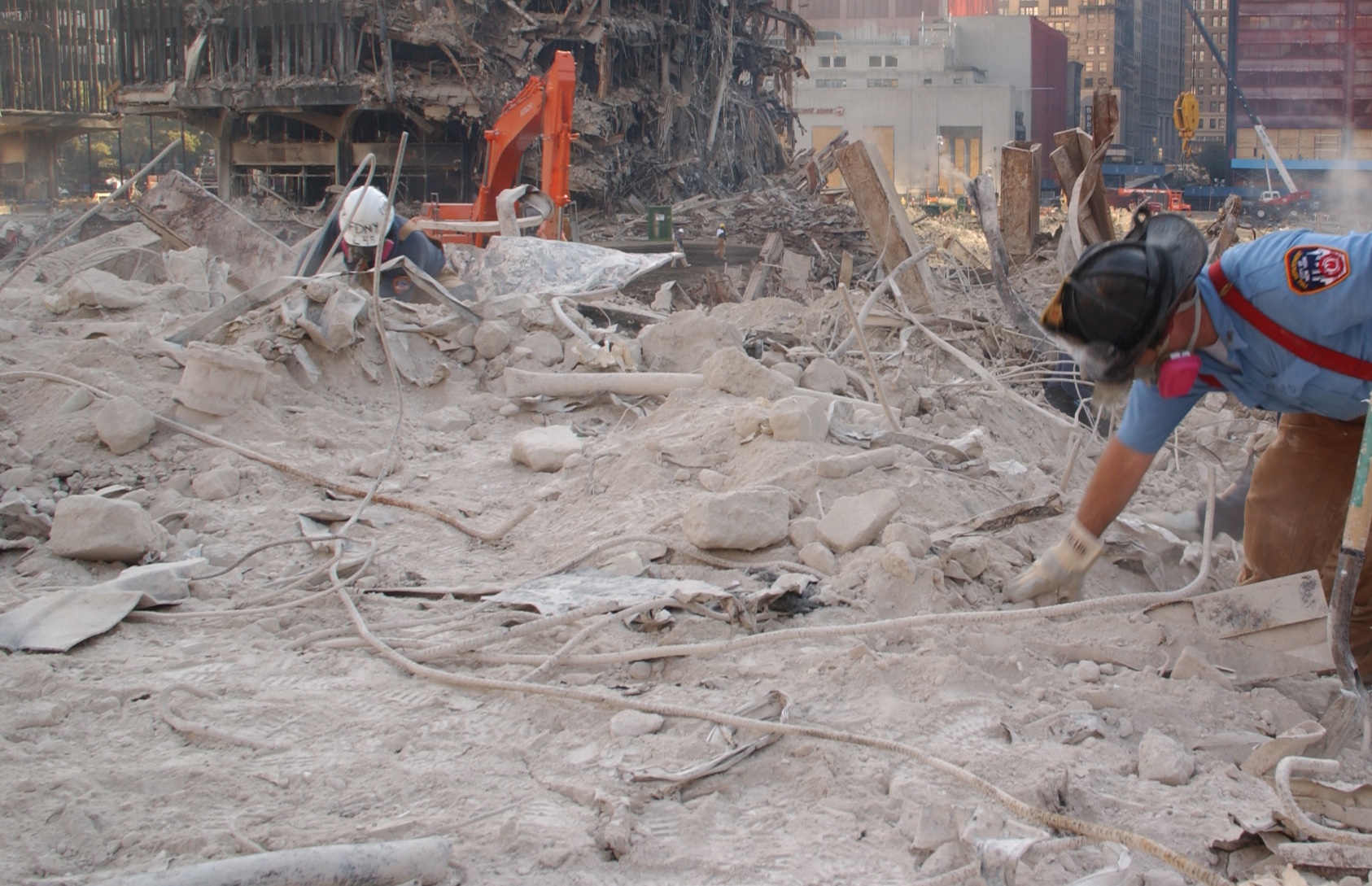
FEMAphoto_WTC - 126.jpg
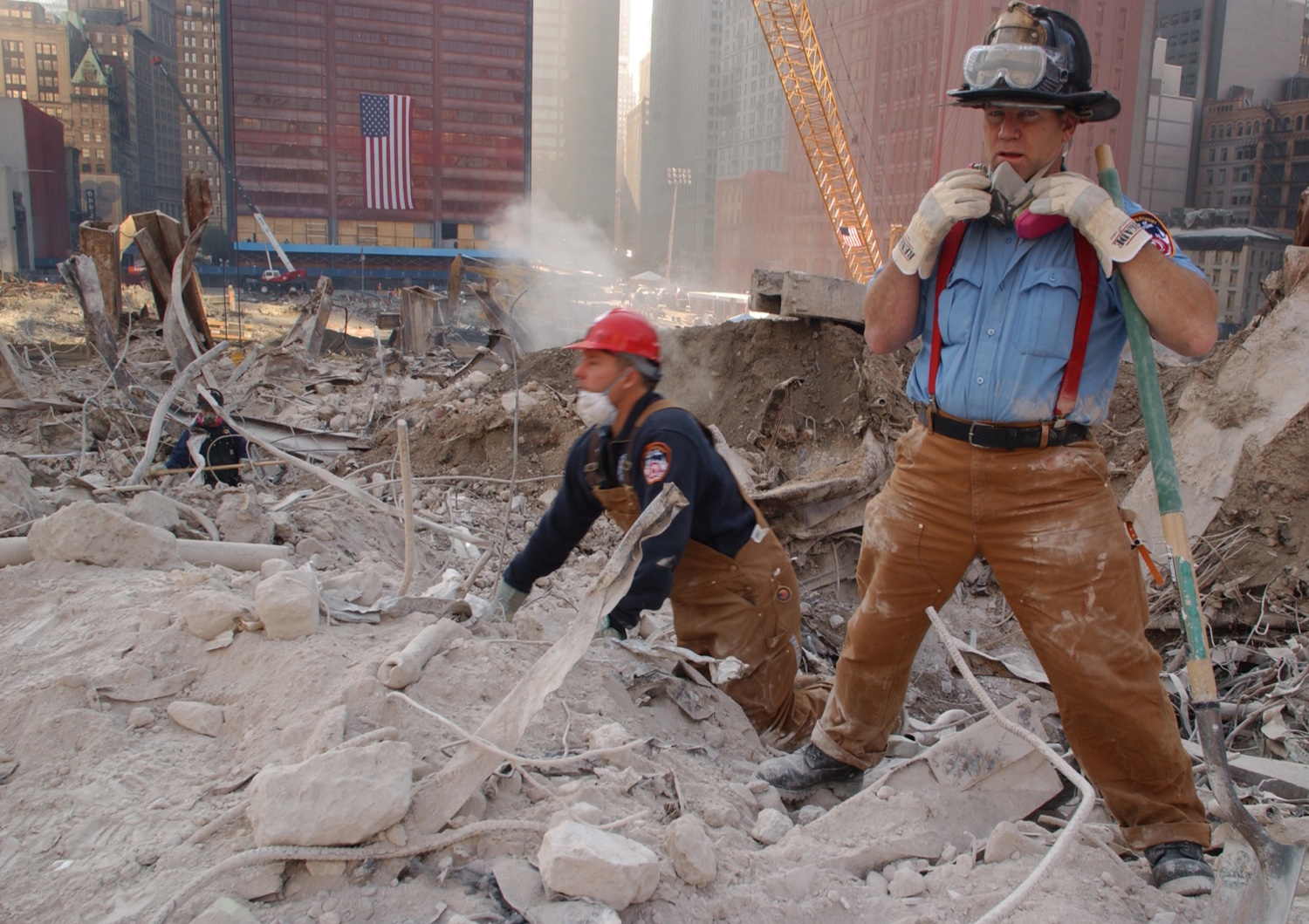
The "pyroclastic cloud" did not seem to differ (accounting for scale) from the dust clouds in verinage demolitions. And in what way is it "pyroclastic"?
All the concrete did not turn to dust. Pretty much all the wallboard probably did, but that does not really take much energy. Dust takes longer to settle, so initially the pile would have had a layer of dust over it. There were many slabs that were simply broken up, and a lot of the debris was in quite large chunks, like here:
Or (US&R-Dog on pile-e3380.jpg):
FEMAphoto_WTC - 109.jpg
FEMAphoto_WTC - 126.jpg
Last edited:

Yes. I'd like to see someone agree with Jazzy's 'friction welding', core sill standing 'all slagged up' (still waiting for that close-up shot which confirms the assertion) kinetic energy brought to melting point inevitable hot spot 'theory'.
I asked you - What is 'energy in its loosest sense'? Your answer:
One other thing, you've also said that the energy required to break the concrete in each tower represents around 5% of the total PE available in each tower. You even said turning steel rc into dust was easy -
I've had to be put through the torture of your theory, so here's mine:
Glad you made those points Lee, I was thinking very much along those lines also but was a bit apathetic about writing it. so thanks.
BTW it takes a force of 4000 psi to smash the concrete but I am sure it is a lot more to pulverise it.
http://en.wikipedia.org/wiki/Reinforced_concrete#Behavior_of_reinforced_concrete
External Quote:Reinforced concrete is a composite material in which concrete's relatively low tensile strength and ductility are counteracted by the inclusion of reinforcement having higher tensile strength and/or ductility.
Typical concrete mixes have high resistance to compressive stresses (about 4,000 psi (28 MPa));

Steve
Active Member
The presure pulses could have occured according to this. The section on presure pulses is near the bottom of the scroll.
http://www.debunking911.com/moltensteel.htm
http://www.debunking911.com/moltensteel.htm
The presure pulses could have occured according to this. The section on presure pulses is near the bottom of the scroll.
http://www.debunking911.com/moltensteel.htm
Yes that is very interesting but it is a theory and although I have only quickly scanned through it as yet, one thing that jumped out was:
Which is highly significant when we previously see the reinforced concrete being described as 'only needing 5% of the available kinetic energy' to destroy it and 'give me a sledgehammer and I will show you' and then it suddenly becomes 'unyielding', thereby preventing any pile driver effect and dissipation of energy.External Quote:"Roaring oven" Ok, it was indeed hot in the rubble piles of WTC 1 & 2. More important, there were definite hot spots which were the hottest. We have seen ample evidence of potential fuels, including ordinary office materials, gasoline in the automobiles in the basement(?) and transformer oil. However, heat always flows from higher temperatures to lower ones. So to obtain yellow hot steel requires not only sufficient energy, but if heated from the exterior, high temperatures. If the energy was supplied by pressure pulses, as suggested, then simply the friction of repeated slamming the bottom of a box column into unyielding concrete or granite suffices.
Maybe you should have started that new thread you promised.
The "pyroclastic cloud" did not seem to differ (accounting for scale) from the dust clouds in verinage demolitions. And in what way is it "pyroclastic"?
All the concrete did not turn to dust. Pretty much all the wallboard probably did, but that does not really take much energy. Dust takes longer to settle, so initially the pile would have had a layer of dust over it. There were many slabs that were simply broken up, and a lot of the debris was in quite large chunks, like here:
Haven't forgotten!
The"pyroclastic cloud"...And in what way is it "pyroclastic"?
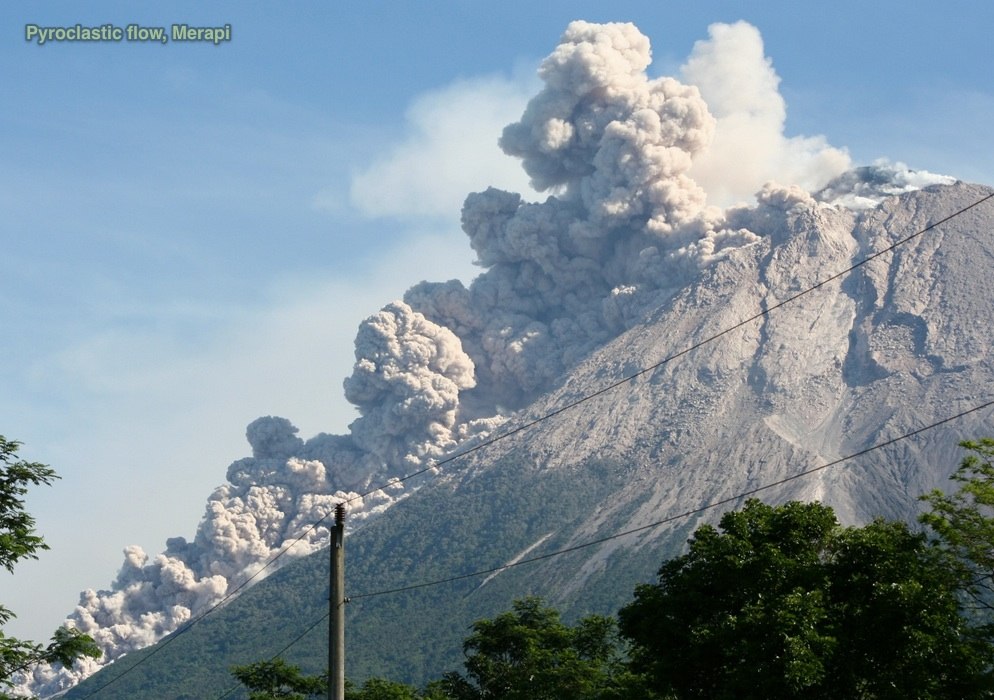
In the way you said it in post 88, pg 3 of thread 9/11: Is this photo consistent with a progessive collapse?
Your response to my description of the destruction of the towers as an 'eruption' was to 'correct' me, but no inverted commas here. You said then:
The pictures you show only serve what I say. Right in there, at the base of it, it's dust, gravel and strangely rounded pieces of larger 'stones' which look smooth ...but where are the pictures of the surrounding streets and buildings covered with thick dust? - where are the at least partially intact floors? It's obvious - it went up in a pyroclastic dust cloud.Pyroclastic flow would be a better volcanic analogy, like this:
Last edited by a moderator:
- Status
- Not open for further replies.
Similar threads

- Replies
- 47
- Views
- 19K

- Replies
- 45
- Views
- 32K

- Replies
- 28
- Views
- 24K


- Replies
- 42
- Views
- 22K
Latest posts
-
 NYT: What Is Out There? The Findings So Far of a Trump-Backed U.F.O. Panel.
- Latest: Smythe Bacchus
-

-

Trending content
-
 Thread 'David Grusch Makes Wild Claims in Oct 2026 Appearance on Joe Rogan Podcast'
- MeowingMuon
Replies: 64 -


