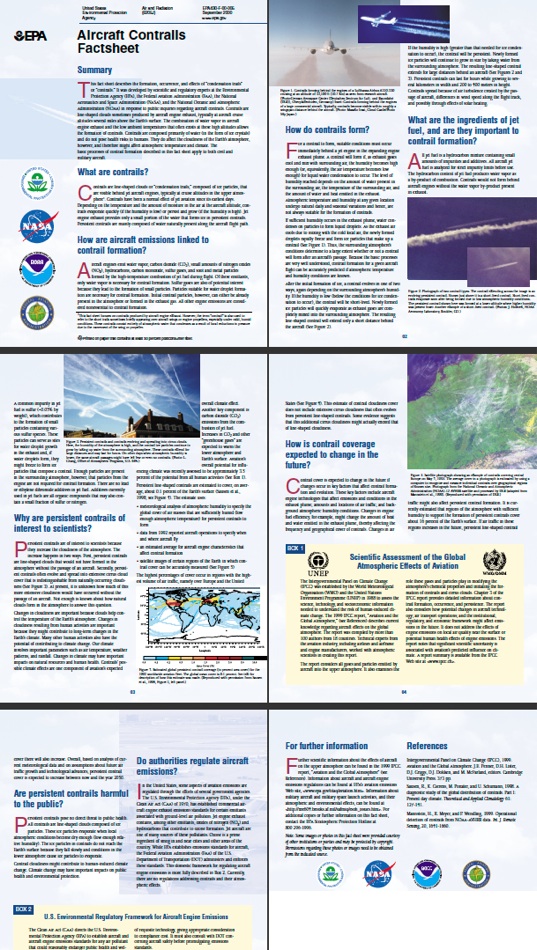
A contrail's life expectancy depends largely on prevailing winds and relative humidity. Presuming that conditions supported its creation in the first place, a contrail can last for many hours if not disturbed by strong or turbulent winds aloft. It is not uncommon to observe a long-lasting contrail stretched sideways like taffy in light wind conditions, transformed into a very thin, localized cirrus layer a mile or more in width. Choppy winds aloft tend to dissipate contrails more quickly, as does extremely low relative humidity. Sometimes contrails exist for only a few seconds or are produced in short, staccato-like bursts when an aircraft happens to be flying in and out of the exact temperature boundary where they will form. But no matter how long they last, they all disappear for the same reason — eventually they are diluted with the comparatively dry, surrounding air. Relative humidity within the contrail cloud steadily decreases, and the ice crystals disappear through the process of sublimation.