An airplane doesn't appear that way, and it doesn't simply disappear at that altitude.
It was obviously not an ultralight (ultralight motorized aircraft), although a self-proclaimed skeptic
had the audacity to claim that the entire wave of Belgian UFO sightings can be explained by this type of aircraft [22]. It wasn't an invisible cloud, nor a balloon carried by the wind, since the direction and magnitude of the speed would then be different. We can also rule out a mirage effect, since the two military radars were observing the source from different directions. Spatial coincidence would have been impossible, and the movement would have been very slow. Furthermore, mirages are more easily detected by the civilian airport radar. It wasn't an American stealth aircraft either. This hypothesis is not supported by any facts.
...
in addition to those from the evening and entire night of March 30/31, 1990, my analysis reveals only two unidentified radar traces. I can therefore state that the Belgian wave UFOs were very difficult to detect by radar. Instead of seeing this as a failure, I consider this result as a piece of physical information that adds to the many others needed to better understand the UFO phenomenon and ultimately understand it. It is true that the Belgian wave UFOs were almost always observed at very low altitude. They then escaped the vigilance of ground radars, but at other times, they must have crossed airspace ...
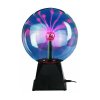
I have good empirical reasons to believe that the UFOs in the Belgian wave were surrounded by ionized air [8]. This is also justified for theoretical reasons, since it is part of the Pulsed EM Propulsion model that I have developed elsewhere. One could therefore object that a plasma should be easily detectable by radar, but this is not necessarily true. Reflectivity depends on the spatial distribution of free electrons. When it is spread out enough and varies gradually enough, it deflects the incident beam instead of reflecting it. It is well known that since the Belgian wave, "triangular UFOs" have often been observed all over the world. I have followed this issue to some extent, but I have never found any evidence of relatively easy radar detection of these craft...
• The presence of anomalous echoes of this type caused, during the night of March 30-31, 1990,
the climb of two F-16s, but this did not explain the anomalous echoes detected and
recorded by them. Their electronic filters should have excluded them, and the
behavior was very different.
• This led to a major puzzle that was only solved by realizing that
the measurement of speed by the Doppler effect can be distorted. This results from the fact that the
waves reflected by different parts of an invisible cloud interfere with each other, which
can simulate a "Doppler velocity" different from the average velocity of that entity. Generally, it is lower, and this is also explained.
• The UFOs in the Belgian wave were difficult to detect by radar, which is mainly due to their shape, which favored specular reflections. However, there were two unidentified radar traces. The best-documented one appeared precisely during the F-16 intervention.