When I presented several possible ways the photo could have been faked, Clarke responded:
"There is a difference between thinking the photo is a hoax and proving it."
Yes, of course—but that's kind of the point. The burden of proof doesn't lie with the skeptic. If the photo can be faked, then it's worthless as evidence of anything extraordinary—especially given that the photographer remains anonymous.
Agree with the burden of proof being with the claimant, and in this case, the people continuing to claim that the remaining photo shows something unusual (the original claimants are unidentified and so aren't available to be questioned as far as we know).
I'm less sure about " If the photo
can be faked, then it's worthless as evidence of anything extraordinary...", though it can show how the photo might have been produced.
Several theories about how the picture was made have been discussed (and some convincing recreations posted) here, but they cannot all be correct. -To clarify, I think it's highly likely that the picture, and its lost siblings, was a deliberate hoax, and that hoax may well have used one or more of the methods that have been proposed.
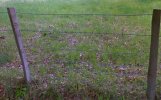
The low quality of the photo and the limited in-picture evidence re. location- essentially a fence and some bits of foliage- and absence of any reliable indication of the object's distance/ size make it very difficult to debunk. Maybe this was the intention of the photographer.
The Calvine photo is an analogue film-captured photograph, so digital manipulation can be ruled out.
But more generally, I'd guess many photos
could be faked. This is a cornerstone of Moon landing denialist belief, despite the massively overwhelming, utterly convincing, and internally consistent evidence of successful human Moon landings.
(The Calvine photo lacks any such supporting evidence except one anonymous account.)
However, we have very few images of the surface of Venus, all from Venera landers (
https://en.wikipedia.org/wiki/Venera):
Picture from Venera 9, 1975;
Picture from Venera 10, 1975. Venera 13, Venera 14 (1981) also took photos.
The state agencies of the USSR had a long history of photo manipulation, including in the space programme,
External Quote:
After cosmonaut Valentin Bondarenko died in a training accident in 1961, the Soviet government airbrushed him out of photographs of the first group of cosmonauts. As Bondarenko had already appeared in publicly available photographs, the deletions led to rumours of cosmonauts dying in failed launches. Both Bondarenko's existence and the nature of his death were secret until 1986.
Wikipedia,
Censorship of images in the Soviet Union; the USSR also had a history of state-endorsed scientific fraud (notably
Lysenkoism).
It wouldn't be
too difficult to fake the above pictures...

(On a more sinister note, I remember a schoolteacher telling us kids that some people believed that the 1960 Sharpeville massacre in South Africa was exaggerated, and the photo of casualties in the history book we were using might have been a fake).
If an image can be faked, or a similar photo produced using mundane (or at least normal terrestrial) means, it isn't evidence in itself that the original is faked. An authentic, low quality photo of a small bright light in the sky, perhaps a distant airliner, might be relatively easy to replicate using hoaxing techniques, but that doesn't alter the authenticity of the original.
However, the highly dubious provenance of the Calvine photo, its low quality and what we know about alien spacecraft (nothing, except there's no testable evidence that they exist) and what we know about fakery and tall tails (common) and British tabloid newspapers (sometimes dodgy) might lead a reasonable person to conclude that
that photo is probably part of a hoax.
Despite David Clarke's suspicions,
@Andreas must be right that the original account of the event rules out any likely terrestrial aircraft, even if we allow for some misjudgement of distance/ size/ speed and unintentional exaggeration or poor recall.