
You are using an out of date browser. It may not display this or other websites correctly.
You should upgrade or use an alternative browser.
You should upgrade or use an alternative browser.
Using Sitrec to plan your EU 2026 Aug 12th Solar eclipse viewing
- Thread starter jarlrmai
- Start date

Can you elaborate a little about how you are using it?It's handy for working out timings and viewpoints, especially if you plan on any photography involving landmarks/buildings etc.
I will be travelling to Mallorca and have got as far as using Suncalc.org to work out that if I want to see the sun setting in the sea rather than disappearing behind land, I will need to move a mile or two south of where I'll be staying.
I'm thinking perhaps here, with the sun between the two (very flat) islets at totality. But the family might not be up for the long hot walk there (and back in the dark!) so perhaps not....

I just fixed some accuracy issues for precisely this type of thing. @ThomasH had a nice photo of the sunrise behind a building where the sun was horizontally off by half a degree and vertically off slightly. The exact DTLDs were known.
The fixes were firstly to account for axial precession -– the earth has tilted half a degree since the reference year. Secondly atmospheric refraction was not applying to buildings.
The precession fix is in. Refraction is mostly done, complete later today.But ENSURE YOU SWITCH REFRACTION ON especially for near the horizon shots. I'm going to make it be in by default. [Refraction is now on by default]
Also, if anyone has any other photos of a moon or sun behind a large building - at high zoom with exact DTLDs, I'd love to use them to verify accuracy. It now matches @Thomas's image to <0.05°, so visually near perfect.
The fixes were firstly to account for axial precession -– the earth has tilted half a degree since the reference year. Secondly atmospheric refraction was not applying to buildings.
The precession fix is in. Refraction is mostly done, complete later today.
Also, if anyone has any other photos of a moon or sun behind a large building - at high zoom with exact DTLDs, I'd love to use them to verify accuracy. It now matches @Thomas's image to <0.05°, so visually near perfect.
Last edited:

jarlrmai
Senior Member.
There are local high spots that look west, so I placed the camera there and set the time to the eclipse time, with the 3d buildings accurate elevation I know the FOV the sun will pass through and how long it will take
This will allow me to setup my wide angle shot
https://www.metabunk.org/sitrec/?custom=11433/Solar eclipse/20260804_150801.js
This will allow me to setup my wide angle shot
https://www.metabunk.org/sitrec/?custom=11433/Solar eclipse/20260804_150801.js
I don't think the terrain modelling is accurate enough to be very useful for the sunset use case... there seems to be a phantom pyramid out to sea!
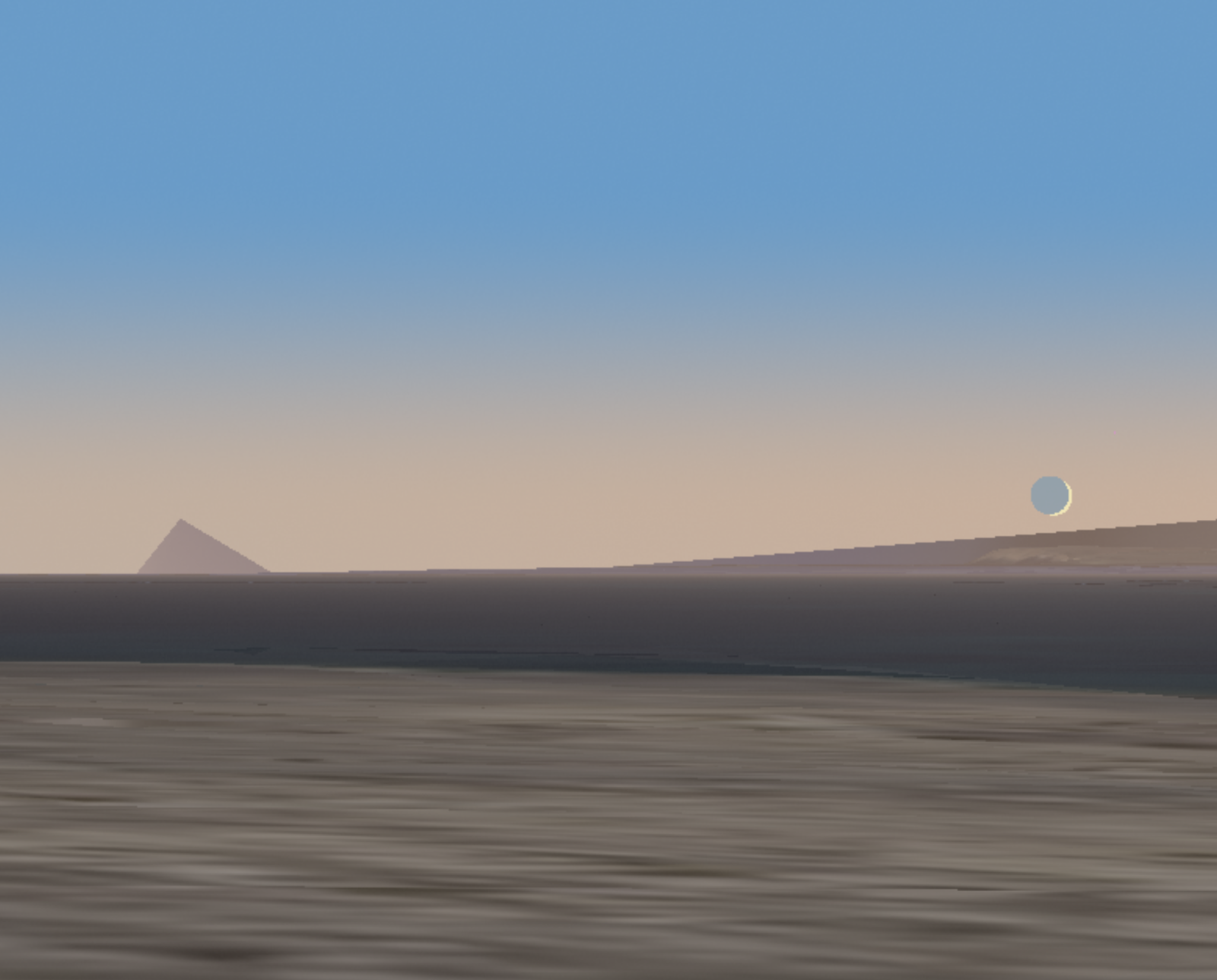
Actually that seems to be an artefact of the 3D buildings layer.
To be honest though I think I'll just have to do a location scout the day before and imagine the sun 0.2 degrees to the left!
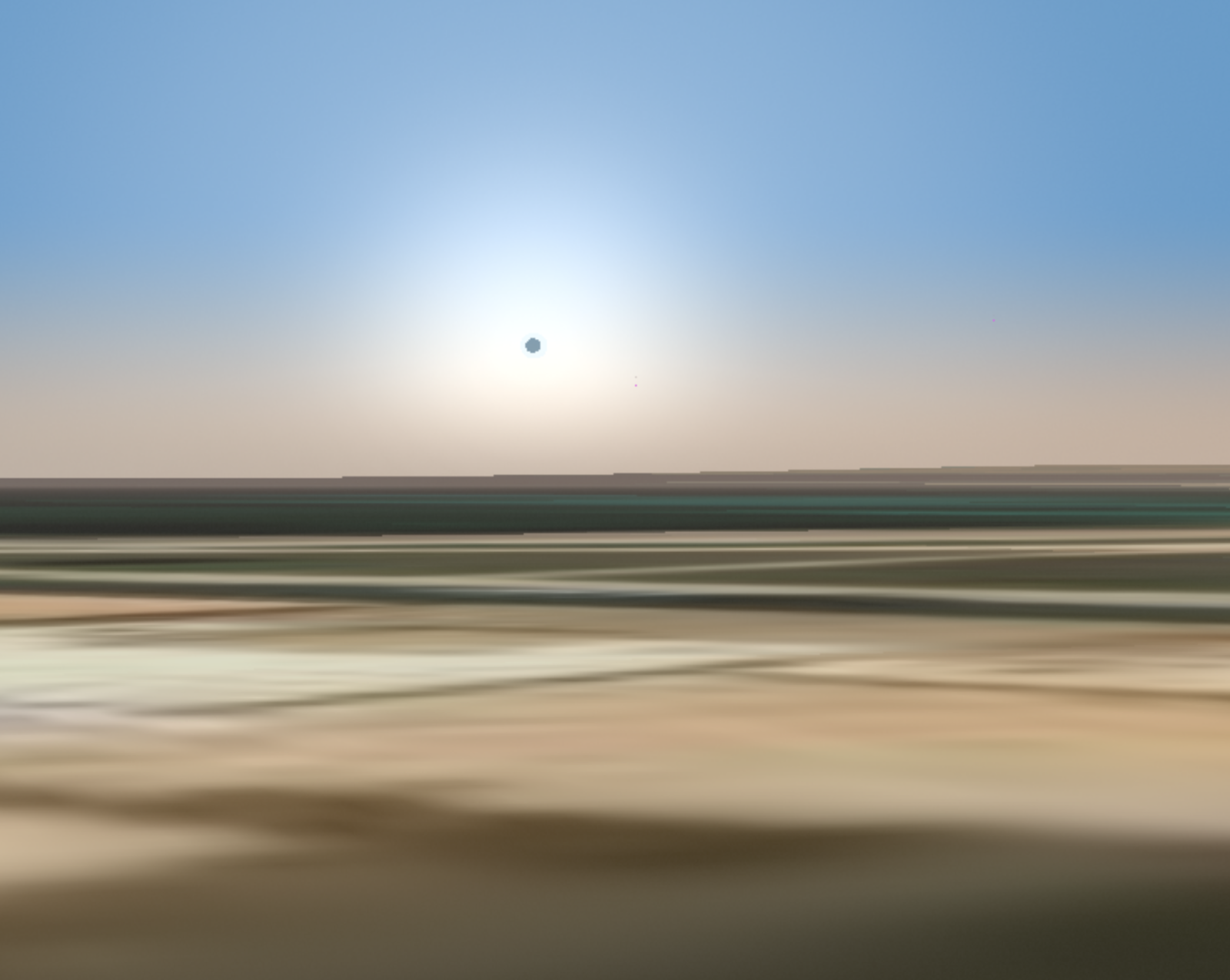
Actually that seems to be an artefact of the 3D buildings layer.
To be honest though I think I'll just have to do a location scout the day before and imagine the sun 0.2 degrees to the left!
Last edited:
Yes it's perfect now! The height is still depending of a lot of atmospheric things, so you have to tweak refraction pressure a bit to have a perfect match, but all in all extremely close.I just fixed some accuracy issues for precisely this type of thing. @ThomasH had a nice photo of the sunrise behind a building where the sun was horizontally off by half a degree and vertically off slightly. The exact DTLDs were known.
The fixes were firstly to account for axial precession -– the earth has tilted half a degree since the reference year. Secondly atmospheric refraction was not applying to buildings.
The precession fix is in. Refraction is mostly done, complete later today. But ENSURE YOU SWITCH REFRACTION ON especially for near the horizon shots. I'm going to make it be in by default.
Also, if anyone has any other photos of a moon or sun behind a large building - at high zoom with exact DTLDs, I'd love to use them to verify accuracy. It now matches @Thomas's image to <0.05°, so visually near perfect.
But with refraction off, the height is way off so maybe it should be on as default?
Here is the matching in Sitrec
....and my little TimeLapse:
Source: https://youtu.be/_DiOkfUbqXA
It is now (2.114.0) on by default.But with refraction off, the height is way off, so maybe it should be on by default?
And it's quite dramatic at these zooms:
Refraction off (geometric ideal)
Refraction on (real life)
At the horizon, it's nearly 0.5 degrees. That does not sound like much, but it's about the diameter of the moon.

Nice work @Mick West - Do you have any plans to correct for the gravitational lensing of the Sun? 
/s
/s
I don't think the terrain modelling is accurate enough to be very useful for the sunset use case... there seems to be a phantom pyramid out to sea!
Are you logged in with 3D buildings and the building source set to Google Photorealistic?
https://www.metabunk.org/sitrec/?custom=1/Mallorca eclipse totality/20260804_175704.js
No, but I have plans, big plans!Nice work @Mick West - Do you have any plans to correct for the gravitational lensing of the Sun?
/s
Great.It is now (2.114.0) on by default.
And it's quite dramatic at these zooms:
Refraction off (geometric ideal)
View attachment 92456
Refraction on (real life)
View attachment 92458
At the horizon, it's nearly 0.5 degrees. That does not sound like much, but it's about the diameter of the moon.
It seems like photoephemeris.com, moon calc etc. use the refraction measure too, maybe just an average. Because when it says Moon a 0 degree it matches Sitrec with refraction ON
Wow Cool!
A small thing, I tried finding the exact center of the moon shadow of an eclipse, it would be a help with a small dot in the center, since the shadow it pretty big when zooming in

Wow Cool!
A small thing, I tried finding the exact center of the moon shadow of an eclipse, it would be a help with a small dot in the center, since the shadow it pretty big when zooming in
Oops, I shall fix and greatly improve this.Oh it was on the shadow I meant.
Oh it was on the shadow I meant.
There you go! "Moon Shadow Center" and "Eclipse Path"
https://www.metabunk.org/sitrec/?custom=1/2027 Egypt Eclipse/20260805_052127.js
Are you logged in with 3D buildings and the building source set to Google Photorealistic?
View attachment 92459
https://www.metabunk.org/sitrec/?custom=1/Mallorca eclipse totality/20260804_175704.js
I obviously didn't have the right settings. So, moving the camera to my intended location it looks like totality will be well above the distant headland:
If I hiked round the bay then the crescent sun would just be kissing the cliffs as it sets:
That's got to be worth the walk right?
Incidentally, with refraction turned off it would set about 3 minutes earlier and into the sea:
Perfect, thanks!View attachment 92471
There you go! "Moon Shadow Center" and "Eclipse Path"
https://www.metabunk.org/sitrec/?custom=1/2027 Egypt Eclipse/20260805_052127.js
Having said that, even from town it would still be pretty neat. I think persuading two kids to take an extra 5-mile return hike around desolate coastline just for a slightly cooler photo op might be a tough sell!That's got to be worth the walk right?
So thanks @Mick West - this has been quite reassuring that the view from anywhere in the town I will be staying should be good as long as I have a clear view across the bay. Just need clear skies now (and no thunderstorms for about 200 miles to the northwest!)
BTW here is the view from the Café del Mar in Ibiza: https://www.metabunk.org/sitrec/?custom=5177/Cafe del Mar eclipse/20260805_112819.js
Last edited:
I've noticed a bit of weirdness (maybe intentional/unavoidable) when looking at the wider view - with refraction turned on you get two moons in the main view!
Presumably the top one is the refracted "virtual" moon while the real moon is the one casting the shadow, which isn't adjusted for refraction?
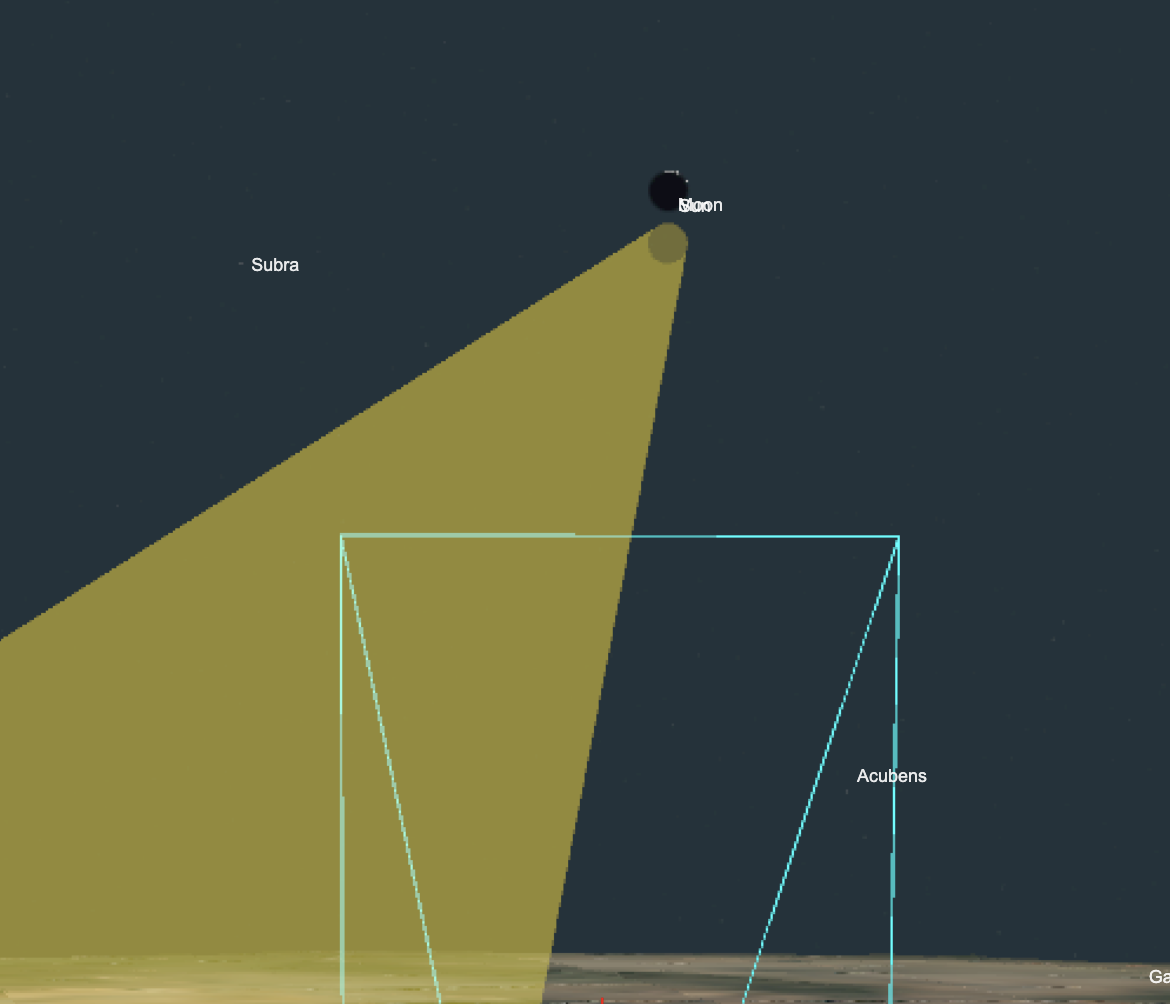
Presumably the top one is the refracted "virtual" moon while the real moon is the one casting the shadow, which isn't adjusted for refraction?

Ravi
Senior Member.
Here is an interesting map/website showing the likelihood of seeing the sun clearly during the eclipse.
Turns out the building I am staying in has a roof terrace so it looks like I may be able to avoid the crowds.
As far as I can work out (no laptop here!) totality should be just above those trees and then the sun should set as a crescent over this headland.
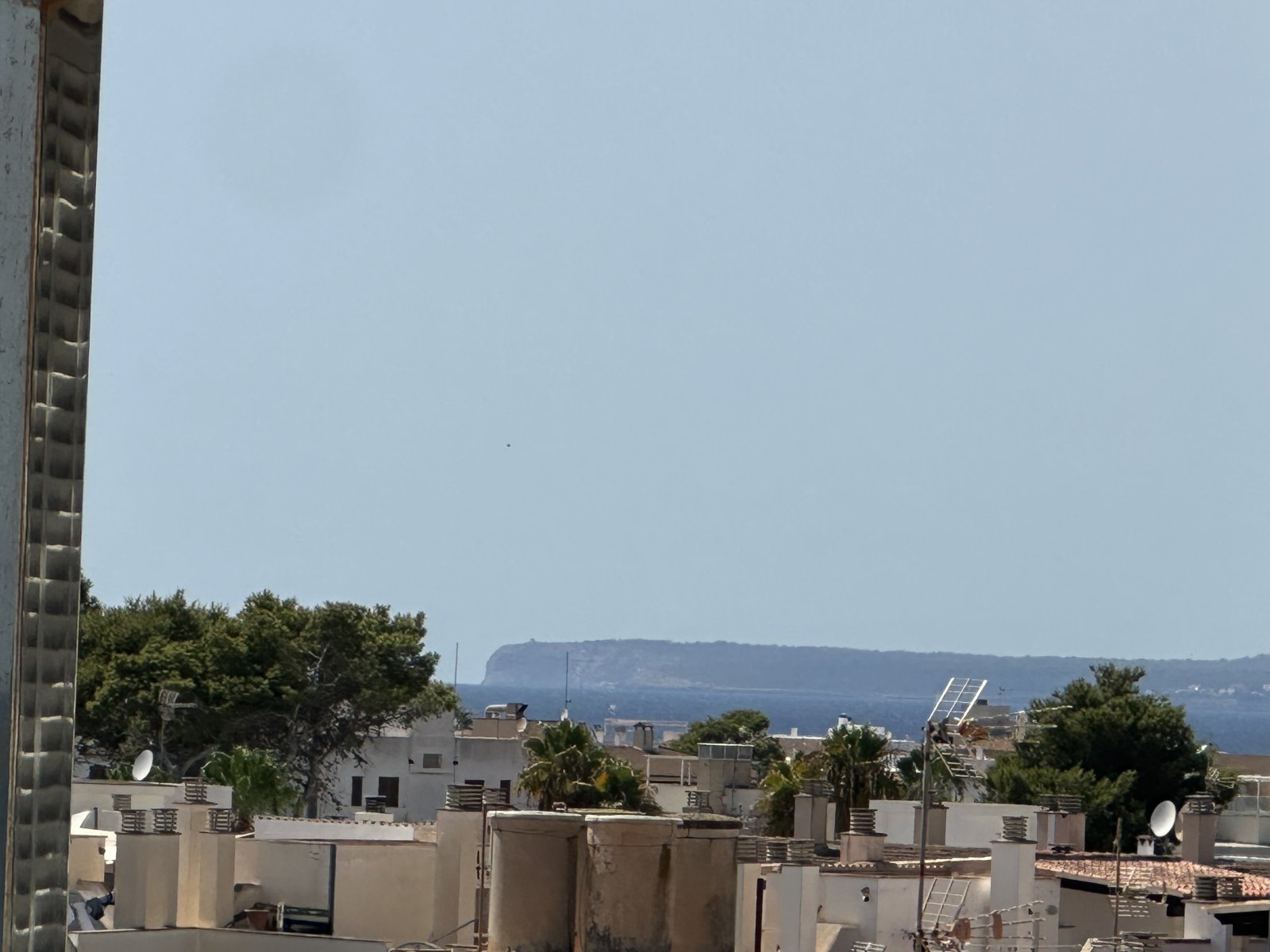
As far as I can work out (no laptop here!) totality should be just above those trees and then the sun should set as a crescent over this headland.
@Trailblazer
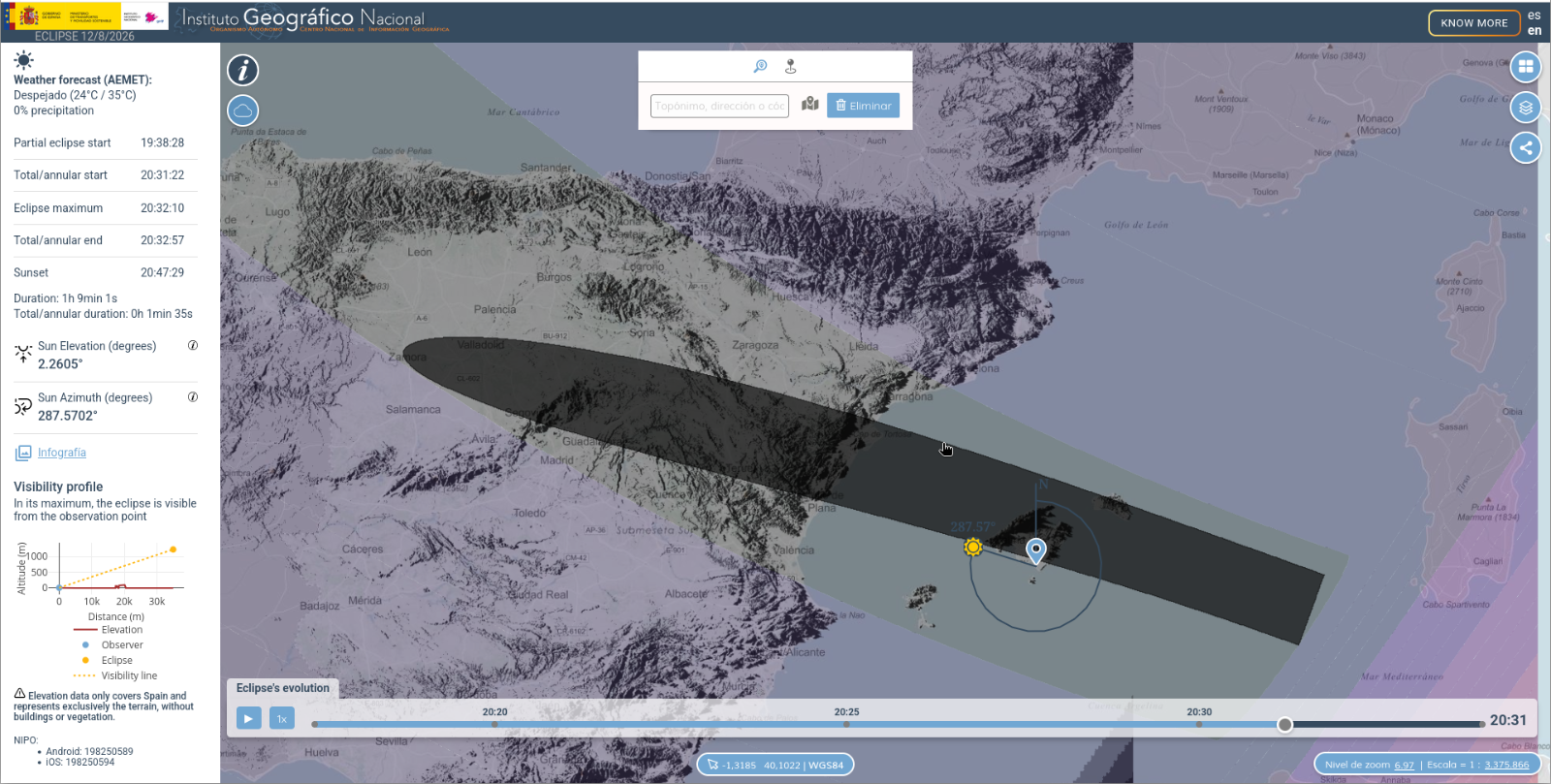
You can also check the website of the National Geographic Institute
https://visualizadores.ign.es/eclipses/2026 (english translation available)
It includes the terrain profile to check for the visibility, as well as the evolution of the shadow.
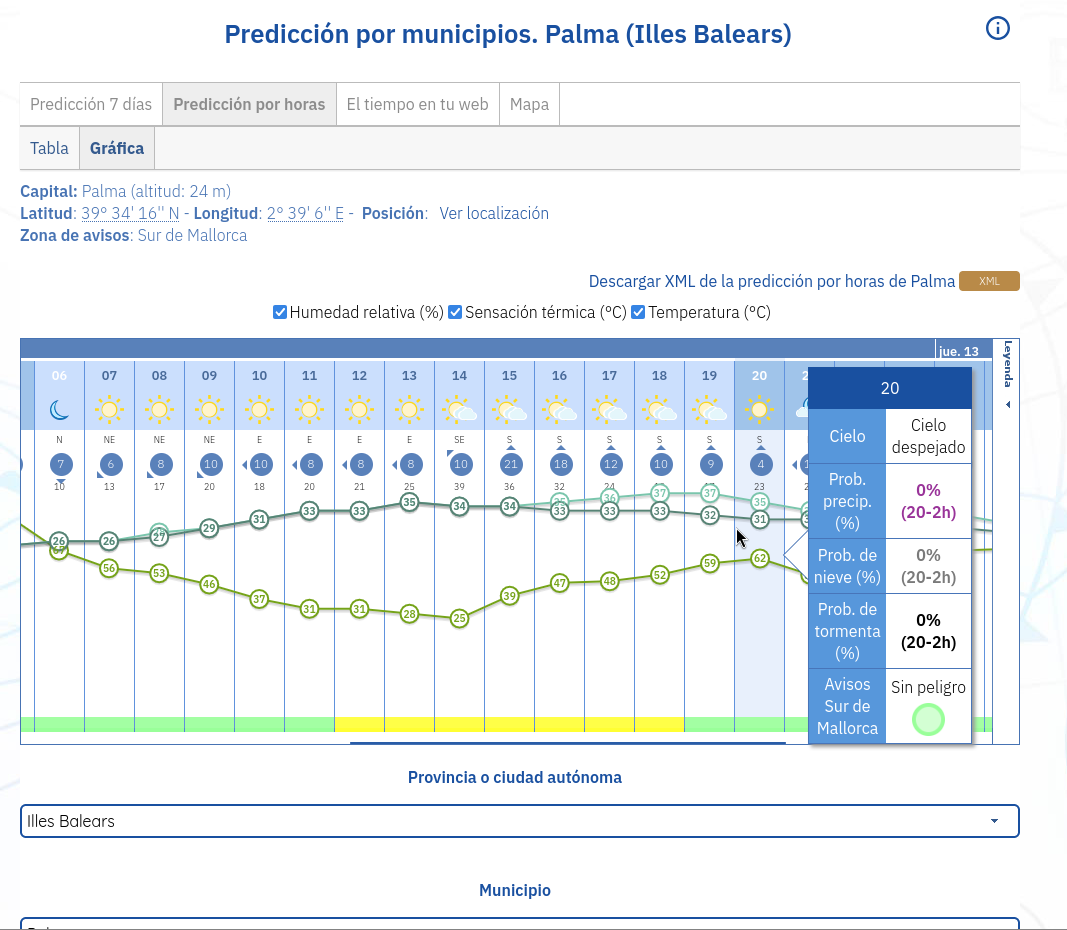
And you may also want to check the weather forecast for tomorrow
http://www.aemet.es
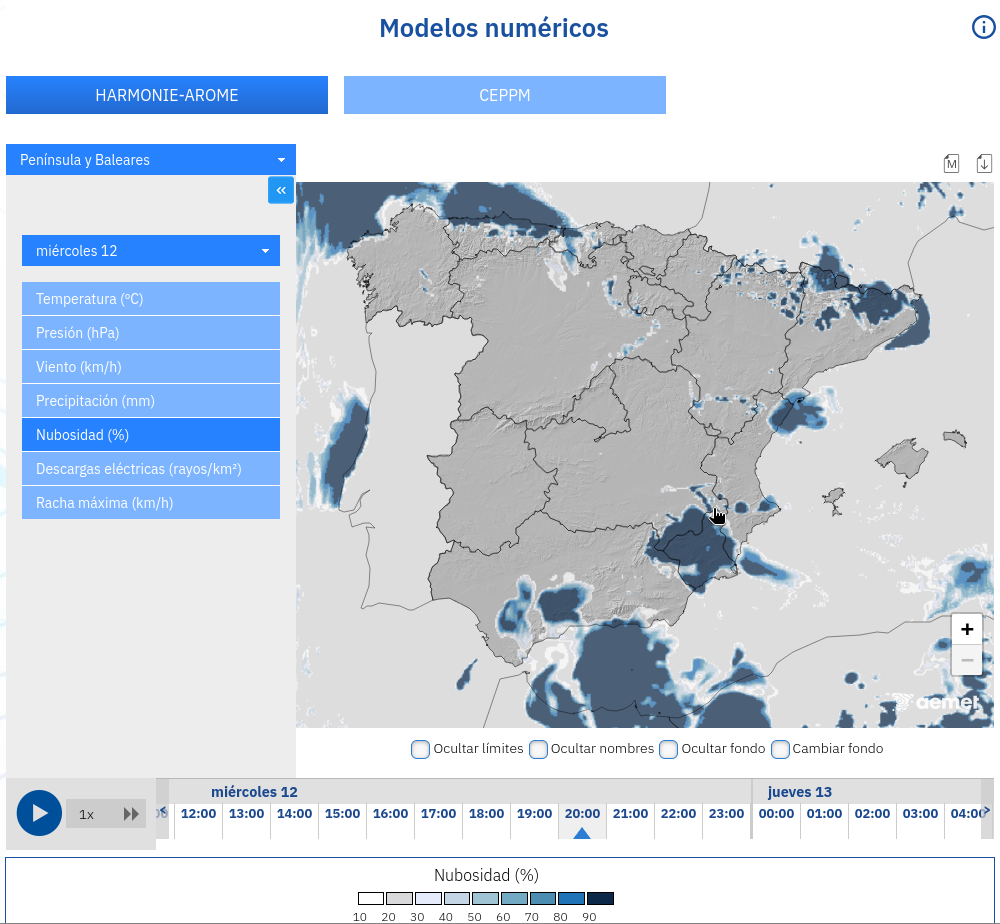
Or cloud cover prediction:
You can also check the website of the National Geographic Institute
https://visualizadores.ign.es/eclipses/2026 (english translation available)
It includes the terrain profile to check for the visibility, as well as the evolution of the shadow.
And you may also want to check the weather forecast for tomorrow
http://www.aemet.es
Or cloud cover prediction:
As far as I can work out (no laptop here!) totality should be just above those trees and then the sun should set as a crescent over this headland.
Assuming somewhere in Colònia de Sant Jordi, and that headland has the Cap Blanc lighthouse, it looks good.
https://www.metabunk.org/sitrec/?cu...from Colonia de Sant Jordi/20260811_174318.js

CuriousPhil
New Member
Congrats, Mick. The eclipse stuff looks awesome.
CuriousPhil
New Member
Hope you don't mind me sharing a CuriousPilot.com simulation of yesterday's eclipse (from the perspective of Majorca, Spain).
Source: https://youtu.be/swjKqh0GZJo?si=_YYoFB74hwmlZyaN
Source: https://youtu.be/swjKqh0GZJo?si=_YYoFB74hwmlZyaN

GM4AJK
Senior Member.
That's low to the horizon. I wonder if the Moon Illusion made it look bigger?
External Quote:
The Moon illusion is the optical illusion of the Moon appearing larger near the horizon than it does higher up in the sky. It has been known since ancient times and recorded by various cultures.[2][3]
The illusion is seen also with other celestial objects (such as in a sunset or sunrise, and constellations) and remains inconclusively explained,[3][4][5] with the ponzo illusion as a popular explanation.[6]
How are you doing the hills? They seem to be in the wrong place. The heading to the Eclipse looks right, around 287 true.Hope you don't mind me sharing a CuriousPilot.com simulation of yesterday's eclipse (from the perspective of Majorca, Spain).
https://www.metabunk.org/sitrec/?custom=1/Majorca match CP/20260813_213356.js
And your sun/moon size is obviously scaled up a bit.
CuriousPhil
New Member
Very observant, guys! Yes, the sun and moon are scaled up quite a bit in that video. That does make the eclipse position appear too low to the horizon. I've just added a checkbox to use the real angular diameters of the sun and moon. I'll default to using those correct sizes in Astronomy Mode in the next release. I've double checked the sun's position at totality against astronomy engine and the az/el matches CuriousPilot.
The hills are a brand new feature that hasn't been checked against reality -- yet. The code uses terrainHorizon.js and a march around the azimuth in 1440 bins. I do need to validate that feature and very much appreciate the comparison image, Mick. I'll get to work on troubleshooting the hills.
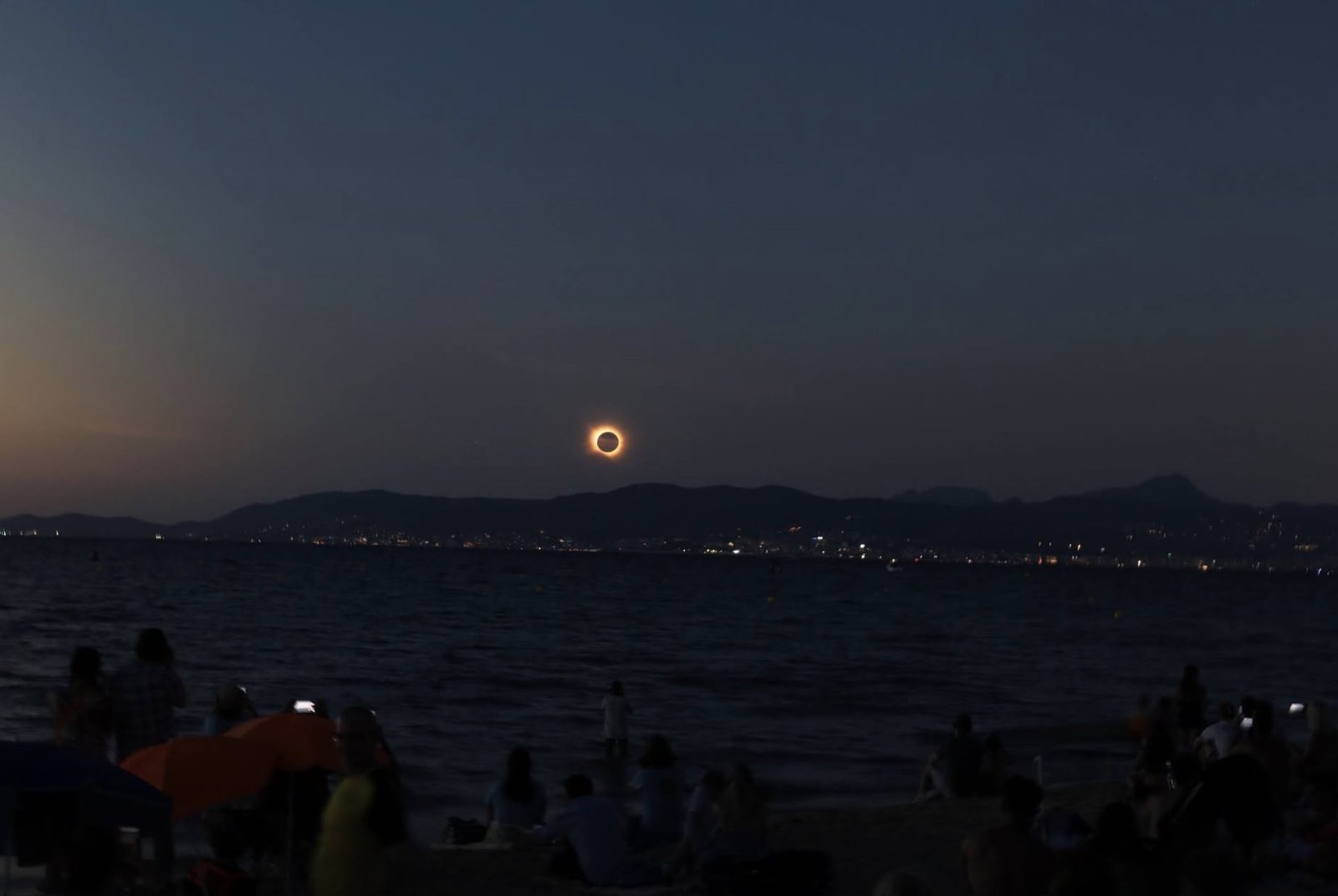
This image was posted by someone in Majorca yesterday. Not sure of the precise location. Very pretty photo, though.
The hills are a brand new feature that hasn't been checked against reality -- yet. The code uses terrainHorizon.js and a march around the azimuth in 1440 bins. I do need to validate that feature and very much appreciate the comparison image, Mick. I'll get to work on troubleshooting the hills.
This image was posted by someone in Majorca yesterday. Not sure of the precise location. Very pretty photo, though.
Not sure of the precise location
I reckon about here:
https://www.metabunk.org/sitrec/?cu...mage Over hills from beach/20260814_001117.js
CuriousPhil
New Member
I've got the image below as a test case showing the CuriousPilot simulation of the sky west of
CuriousPhil
New Member
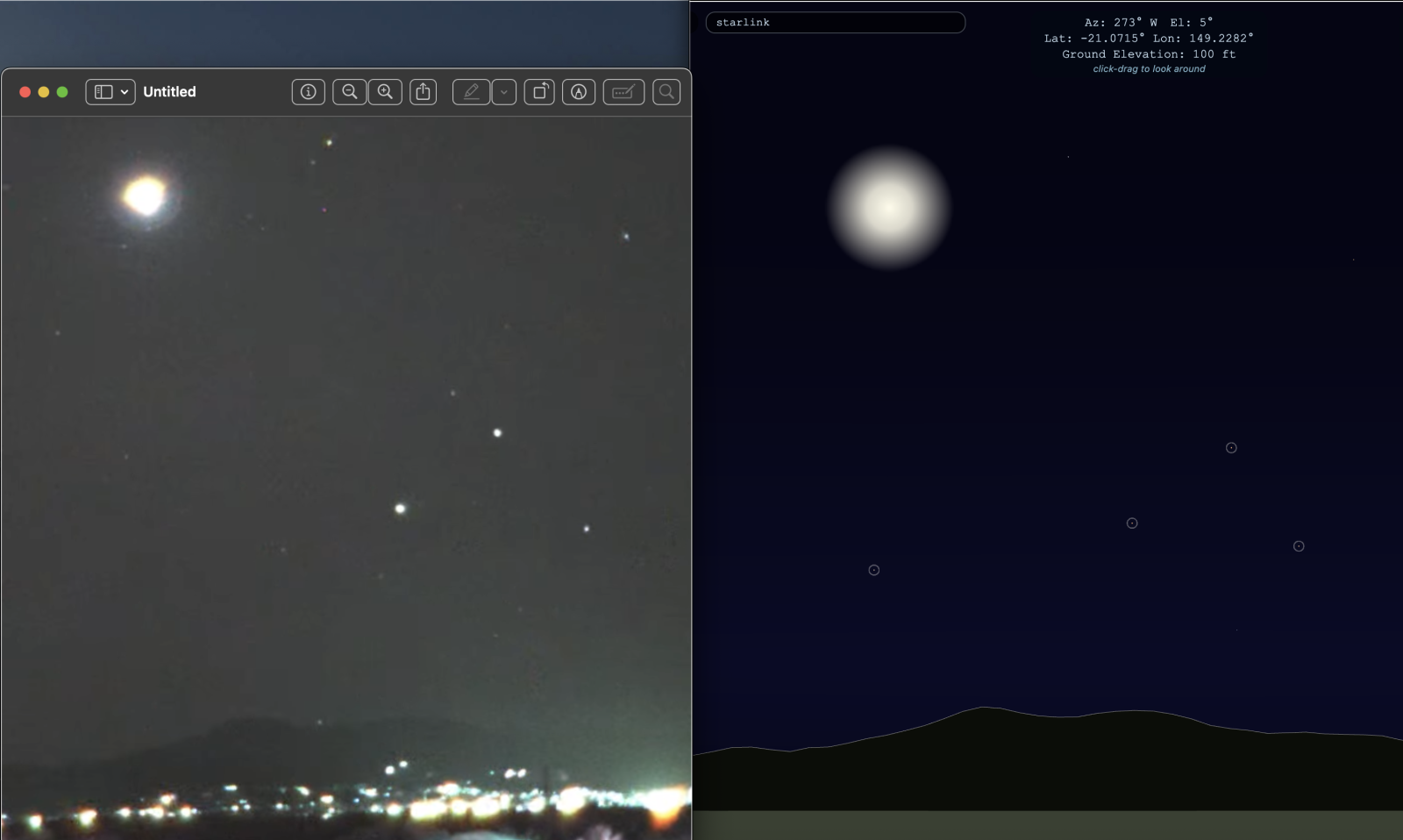
FYI. I've just compared the snapshot below from a video taken by an astronomer of Venus and Starlink flares to the CuriousPilot simulation. The video was taken on 2026-08-11 at 8:30:00 PM local time from Lambert's Lookout in Queensland, Australia. The Starlink movements in CuriousPilot precisely match the movements in the video, so I know this is a valid comparison. The position of the distant hills looks like a pretty good match to the simulation. This investigation continues!
I think you're okay! I somehow got the wrong lat/lonThis investigation continues!
https://www.metabunk.org/sitrec/?custom=1/Majorca match CP/20260814_004001.js
CuriousPhil
New Member
Thank you, Mick, for the excellent setup for comparison! Very much appreciated.
Here is the CuriousPilot snapshot from that location at totality (6:31:06 local time). Seems like a pretty good match, no?
BTW, this is with the Sun and Moon rendered at their correct sizes.
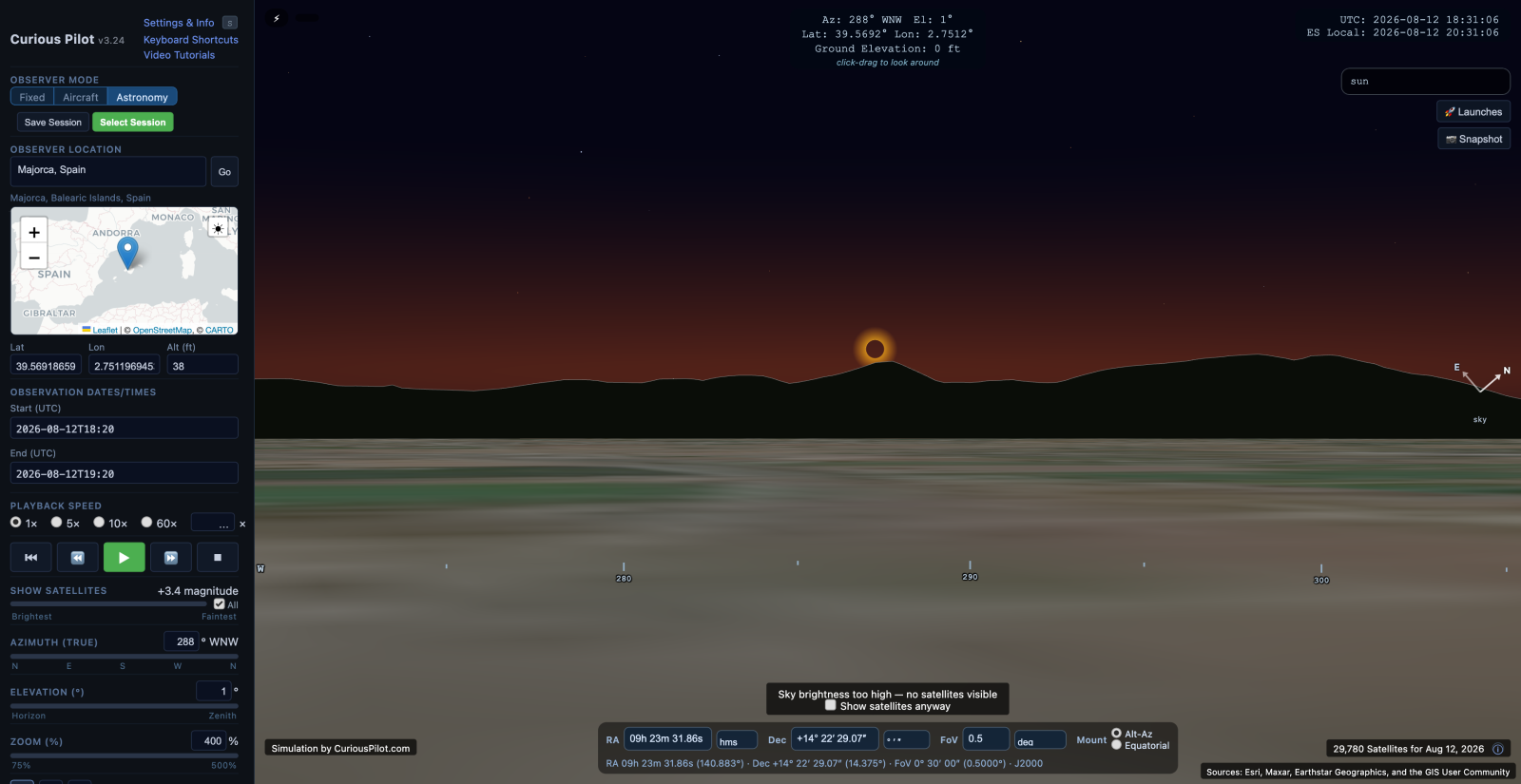
Here is the CuriousPilot snapshot from that location at totality (6:31:06 local time). Seems like a pretty good match, no?
BTW, this is with the Sun and Moon rendered at their correct sizes.
CuriousPhil
New Member
No worries, Mick. I've messed up lat/lon entries MANY times myself.I think you're okay! I somehow got the wrong lat/lon
https://www.metabunk.org/sitrec/?custom=1/Majorca match CP/20260814_004001.js
View attachment 92666
Assuming somewhere in Colònia de Sant Jordi, and that headland has the Cap Blanc lighthouse, it looks good.
https://www.metabunk.org/sitrec/?custom=1/Majorca Exclips from Colonia de Sant Jordi/20260811_174318.js
View attachment 92604
Indeed it was. Only phone photos so not great quality but in person it was mesmerising. Before the next eclipse I really need to invest in a proper camera - my last digital camera was bought about 20 years ago and wasn't even still working!
Followed by the sun setting still in deep partial eclipse:
Interestingly, the same town, Colònia de Sant Jordi, will have an annular eclipse exactly on sunset in January 2028. It would take exceptionally clear conditions to see it set into the sea as a half circle, but how cool would that be?
Similar threads

- Replies
- 8
- Views
- 3K


- Replies
- 9
- Views
- 3K

- Replies
- 3
- Views
- 5K


- Replies
- 129
- Views
- 36K


Latest posts
-

-
 The Ariel School, Zimbabwe UFO sighting - has it ever been debunked?
- Latest: Fritzkquzerk
-


