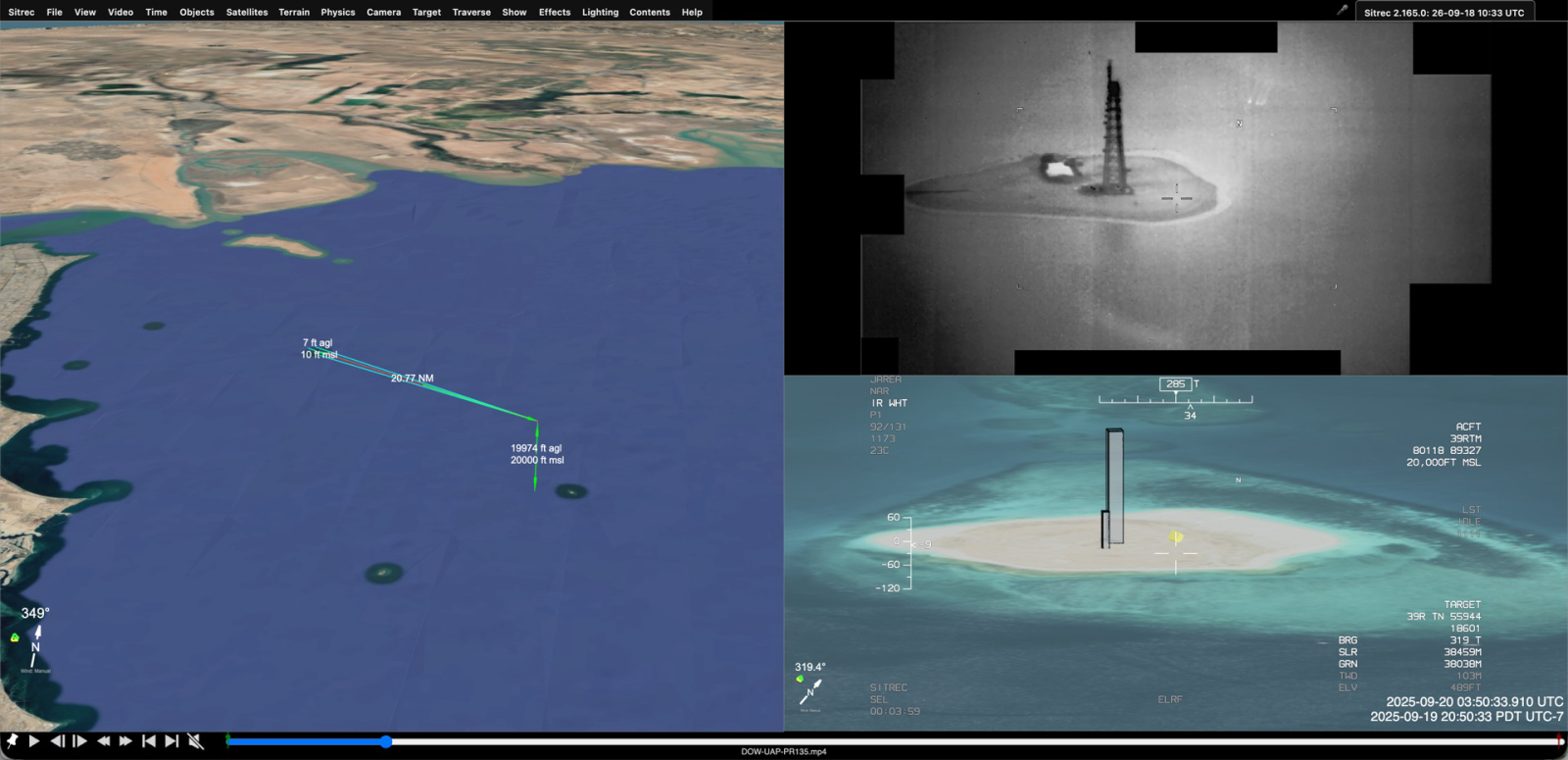
Each of the six objects beats steadily
at 7.1–7.9 Hz, at its own frequency and phase, which neither the video nor the sensor
produces. Flying animals recorded by infrared cameras beat in the same way, in
brightness and apparent size together, at 3.4–10.0 Hz. Finally, the reported speed and
direction are what a slow object at 60–80% of the aircraft's height would produce
when no range is measured. The simplest explanation is a small flock of birds, nearer
to the aircraft than the ground point on which the speed was estimated. The number
of objects, their changing arrangement, and the report's description of objects that
were agile and changed direction are all consistent with this interpretation.
The frequencies of the six objects lie within the range measured for birds in cruising
flight [6–8].