
UFOs seen by Oil Rig Worker in Gulf of Mexico

flarkey

Senior Member.
Staff member
This video is getting some exposure on X.


Source: https://x.com/Jehoseph/status/2120076265780920457?a=J978X_2Yoh4eK0EZGIo&s=19


Date and Time is unknown, but presumably this was recently. The location was given as on an oil rig 100miles offshore from Alabama.

https://en.wikipedia.org/wiki/Offshore_oil_and_gas_in_the_Gulf_of_Mexico_(United_States)
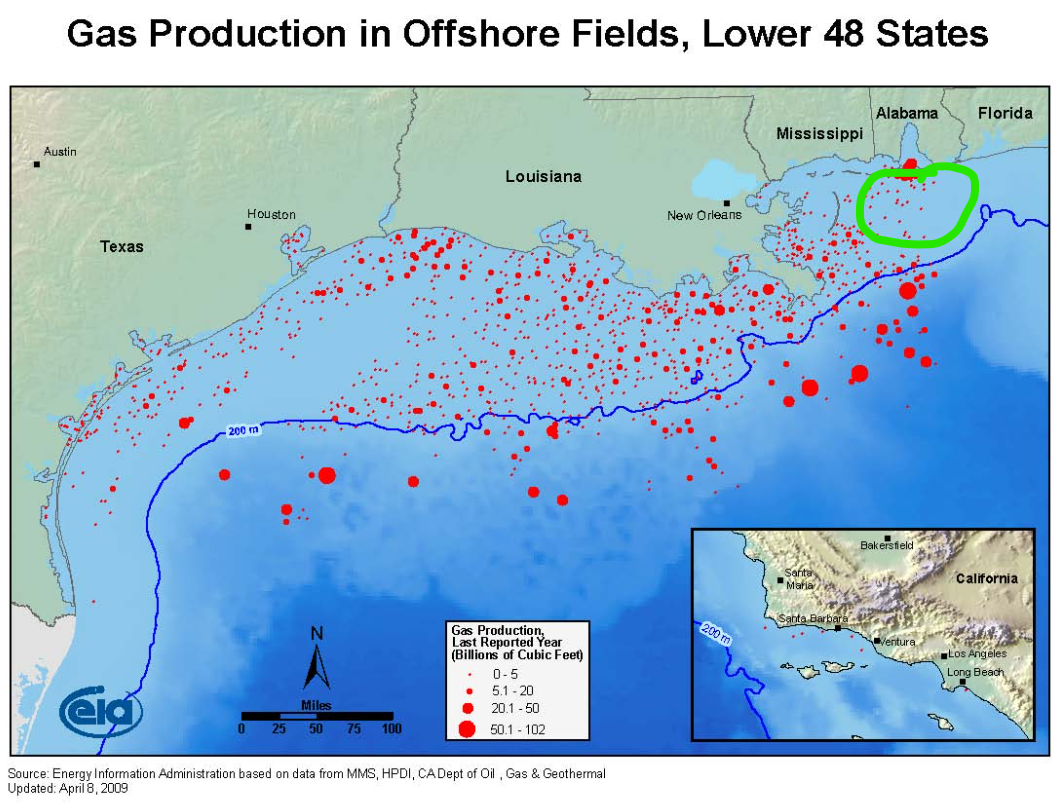
1794383327633.png


The UFOs look just like Starlink Satellite Flares. Ive taken the location and created a stitch in Sitrec. The flares would either be visible a few hrs after sunset in the west, or a few hours before dawn in the east. I've tried to match the stars in the video with known stars, looking west has a better match but its not conclusive. Can anyone else match them...?

https://www.metabunk.org/sitrec/?custom=15857/Gulf of Mexico Oil rig - Starlink/20261110_133803_a94f35c10ce4f75114ec5beb16d9b67e.js
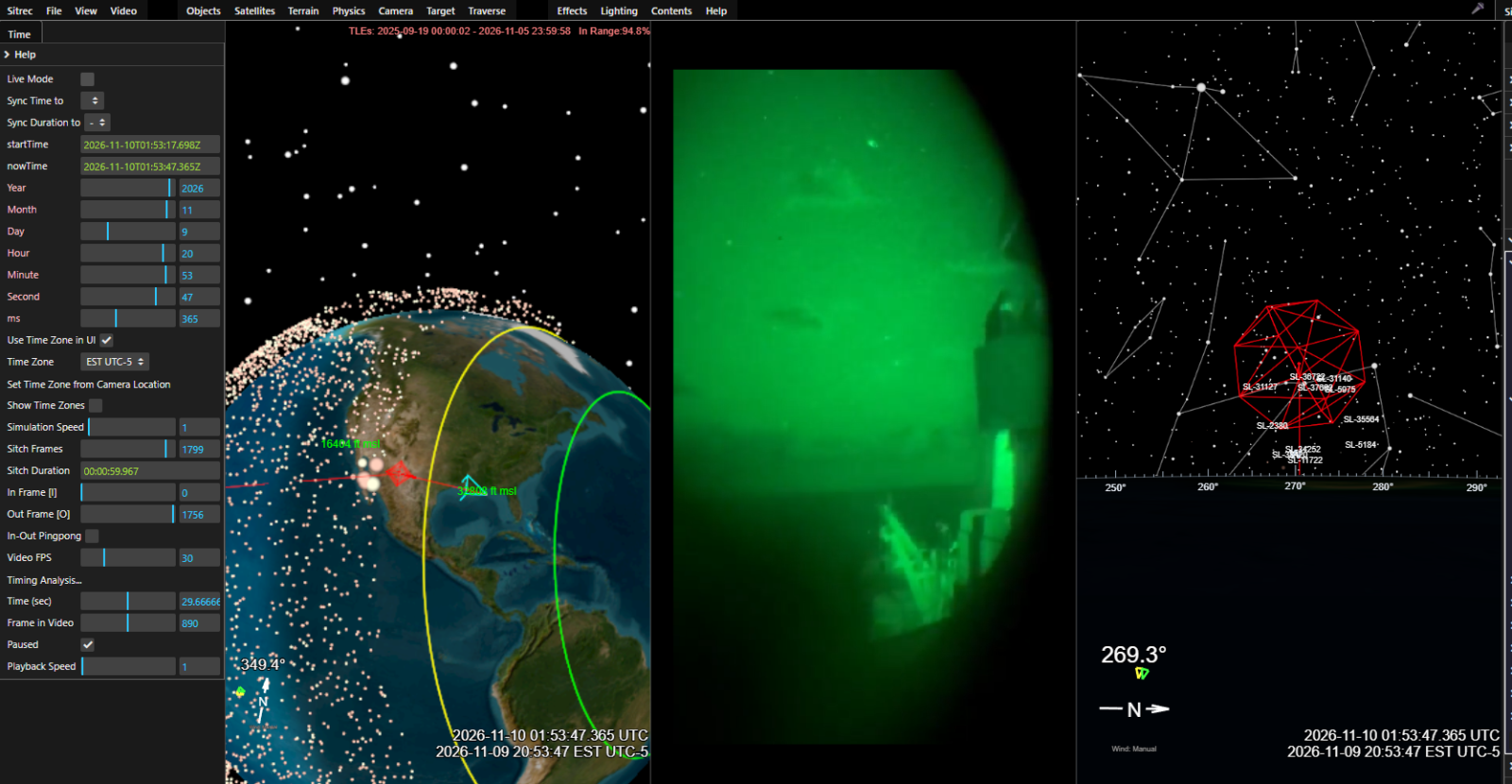
1794383528819.png
 
There will be wifi on the rig so no reason it couldn't be sent just after being taken
Maybe, but would AFTER 3 am be described as the middle of the night? There seems to me to be a larger window of "middle of the night" after an evening sighting than a morning one.

Not saying it could not have been the morning show that was videoed, just that I don't think being sent "in the middle of the night" really favors one interpretation over the other.

With the added possibility that the poster could be in a different time zone (I walked through several layers of subreddits trying to see if I could find any mention of where the poster was located, and gave up, perhaps somebody else knows how to find that, or has already found it?) So "middle of the night" may refer to when it was received, in which case it tells us nothing about when it was sent unless we know where the poster was located, time-zone-wise.
 
12-4am is the colloquial 'middle of the night' to me

As happens often we are with no details, with details this one would have recreated by me, Mick or Flarkey as soon as we found out about it, thus potentially nipping it in the bud.
 
Claude found what looks like a match. The problem is that it's not in the Gulf, but rather in the North Atlantic. Possibly a false positive? The match does seem very good.

https://www.metabunk.org/sitrec/?custom=1/Seph Alabama Gulf Starlink/20261111_170539_fc47ae7e9888156f5ea4df291e775caa.js

@Mick West Wow, that is just, wow. :eek:

So, taking that date time & location that Claude determined....
1794478909955.png


We can check historical AIS Data on globalfishingwatch.org to find out which ships were in the area at the time (link). Nothing fits exactly, so the question then becomes, what tolerance is on the Claude location? And which ship could it be?
1794482045623.png
 
Last edited:
@Mick West Wow, that is just, wow. :eek:
Yeah, Claude Fabel 5.2, quite amazing. Stuff that would take days, it can do in minutes. It's very much the future for this type of thing.

what tolerance is on the Claude location?
Not a huge amount, some tens of miles. You can see this manually by moving the camera around in the main view. There's a lot more leeway east/west, where you can move the camera and the flares stay in about the same position.

Claude is quantifying this now....
 
Claude is quantifying this now....
tolerance_map.png


External Quote:

The fix holds, and it is tight: about 3 km north-south and about 15 km east-west, with the clock good to 0.3 s. None of the four vessels on flarkey's AIS map can be the camera; they are 131 to 234 km away.

One correction first. The first fit did not move its clock (a step-size fault in the search probe). With the clock fitted, the fix is 37.49 N, 59.48 W at 07:28:24.8 UTC, 5 km west of the value in the thread. Your saved sitch is inside the error, so I did not change it.

Place
- Why the two directions differ: the lights are low in the east. A common error of 1 px in their height moves the fix 7.7 km east-west; 1 px sideways moves it 0.9 km north-south.
- Error map: the error of the fit is 0.076° (2.9 px) at the fix. It stays below 1.25 times that value inside a region 7 km by 43 km (full widths).
- Vessels: at their positions the error is 1.06° to 2.28° (41 to 88 px), 14 to 30 times the fit. I read their positions from flarkey's picture, so they are good to about 5 km.
- Open item: standard refraction applied in full to each light moves the fix 13 km west. But the fit is then worse, and the sea horizon then needs a camera 100 m above the sea (34 m without it). So the 15 km is an estimate, and its open side is west.
- Independent check: the height of the stars above the sea horizon (a sextant fix, no satellite) gives 37.51 N, 59.46 W for an eye at 25 m, 4 km from the satellite fix.

Clock: the error doubles at ±0.9 s. A move of the camera cannot make up for a wrong clock, because the satellites cross the picture in different directions.

Other times and dates
- Catalogue search, 16 October to 10 November: no other time explains more than 4 of the 8 lights on one clock and place. The match explains 5, plus a sixth at 0.18° and a seventh on its path 6.5 s late.
- Caution: three lights fit as well as the match about once a day somewhere on the Earth (always near 37.5 N). So the count of lights decides, not the error of a partial fit.
- Sun only, no catalogue: all six matched lights can be flares on 4 and 5 November only, and none before 2 November or after 9 November.
- Not searched: dates before 16 October have no catalogue search; the Sun test covers them.
tolerance_dates.png


1794487552099.png
 
Back
Top