Lights rising and fading above the Piute Mountains, California — September 29, 2026, approximately 10 p.m. PDT

jakewetz

New Member
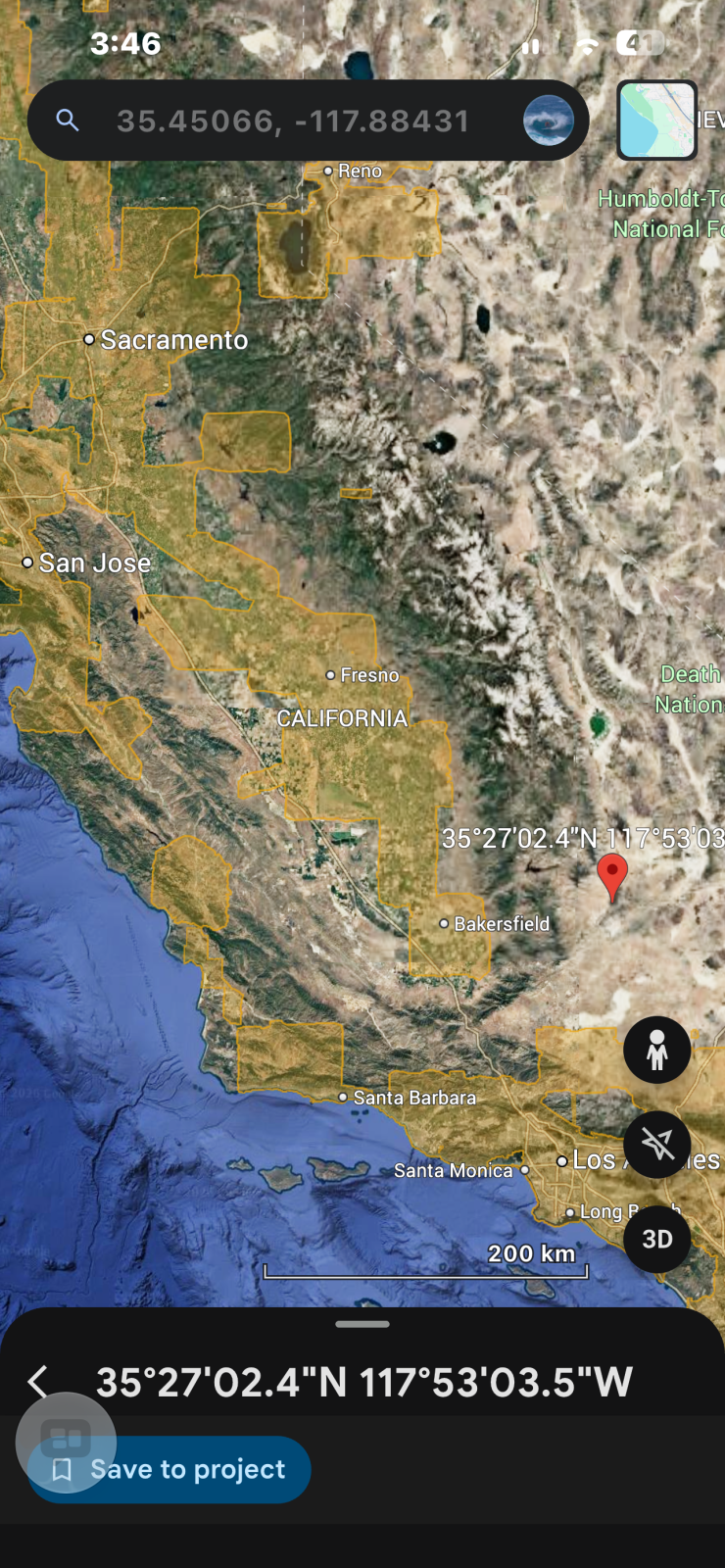
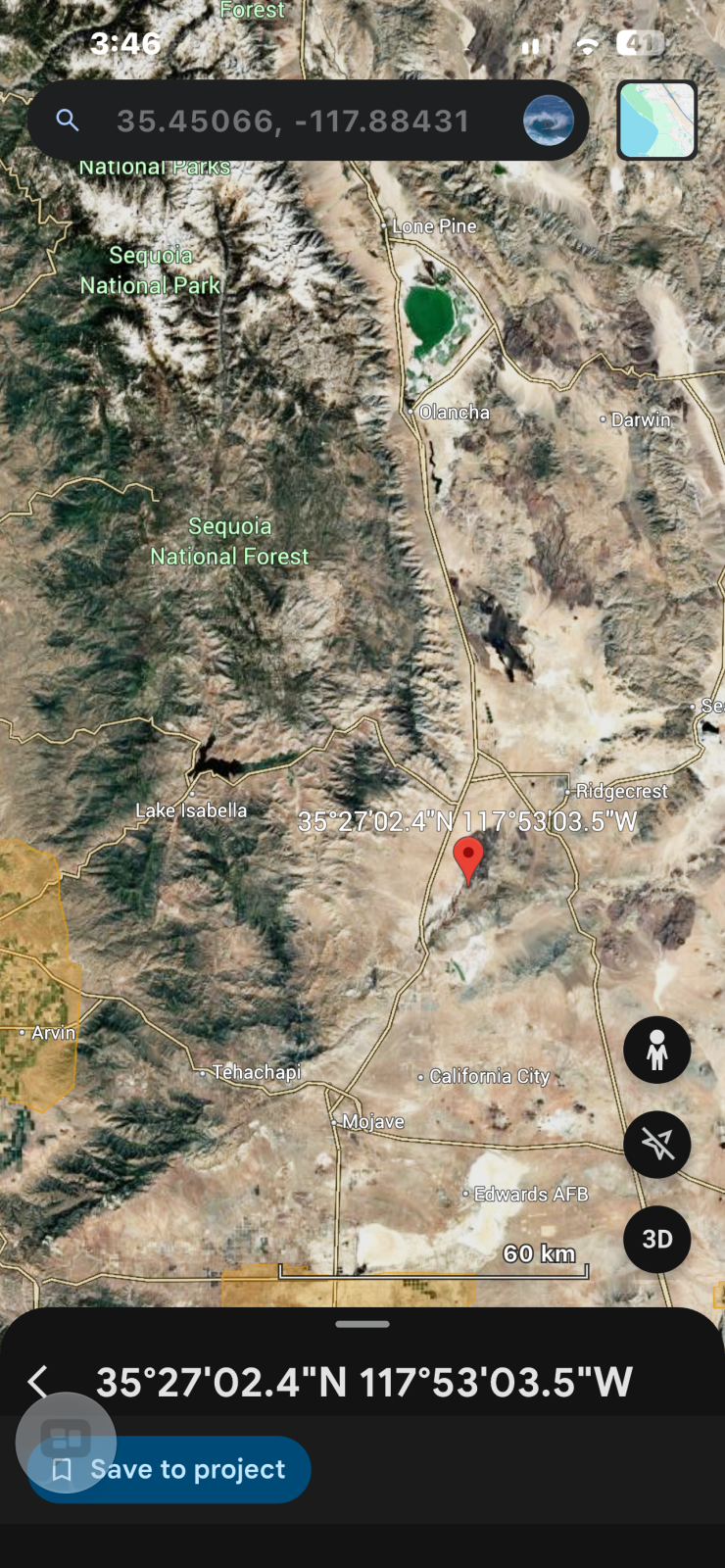
I filmed these lights from 35.45066, −117.88431, looking approximately WNW between Heald Peak and Skinner Peak - close to Sequoia National Forest.

With the naked eye, some lights appeared to rise from the ridgeline in different directions and then disappear, while others appeared stationary in the top left. I watched the activity for approximately seven minutes. Lights rose out of a similar location and heading in a similar direction. The 3 brightest lights all appeared to disappear or exit in roughly the same area. This only happened for about 8 minutes total, and more lights did similar maneuvers prior to filming which prompted me to start filming. After this it completely stopped. It was just odd to me because very bright lights were flying directly upward and outward (unlike the flight patterns) and they were disappearing which struck me as very odd and caught my attention.

The camera was stationary on a tripod, recording in Sony S-Log3. I'm looking for help identifying the lights and checking possible aircraft or satellite matches.

Original camera file:
Edited file for viewing (real time, 5x, and 10x speed):

Viewing direction/map:
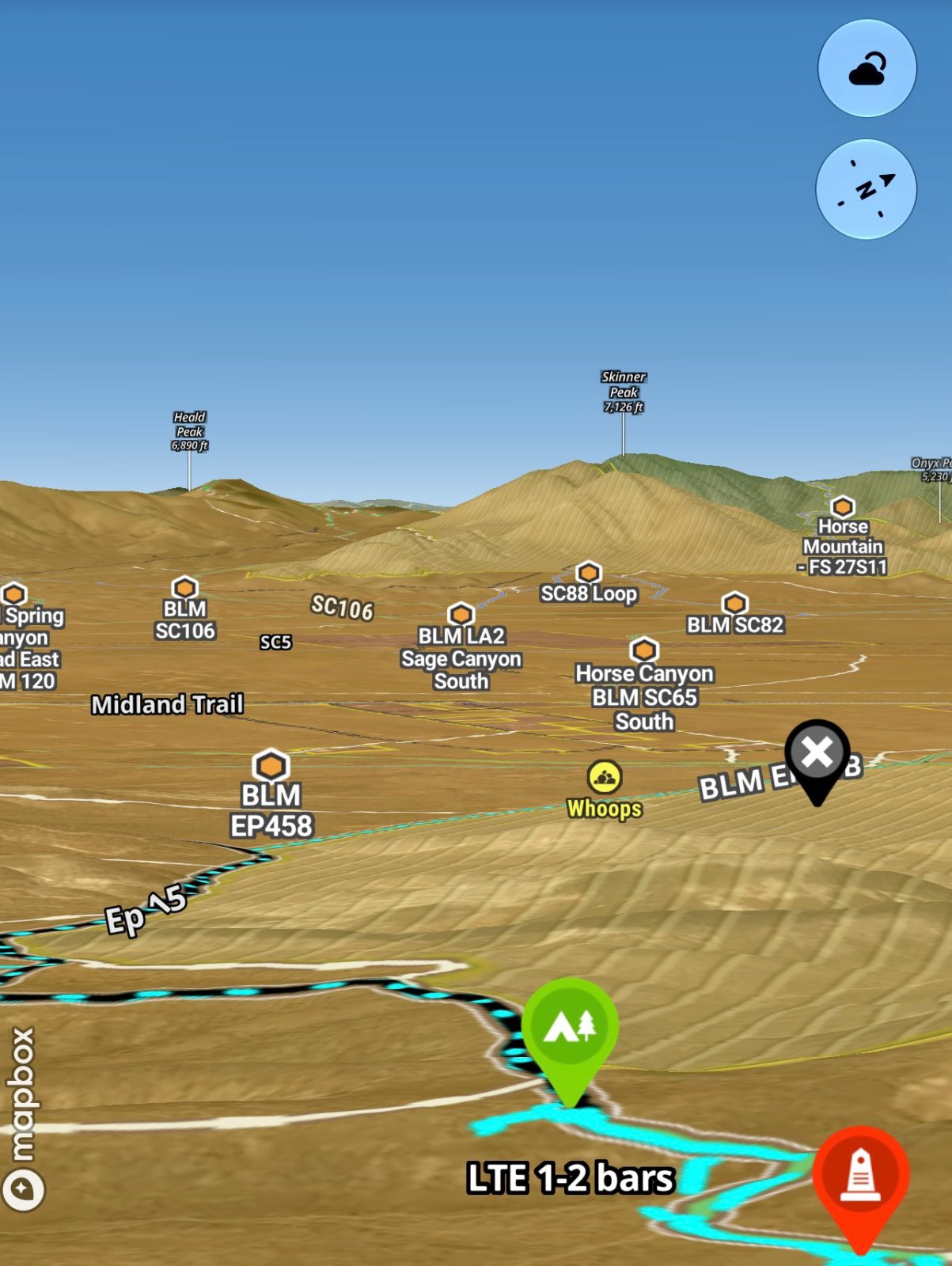
IMG_0307.jpg

IMG_0303.PNG

IMG_0304.PNG

-Jake
 
Last edited:
This was a nice testbed of using AI to solve the case. I used Claude Opus 5.5, Extra high reasoning, and an MCP bridge connection to Sitrec. It went above and beyond what I'd normally manage to do with a quite detailed fitting of the stars and the moving satellites

1791590382170.png

And in its own words, this is how it did it:

External Quote:

Short answer: Every moving light in the original video is a satellite. The bright lights that rise from the ridge and then fade are Starlink satellites in a "horizon flare". They fade when they go into the Earth's shadow.

The video
  • "UFO OG.mov": 2 min 53 s, 3840×2160, 23.976 fps. It is a DaVinci Resolve export, so it has no camera time stamp.
  • The sky is very dark and the ridge is just below the frame. The lights come in at the bottom edge.

Step 1: The stars give the camera direction
I stacked all the frames, keeping the brightest value of each pixel. This shows each moving light as a trail (image below).

The bright "stationary" light at the top left is the star Izar (ε Boötis). Its wiggly trail shows camera shake. It also shows that the camera settled for the first ~22 seconds, then was bumped and zoomed in (1.36×) at about 88 seconds.

I aligned every frame on Izar and stacked them again. This showed three fainter stars: HIP 71995 (mag 4.8, just below and to the left of Izar), σ Boötis and HIP 71094. These four stars give the camera direction:
  • Azimuth 300.5° (WNW), elevation 3.9°
  • Field of view 5.9° × 3.3° (about 350 mm full-frame equivalent), then 2.4° high after the zoom
  • The bottom of the frame is about 2.2° above the horizon

Step 2: The satellites give the time
I measured each moving light frame by frame and changed its pixel positions into sky positions with the star solution. Then I compared each track with every object in the Space-Track orbit data for 29–30 September (16,837 objects in low orbit).

Eight lights matched eight satellites, all with the same start time. The first frame of the video is at 21:56:34 PDT (04:56:34 UTC, 30 September), to about half a second. The match errors are 0.01° to 0.1°, which is 8 to 60 pixels in the 4K frame.

Time in videoSatelliteMatch errorLight fades atGoes into Earth's shadow at
0–12 sSTARLINK-327100.03°12.0 s13.1 s
22–47 s (brightest)STARLINK-323610.017°47.2 s46.3 s
48–58 sSTARLINK-356480.024°57.6 s54.1 s
54–78 s (bright)STARLINK-304390.015°77.6 s75.7 s
115–118 sSTARLINK-358330.012°short flarelater
143–156 s (bright)STARLINK-301270.095°155.7 s156.2 s
6–32 s (moves up and left)KUIPER-001280.095°leaves the frame–
140–159 s (fast, crosses)KUIPER-000120.014°leaves the frame–

Why they look strange
  • They rise from the ridge. The Starlinks are about 2,200 km away and only 2° to 4° above the horizon. They come up from behind the ridge as they move toward us.
  • They are very bright. The Sun was 40° below the horizon, in nearly the same direction as the camera (azimuth about 302°). Satellites low in that direction are still in sunlight. The flat underside of each Starlink reflects the sunlight to us like a mirror, within 2° of a perfect reflection. This is a Starlink "horizon flare".
  • They all disappear in the same place. Each one fades within 1 to 2 seconds of going into the Earth's shadow. The edge of the shadow is a fixed line in the sky, so they all fade at about the same height. The light keeps going, but we can no longer see it.
  • Some lights look stationary. The "stationary" lights at the top left are the stars Izar and HIP 71995.
  • The two Amazon Kuiper satellites are higher (623 km) and are not flaring, so they are fainter and do not fade in the same way.

Satellites in that part of the sky were flaring for most of that hour, which explains the similar lights before you started filming. In the image, each trail has its satellite name and its time in the video.
 
External Quote:

Time and cost of the analysis

Time

About 41 minutes from the first question to the finished post. About 31 minutes of that was the AI working. The rest was waiting while I connected the browser bridge and downloaded the videos.

PartClock (from start)Working time
First look: thread, images, Sun position0 – 2.3 min2.3 min
Waiting for the bridge and the video links2.3 – 5.4 min–
Sitrec setup, video stacks, star tracking5.4 – 17.0 min11.6 min
Star solution, satellite match, timing, notes, image18.3 – 34.7 min16.4 min
Write-up for the forum40.0 – 41.0 min0.9 min

The computing itself was quick. Each full pass through the 4K video took 20–80 seconds. The search over all 11,142 Starlink satellites, done inside Sitrec in the browser, took about 20 seconds.

Cost
At standard API prices for the model used (Claude Opus 5.5), the session would cost about $13–14. On a Claude Max subscription there is no extra charge.

Token typeTokensPrice per millionCost
Cache reads (the conversation, re-read on each step)35.9 M$0.20$7.18
Cache writes (new material, stored for 1 hour)0.39–0.45 M$8.00$3.10–3.60
Output (reasoning, replies, tool calls)0.155 M$20.00$3.10
Uncached input~0$4.00~$0
Total (137 model requests)≈ $13.40–13.90

Where the usage went (share of usage, weighted by price type)
Code:
Reasoning and replies            ███████████████████████  46%
Standing instructions            ████████████             24%
Video analysis (Python)          ██████                   12%
Sitrec (browser bridge)          ████                      8%
File reading and writing         ███                       6%
Built-in browser                 █                         2%
Everything else                  █                         2%

  • Reasoning was the largest part. Output costs more than input. The reasoning also stays in the conversation, so each later step reads it again.
  • Standing instructions came second. About 90,000 tokens of setup (project rules, notes, the tool list) were re-read on all 137 requests. Each read is cheap, but there were many.
  • The actual analysis was a small part. The video processing ran in Python on my machine, and the satellite orbits were calculated inside Sitrec. Only short results went back to the AI. The 4K video frames and the 16,837 satellite orbits never went through the conversation.
 
@jakewetz - Good job explaining when, where, and how you collected this data.
Yes, that was very useful! It's always a challenge getting the DTLDs (Date, time, location, direction), and this case had it all. The only thing missing was the exact start time of the video clip, which Claude figured out from the Satellites.
 
Back
Top