
You are using an out of date browser. It may not display this or other websites correctly.
You should upgrade or use an alternative browser.
You should upgrade or use an alternative browser.
How to talk to a climate change denier, and then what?
- Thread starter Mick West
- Start date
- Status
- Not open for further replies.

Belfrey
Senior Member
You might want to consider that past mass extinction events have often been associated with rapid climate change events. Sure, life on earth will continue, I'd even optimistically say that humans will probably continue as a species. But it makes no sense to assume that all organisms will adapt. Extinction is the overwhelmingly dominant feature of evolutionary history.But 'life', mammals, have been around for very many millions of years. We could easily adapt and survive if needed... our ancestors survived ice ages.

Yep thats great.
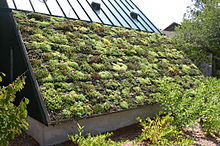
Can I have one. Who is going to look after the running of it whilst I am working all hours to pay for everything. What happens to the people who are not green fingered or are old or sick. It is great but how do you see this fitting in with 'Globalisation' and multinational corporations etc.
I think it a good thing but does it fly?
I like to grow my own organic stuff but sometimes it goes wrong and I get little. I have looked into
http://tilz.tearfund.org/Publicatio...tsteps+25/Raising+fish+and+crops+together.htm
Anyone can do it... but I haven't got round to it and nor have most people. If I had to I would.
How about you?
Last edited by a moderator:
Last I heard mass extiction events were normally a result of volcanic activity or meteor strikes.You might want to consider that past mass extinction events have often been associated with rapid climate change events. Sure, life on earth will continue, I'd even optimistically say that humans will probably continue as a species. But it makes no sense to assume that all organisms will adapt. Extinction is the overwhelmingly dominant feature of evolutionary history.
Looks like you will need your hat in the very near future then.
 mind Nibiru doesn't get you first though.
Belfrey
Senior Member
And change in volcanic activity is one of the ways that climate change has occurred naturally in the past. There are many factors (and combinations thereof) which probably came into play in the major extinction events, and climate change is one of them. See for example this Scientific American article:Last I heard mass extiction events were normally a result of volcanic activity or meteor strikes.
External Quote:Roughly 251 million years ago, an estimated 70 percent of land plants and animals died, along with 84 percent of ocean organisms—an event known as the end Permian extinction. The cause is unknown but it is known that this period was also an extremely warm one. A new analysis of the temperature and fossil records over the past 520 million years reveals that the end of the Permian is not alone in this association: global warming is consistently associated with planetwide die-offs.
"There have been three major greenhouse phases in the time period we analyzed and the peaks in temperature of each coincide with mass extinctions," says ecologist Peter Mayhew of the University of York in England, who led the research examining the fossil and temperature records. "The fossil record and temperature data sets already existed but nobody had looked at the relationships between them."
Last edited:

Sausalito
Active Member
Guh? Is Nibiru a drug dealer or bookie or pimp? I'm always soused when I do those things, so memory's foggy.Looks like you will need your hat in the very near future then.
But the fact of the matter is, you don't know what will happen any more than I do. It is all conjecture. No one saw the last few meteors coming until it was too late...(whenever that was)... who knows? I am sure we will be able to handle co2 at much higher levels than we have now but if we can change we should just to be on the side of caution but how is the point. Pete cites some geo cities but how practicable are they? Who can afford to build them, what forces will oppose them, are we all going to have to become farmers. Do we need 25 different yoghurts in the supermarket and bottled water flown in from wherever and which the local inhabitants have washed and defecated in further upstream?An change in volcanic activity is one of the ways that climate change has occurred naturally in the past. There are many factors (and combinations thereof) which probably came into play in the major extinction events, and climate change is one of them. See for example this Scientific American article:
External Quote:Roughly 251 million years ago, an estimated 70 percent of land plants and animals died, along with 84 percent of ocean organisms—an event known as the end Permian extinction. The cause is unknown but it is known that this period was also an extremely warm one. A new analysis of the temperature and fossil records over the past 520 million years reveals that the end of the Permian is not alone in this association: global warming is consistently associated with planetwide die-offs.
"There have been three major greenhouse phases in the time period we analyzed and the peaks in temperature of each coincide with mass extinctions," says ecologist Peter Mayhew of the University of York in England, who led the research examining the fossil and temperature records. "The fossil record and temperature data sets already existed but nobody had looked at the relationships between them."
What about the DU ammunition and the war machine which as mynym says, 'doesn't run on rainbow pony poop'... Also like he says it is the serfs who bear the brunt of it in extra costs but for what? It doesn't stop oil pipelines across America transporting sludge from the tar sands.
Sausalito
Active Member
*sigh* Point taken, perhaps we're proper forked. The first obvious answer to "what to do?" is legislation. If it doesn't prevent major catastrophe, perhaps it'll prime the survivors for a more sensible relationship with their planet. Should we go through the charade of pretending to care and believe that we can assuage a hopeless eventuality? Abso-honking-lutely! What is the alternative?But the fact of the matter is, you don't know what will happen any more than I do. It is all conjecture. No one saw the last few meteors coming until it was too late...(whenever that was)... who knows? I am sure we will be able to handle co2 at much higher levels than we have now but if we can change we should just to be on the side of caution but how is the point. Pete cites some geo cities but how practicable are they? Who can afford to build them, what forces will oppose them, are we all going to have to become farmers. Do we need 25 different yoghurts in the supermarket and bottled water flown in from wherever and which the local inhabitants have washed and defecated in further upstream?
What about the DU ammunition and the war machine which as mynym says, 'doesn't run on rainbow pony poop'... Also like he says it is the serfs who bear the brunt of it in extra costs but for what? It doesn't stop oil pipelines across America transporting sludge from the tar sands.
Belfrey
Senior Member
I disagree. It's not all conjecture. AGW theory is fundamentally based in well-established physics. That there will be winners and losers among existing populations of organisms when environmental conditions change massively and rapidly is practically a biological truism.But the fact of the matter is, you don't know what will happen any more than I do. It is all conjecture.
Here's the pattern I see. First the "skeptics" will often suggest that the concerns about AGW are overstated or ill-founded. When backed into a corner on those points, they will often switch to suggesting that there's really no good way to avoid it, so it's pointless to try. My main interest is in the science vs. pseudoscience aspect of the debate, so I'm not going to let you off the hook on the first issue. That doesn't mean that the second issue isn't important or that there aren't valid answers for it, but it's a separate issue.Oxymoron said:No one saw the last few meteors coming until it was too late...(whenever that was)... who knows? I am sure we will be able to handle co2 at much higher levels than we have now but if we can change we should just to be on the side of caution but how is the point. Pete cites some geo cities but how practicable are they? Who can afford to build them, what forces will oppose them, are we all going to have to become farmers. Do we need 25 different yoghurts in the supermarket and bottled water flown in from wherever and which the local inhabitants have washed and defecated in further upstream?

Boston
Active Member
They have only recently discovered them so what activity levels they were in the past is conjecture at the moment.
It seems logical that sea temperatures in the area will be affected by the mantle temperature in the locality. If you are averaging out the sea temp that could also be for a number of reasons.
It is interesting that:
http://geocraft.com/WVFossils/Carboniferous_climate.html
External Quote:It wasn't until Pangea began breaking up in the Jurassic Period that climates became moist once again. Carbon dioxide existed then at average concentrations of about 1200 ppm, but has since declined. Today, at 380 ppm our atmosphere is CO2-impoverished, although environmentalists, certain political groups, and the news media would have us believe otherwise.
ok so your suggesting that adding 1/3 more CO2 to the atmosphere isn't the cause of climate shift, and that even though a shift in CO2 is coupled with warming over the entire paleoclimate record, thats somehow not whats happening today and that somehow that mechanism has switched off and instead we have some heretofore unrecognized warming from underground volcanic sources we are only now just beginning to understand ?
Ludicrous
Laughably ludicrous
denial at its finest.
Why is it the exact amount of warming that might be expected from the exact amount of additional CO2 has been found ?
Boston
Active Member
But 'life', mammals, have been around for very many millions of years. We could easily adapt and survive if needed... our ancestors survived ice ages.
Wrong
The reason the extinctions occur is specifically because this isn't true. We can't adapt in time. As a matter of fact there isn't even the possibility of adaptation because the end result of climate shift isn't just a dramatic shift in temps, but a dramatic reduction of available oxygen in the atmosphere, rule of thumb, the bigger you are, the more oxygen you require be available. IE just how far down everything dies off is entirely dependent on this simple reality. Its got jack to do with adaptation

MikeC
Closed Account
We don't know whether "we" (by which I mean homo sapiens) can adapt fast enough or not.
And we won't know unless it happens.
however there is actually an alternative to adapting - and that is coping - which is something that we have been very good at worldwide for the last 100,000 years or so.
And we won't know unless it happens.
however there is actually an alternative to adapting - and that is coping - which is something that we have been very good at worldwide for the last 100,000 years or so.
Boston
Active Member
We don't know whether "we" (by which I mean homo sapiens) can adapt fast enough or not.
And we won't know unless it happens.
however there is actually an alternative to adapting - and that is coping - which is something that we have been very good at worldwide for the last 100,000 years or so.
The Permian Triassic extiction lasted 30 million years and pretty much everything down to 2 lbs died. It occurred due to a change in atmospheric CO2 most likely resulting from the Siberian trap event which took about a million years to raise temps by 4°C followed by the death of the oceans, the release in methane from calthrates IE hydrate. With an associated increase above that original 4°C by another 6°C which was accompanied by a corresponding drop in oxygen levels,
If you really think humans can survive a 10°C hotter world by walking around in some kinda ultra modern scuba gear. Well best of luck with that. But this time we've changed the atmospheric temps roughly 2500 times faster than in the Permian Triassic extinction
Another fine example I've mentioned before is the Cambrian extinction, this one lasted 50 million years, everything down to amoeba died off and it lasted for 50 million years. Actually there's a whole pile of examples
Mass extinctions due to rapidly escalating levels of CO2 are recorded since as long as 580 million years ago. As our anthropogenic global emissions of CO2 are rising, at a rate for which no precedence is known from the geological record with the exception of asteroid impacts, another wave of extinctions is unfolding.
Mass extinctions of species in the history of Earth include:
* the ~580 million years-old (Ma) Acraman impact (South Australia) and Acrytarch (ancient palynomorphs) extinction and radiation
* Late Devonian (~374 Ma) volcanism, peak global temperatures and mass extinctions
* the end-Devonian impact cluster associated with mass extinction, which among others destroyed the Kimberley Fitzroy reefs (~360 Ma)
* the upper Permian (~267 Ma) extinction associated with a warming trend
* the Permian-Triassic boundary volcanic and asteroid impact events (~ 251 Ma) and peak warming
* the End-Triassic (201 Ma) opening of the Atlantic Ocean, and massive volcanism
* an End-Jurassic (~145 Ma) impact cluster and opening of the Indian Ocean
* the Cretaceous-Tertiary boundary (K-T) (~65 Ma) impact cluster, Deccan volcanic activity and mass extinction
* the pre-Eocene-Oligocene boundary (~34 Ma) impact cluster and a cooling trend, followed by opening of the Drake Passage between Antarctica and South America, formation of the Antarctic ice sheet and minor extinction at ~34 Ma.
See
http://phys.org/news/2013-03-link-co2-mass-extinctions-species.html#jCp
So again there's really no excuse to be arguing the link between CO2 and mass extinction.
Whats almost funny, is that people don't seem to get that the faster you change CO2 the deeper the extinction event. To the point where at about 1250 times slower than the change is happening today, we see everything down to amoeba dying out and the whole planet freezing over for 50 million years, yet some folks still insist "we'll adapt"
Brilliant argument, lets just burn it all down and "see if we can cope with itt"
MikeC
Closed Account
If you really think humans can survive a 10°C hotter world by walking around in some kinda ultra modern scuba gear. Well best of luck with that.
That would leave my country cooler than the Sahara - and people live there.
So yes...I think humanity can survive a 10°C hotter world - with nothing much more than cotton and camels!
Boston
Active Member
That would leave my country cooler than the Sahara - and people live there.
So yes...I think humanity can survive a 10°C hotter world - with nothing much more than cotton and camels!
OK so what we have is a basic misunderstanding of what happens when you screw up the thermohaline circulation. Given the present topography of plate tectonics the reasonably stable temps of the glacial period are supported by the recurring incidence of the grand oceanic current, which eventually wants to restore the even or relatively so distribution of heat around the planet. The initial warming is then eclipsed by the failure of the thermohaline circulation, based on its driving mechanism which requires currents of a certain temp and density to loose x amount of there heat at a given place in the system corresponding to a given location specific to the topographical characteristics that encourage that circulation. IE if shit don't cool at the right time in the right place to maintain the grand oceanic current, we're screwed. In which case the radiator of the world stops and after a brief period of warming, it gets butt cold. Fast. For a long damn time. Say 50 million years in one well recorded event at the end of the Cambrian.
The simple reality is that people just don't understand what +4°C really means, cause +4°C is the magic number within the paleoclimate record. However, based on the exponential increase in methane lately, it seems that +4°C isn't the only factor, rate of change also and always played a key role. Increase that rate of change and you destabilize those CH4 calthrates even faster, which does seem to be whats happening today. Deal is within the natural system even given the occasional asteroid impact CO2 could only change by so much, so fast, however, get 7 billion idiots drilling for fossil fuels at once and apparently, it is possible to accelerate that rate of change to entirely new heights, like about 1250 times faster than ever seen before, or there abouts.
The hard reality is once the oceans go, there's no bringing them back until things run its course. Which in many cases in the past took millions of years of reduced oxygen levels and increased sulfur, ammonia and methane levels, shit we don't breath. If you think the human race can glue itself to some kinda scuba system for that long, then consider this, how is an advanced society going to survive millions of years on a giant ice flow, cause ice is whats going to cover the entire planet, just like before, when things got out of balance. For 50 million years ;-)

Again with the blather and NWO razzle-dazzle, all to make just two really simple points. You're not really even daring to debate science.
From my perspective what has been offered doesn't really matter and I already agree that it's likely that man is changing the climate and so forth. I could "dare" to debate relatively useless information if I was interesting in creating a debate like that. As I said, I know a good denier and so forth. But what's the point?
Your claims boil down to just:
1. Calling somebody a "denier" may be derogatory and counterproductive (and I might agree, depending on the context).
So we basically agree again it's just that for some reason you don't like the NWO razzle-dazzle or rambling man style. There again, maybe you even like that too and you're just used to creating a debate or a disagreement where there isn't one.
2. Global warming isn't important, because more horrible things like NWO engineered war or economic collapse will do us in first, so why worry about it?
The debunker mentality or a narrow minded focus might be apposite in some cases but when you start talking about global problems like climate change then that's about as big picture and holistic and therefore rambling as it gets. I'm not saying that people can't do better than they are. In fact, I tried to offer some scenarios in which we could do way better than shipping in oil on big tankers while sending Team America, World Police all around the world on huge ships and so forth.
This is as much of a "new world order" issue or whole as anything is. So about those little ponies pooping solar powered rainbows of tolerance headed toward the MidEast and so forth. It's not: "Why worry about global warming?" It's look at it as the whole and look at what is most likely to have signficance. Team America, World Police wouldn't have to be incorporated in policing the Strait of Hormuz if more people were driving natural gas cars and you couldn't see the Bakken fields from space because the price of natural gas was being driven up... and it wasn't dirt cheap. In what world is the fact that there are fossils fueling Team America, World Police and the military industrial complex in general supposedly not a part of or relevant to "climate change"?
Little wonder that many serfs think that global warming is bunk and just another instance of corporate/government scientists trending along or "conspiring" to work for their owners again. And it would seem that some scientists gave them fuel for that fire.
What would you do if 2 is wrong, though?
I can think of many scenarios involving what could be done. But none of them involve giving Western banksters the ability to monetize the air or create markets of air in which to shift all their "derivatives" and "toxic" assets and so forth. How about this scenario... assassinate them all without trial, save the planet? Just kidding. Due process and all that, don't you know.
I don't think it's a very strong claim, at least as you present it, since it's predicated on your elaborately concocted NWO/Masonic/Zionist/Darwinist/Banker worldview.
Funny how Darwinism happened by happenstance to wind up as a projection of colonialism and capitalism onto nature, isn't it? There again, if that's the case then man is just "survival of the fittest" and the fossil fuels of the future. Perhaps progressives are the fuels of the future and the change that they've been waiting for. Life will evolve again after the catastrophes everyone is predicting, right?
There again, seems unlikely that what began as a projection of Darwin's culture and the way that his family profited off of slavery and the "lower races" is actually an accurate portrayal of nature. I actually like Darwin, often did his best to actually think about things... but it was still all within his paradigm. So it still seems like his projections had more to do with him and his own "selfish gene" family than what can often be observed among other people and throughout nature too.
You can certainly do a lot of rhetorical fancy dancing, post cute videos, and make puns, but you have never yet directly addressed why your grand, overarching meta-theory is even remotely credible.
Reality is usually incredible... so it's probably not going to fit in a test tube or into the bunker in a way that you find credible. Interesting though, how are you imagining that your perceptions of my worldview could be made credible in your eyes? Seems impossible. What sort of evidence would make a NWO/Masonic/Zionist/Darwinist/Banker worldview "credible"? I can only imagine.
Perhaps a document: "We, the NWO... are not just men in tights or entertainment for peasants after all... we're actually a global conspiracy having something to do with elites incorporated into the Masonry of the Jesuits that built their sacred geometry and cathedrals on the backs of poor peasants. We even have something to do with da Jooos too! And just like Luciferians, the Twelvers of Islam and some factions among the Jews all trying to bring about or prep for their messiahs, we're trying to centralize enough global power to prep for ours too. Yup, it's the messianic stuff but on a global scale. Same old, same old... don't you know... but at least we have donuts at our modern meetings now. Have we mentioned that we're all consciously conspiring at the highest levels of consciousness and are conscious of our own nefarious and evil intents too? Thought you might like to know, just as we all know how evil we really are." Etc.
In any event, back to those ponies of the military industrial complex and the petrodollar owned by the ruling/measuring class (You're not a denier about that, are you?) and so forth... what are you actually thinking about all that relative to "climate change"? Are you going to let all that go and focus on getting Justin Bieber a new $100,000 "green" car or focus on how to best finance another Solyndra by having corrupt politicians partner with banksters to create even more debt/money? Because all that's been tried already and the climate didn't change.
Doesn't the military industrial complex and the wars created by those that created 911 and the oil being shipped from the MidEast and all the rest of the big picture type stuff have anything to do with "climate change"? Apparently a holistic view of the world doesn't fit into the provincial paradigm of the average "flat minded" progressive in the bunker.* Apparently they're more likely to just want to join a crowd to vote for Obama or some other politician to lower the oceans and save the planet by beating "red team" and so forth. There they are now, entertain them. The drones flying around in the background, the oil tankers headed their way and everything else can be ignored... which is probably why I'm being ignored by some of the most "flat minded" even when it's often been said that I'm pretty entertaining too.
Sorry, I'm also interested in reality and what's actually going on in the real world of drones and tankers and so forth, where you can't just vote for a politician and expect "change." Apparently Obama has already told people that he doesn't want to wind up getting assassinated. He has a family, etc. Seems to me that dragging his feet on Syria and creating new red line after red line might be about the best he can do to slow the Masonic/Zionist/Darwinist/bankster/capitalist "axis of evil" down some. (That'll probably have to wait for Hillary or red team?)
*The type of person that apparently couldn't see the NWO of an empire rooted in the "old order" of Atlantis upon which fossil fuels were laid down in catastrophic events coming even if it had already caused the formation of a bunch of global corporations and global banks to incorporate them into serfdom and eventually back into another slave system like the old, more literal pyramid schemes and monuments to ignorance that litter the world. You know, it's unlikely that our architecture will last through "global" catastrophes or floods like some of those huge stones of the old global empire of the purely mythological Atlantis and so forth apparently have. Maybe we should try to figure out a way to lift and place big stones on each other like our mythological ancestors did before the next catastrophe, huh? There again, someone would probably come along and say... "That's just a big pile of stones arranged in a stable structure by some ape-like creatures that were created by blind and ignorant mechanisms in the past. Nothing else to see here, move along."
Last edited:
Mynym although I do find your posts quite entertaining that last is about as proof positive of the basic denial I'm taking about as there could ever be. Your even denying that you denied anything.
Shrug. Consider that one can think that man is changing the climate without thinking that it's the biggest crisis in the world before one has to head the way of the Dodo. There's other stuff going on in the world too. You read the way that some of what I wrote might minimize the perception of "crisis" as total denial?
I think I may have mentioned this... but as far as the crisis and catastrophic aspect of it goes, have you considered partnering with fundamentalists in your campaign? After all, some of them say that when people don't have sex the way that they think that they should, that creates storms and natural catastrophes. They say that based on language as people of a Book, while the Hollywood types essentially say the same type of thing based on imagery... while scientists say it based on their perception of patterns of evidence. Interesting that all seem to want people to engage in what would seem to be relatively useless behaviors or rituals, though.
Possible slogans: "Stop fornicating, prevent catastrophes!" "Westboro church says, hell is warming too!" Actually, people interested in mass movements in the bowels of the body politic might be able to come to an agreement in some way. Ok... just kidding, that would never happen.
But seriously, have you considered that the biggest cause of climate change and therefore the imaginary natural catastrophes of the future really is, ultimately... sex? No sex, no people. Or perhaps no sex and then less people to perceive things as a crisis and so forth. Just saying. That's sort of the same conclusion that the old scientific consensus/"save civilization" eugenics movement came to also. No one ever seems to come to the conclusion that everything is pretty much fine. They were actually pretty panicked about saving civilization, back in the day. Turns out that the answer to their problems was probably sex, though. As that's the only thing that really integrates the "races" and does away with all that they perceived as a crisis. Maybe the answer here will turn out to be more sex too. After all, if people had more sex then some crackpot might be born that invents an essentially "free" energy device in their garage even as corporate/government scientists try to "debunk" them and so forth. I can imagine that scenario, it's not without historical precedent in some ways.
So my solution: "It's a crisis!!! Everyone have sex to save the planet!"
There, that's better.
Anyway... I already said that instead of manufacturing a disagreement and a debate that I'm content to agree with you. You've successfully changed my mind for today. (But what a dirty denier I was yesterday! Heck, I probably even denied that I denied it. Double the denial!)
But I agree now... so, now what?
Last edited:
The Permian Triassic extiction lasted 30 million years and pretty much everything down to 2 lbs died. It occurred due to a change in atmospheric CO2 most likely resulting from the Siberian trap event which took about a million years to raise temps by 4°C followed by the death of the oceans, the release in methane from calthrates IE hydrate. With an associated increase above that original 4°C by another 6°C which was accompanied by a corresponding drop in oxygen levels,
If you really think humans can survive a 10°C hotter world by walking around in some kinda ultra modern scuba gear. Well best of luck with that. But this time we've changed the atmospheric temps roughly 2500 times faster than in the Permian Triassic extinction
Another fine example I've mentioned before is the Cambrian extinction, this one lasted 50 million years, everything down to amoeba died off and it lasted for 50 million years. Actually there's a whole pile of examples
So again there's really no excuse to be arguing the link between CO2 and mass extinction.
Whats almost funny, is that people don't seem to get that the faster you change CO2 the deeper the extinction event. To the point where at about 1250 times slower than the change is happening today, we see everything down to amoeba dying out and the whole planet freezing over for 50 million years, yet some folks still insist "we'll adapt"
Brilliant argument, lets just burn it all down and "see if we can cope with itt"
So how many times do you think life has evolved from basics on this planet throughout its history?
The last major threat to mankinds existence (that took place), was
https://en.wikipedia.org/wiki/Toba_catastrophe_theory
Notice it was 'sometime between 69k and 77k ya. Science isn't that precise when guestimating long past events but that is a btw.External Quote:The Toba supereruption (Youngest Toba Tuff or simply YTT[2]) was a supervolcanic eruption that occurred sometime between 69,000 and 77,000 years ago at Lake Toba (Sumatra, Indonesia). It is recognized as one of the Earth's largest known eruptions. The related catastrophe hypothesis holds that this event caused a global volcanic winter of 6–10 years and possibly a 1,000-year-long cooling episode.
The Toba eruption has been linked to a genetic bottleneck in human evolution about 50,000 years ago,[28][29] which may have resulted from a severe reduction in the size of the total human population due to the effects of the eruption on the global climate.[30]
According to the genetic bottleneck theory, between 50,000 and 100,000 years ago, human populations sharply decreased to 3,000-10,000 surviving individuals.[31][32] It is supported by genetic evidence suggesting that today's humans are descended from a very small population of between 1,000 to 10,000 breeding pairs that existed about 70,000 years ago.[3
OOI, I would be interested to see a proper, detailed, breakdown of how we are producing carbon. What are the most prolific forms. If the science is down to such a fine art as you suggest, why not spell it out so it all adds up.
Total = blah blah
of which x accounts for y tons
Aircraft
Shipping
Cars
Trucks
Trains
Factories
Power stations
Offices
Consumer goods (necessary)
Consumer goods (Grinch)... will wind up in landfill within a week or two.
Military Industrial Complex
Developed nations
Developing nations
3rd world countries
Yep it should all add up. Of course, if this information is not available then the end figure must be plucked out of the air.
But the greater question is... what do we do about it?
If we work on the premise... for safeties sake, that it is true... what is the answer? Which I think definitely deserves its own thread.
Edit: done
https://www.metabunk.org/threads/geoengineering-to-fight-global-warming.2104/
Last edited by a moderator:
Belfrey
Senior Member
One does not need to have a precise breakdown of where the anthropogenically-added carbon comes from in order to determine that humans are increasing CO2. See The Human Fingerprint in Global Warming for information about carbon isotope ratios and other lines of evidence. But if you're interested in learning about the global carbon budget, here's one source you can look at: Global Carbon Budget.Yep it should all add up. Of course, if this information is not available then the end figure must be plucked out of the air.
If you don't know exactly where it is coming from, you cannot work out the best way to combat it. Doesn't sound like any sort of science I know?One does not need to have a precise breakdown of where the anthropogenically-added carbon comes from in order to determine that humans are increasing CO2. See The Human Fingerprint in Global Warming for information about carbon isotope ratios and other lines of evidence. But if you're interested in learning about the global carbon budget, here's one source you can look at: Global Carbon Budget.
I am really not interested in some global ponzi get rich quick scheme which says its ok to pollute provided you buy credits off the stockbroker.
Belfrey
Senior Member
You don't need to know precisely and exactly the magnitude of every single minor source, to identify what the major sources are - and sensibly, those are the ones you'd want to address first. But as you can see in that Carbon Budget site, the numbers can be broken down quite a bit.If you don't know exactly where it is coming from, you cannot work out the best way to combat it. Doesn't sound like any sort of science I know?
Well where are the straight answers?You don't need to know precisely and exactly the magnitude of every single minor source, to identify what the major sources are - and sensibly, those are the ones you'd want to address first. But as you can see in that Carbon Budget site, the numbers can be broken down quite a bit.
How much is each country responsible for?
How many cars do we need to get rid of
Warships?
Merchant ships
Power stations?
Home appliances?
What do they intend to replace them with?
What good do imaginary carbon credits do anyone except the ponzi scheme barons?
Belfrey
Senior Member
If you're sincerely interested in the identity and magnitude of specific anthropogenic sources, I suggest that you start looking it up. I've given you one source where you can start.Well where are the straight answers?
How much is each country responsible for?
[...]
In the news:
Is there a time frame on the catastrophe and the extinctions... or what? Seems to me that it's already been pretty catastrophic. But at least dropping nuclear bombs in cities didn't change the climate... huh? I suspect that it changed the weather for a bit there, though.
Kind of ironic, apparently the chem trailers think that it's wrong to intentionally manipulate the weather like the Chinese do (or the climate like some geoengineers propose) but the climate changers think it will be catastrophic that we've already done so, unintentionally.External Quote:Record-breaking temperatures have been searing large swaths of China, resulting in dozens of heat-related deaths and prompting authorities to issue a national alert. As CNN reports, people are packing into swimming pools or taking refuge in caves in their attempts to escape the fierce temperatures. Local governments are resorting to cloud-seeding technology to try to bring rain to millions of acres of parched farmland. The worst of the smoldering heat wave has been concentrated in the south and east of the country, with Shanghai experiencing its hottest July in at least 140 years. In Shanghai, the heat was being blamed for mounting numbers of dead fish in ponds and rivers and is likely to continue into the middle of August.
The thermometer went above 40 degrees Celsius (104 degrees Fahrenheit) in Hangzhou on six out of seven days in the past week, state media reported. In the district of Xiaoshan, it reached 42.2 degrees Celsius (about 108 Fahrenheit) on Tuesday, the highest temperature recorded for the area.
Seven cities and counties in the surrounding province of Zhejiang used cloud-seeding techniques on Tuesday to bring rain to drought-hit farmland, China Daily said.
Images From A Cave-Hiding, Cloud-Seeding Chinese Heat-Wave
Is there a time frame on the catastrophe and the extinctions... or what? Seems to me that it's already been pretty catastrophic. But at least dropping nuclear bombs in cities didn't change the climate... huh? I suspect that it changed the weather for a bit there, though.
But if you're interested in learning about the global carbon budget, here's one source you can look at: Global Carbon Budget.
Seems to me that a nation could increase their budget by bioengineering an algae bloom to live in the waters near Fukishima. After all, there's probably not much else going to be living there. The corporate media doesn't report on it much, not on their teleprompters... but Ho Lee Fuk told me that Sum Ting Wong is there, reporting on the story.
There again, the idea of "carbon credits" will probably depend on who is counting the "credits" while creating credit out of thin air, if the current banking system is any measure.
Funny, I Googled:
I think Americans can come up with solutions that don't allow bankers (i.e. moral degenerates*, for the most part) to monetize the air or incorporate the solution in the "derivatives" markets that they gamble with and so forth. After all, what are you doing to do when their paper ponzi collapses and there isn't enough hopium in all of Afghanistan to keep "full faith and credit" in the system from collapsing?External Quote:Scientists have known for some time that artificially created algal blooms could be used to absorb greenhouse gases, but the technique has been banned for fear of causing unforeseen side effects in fragile ecosystems. However, based on the UK team's evidence that the process has been occurring naturally for millions of years, and on a wide scale, the UN has given the green light for a ground-breaking experiment later this month.
The team will seek to create a massive algae bloom by releasing several tons of iron sulphate into the sea off the coast of the British island of South Georgia. The patch will apparently be large enough to be visible from space.
If successful, the technique could be rolled out across vast swathes of the Great Southern Ocean. Scientists calculate that if the whole 20 million square miles was treated, it could remove up to three and a half Gigatons of C02, equivalent to one eighth of all global annual emissions from fossil fuels. CleanTechnica
I've already mentioned a few scenarios or solutions that involve less ships coming from the MidEast and less "money" for the private banking cartel that owns the petrodollar to work with and so forth. That would make a difference. Real tough choices like bringing Team America home to establish local forms of energy independence instead of having huge tankers heading across half dead oceans... etc.
But I repeat myself. So as far as your idea goes, who will finance and own the idea of a "carbon budget" or the markets upon which it is traded. The same bankers and their "economist" lackeys that supposedly can't grasp how virtual mountains of money/debt that can't be paid is already being created out of thin air?
I wouldn't be surprised if a carbondollar is next, after the fuel for the petrodollar runs out or more soldiers decide to stop reinfusing the pollution of our economic language with value and meaning. But even if you were an independent and creative person that's planted a lot of trees or created a lot of algae, I suspect that you'll be incorporated into paying for the new "carbondollar" or whatever the "too big to fail" financial services industry and the bankers come up with. In fact, you might even begin to think that it is "your" national debt to pay... even when it's generally the banker's money to do with what they will. If they don't like nations that have a lot of debt, then why do they keep trying to partner with corrupt politicians to create mountains of money that can't be paid back?
*Seems to me that psychopathy, like empathy, is a continuum.
Last edited:
Boston
Active Member
From my perspective what has been offered doesn't really matter and I already agree that it's likely that man is changing the climate and so forth. I could "dare" to debate relatively useless information if I was interesting in creating a debate like that. As I said, I know a good denier and so forth. But what's the point?
You know a good denier, or you are one ? Cause from what I can see, you'd place the errors of a faux monetary system above that of oxygen. You've been offered the scientific data on CO2 and yet can't see the dire nature the problem. You've been offered the facts of the paleoclimate record showing a clear and undeniable correlation between even minor glitches in the rate of change in that CO2 and mass extinctions, in at least a dozen previously studied cases, but you think Justin Biebers car is somehow more important. You've been made aware of the fact that under some circumstances IE sufficient rate of change in the atmospheric levels of CO2; the oceans die off ( go anaerobically stratified although I'm certain it would be a complete waste of time to even try and explain the science behind that one to you ) stop producing the roughly 2/3 of our oxygen and start producing an even greater volume of shit we not only don't breath, but that is highly toxic to oxygen based life forms. Stick your head in a bottle of amonia for ten years and get back to us on how it went ;-). But your not a denier.
The simple reality is there's no problems that can't be fixed cause no other problem results in the end of the ecological system as we know it.
The IPCC has consistently predicted conservatively and every new report is forced to conclude that its worst case scenarios from the previous report, must be now considered best case, with subsequent predictions going through the same cycle again. For how many reports now ?
If you actually were to go to this site, which I'm sure you wont since your in complete denial of the science, but for the sake of our readers I'll present the information anyway
http://www.ipcc.ch/publications_and_data/ar4/wg1/en/spmsspm-projections-of.html
and you scroll down ( or better yet actually read it ;-) to table SPM.3. and you can see the latest IPCC predictions. Based on past performance its reasonable to estimate that a mid to worst case scenario will prevail, which puts the likely increase by 2100 at something between +3.8 and +6.4°C.
Those predictions are based on a baseline period of 1961 to 1990.
There's only one thing wrong with that, the industrial age didn't start within that time frame, it started with the burning of coal on an global basis waaaaaay back in about 1800 and yes science can find the isotopic signature of this coal within the CO2 record.
Best polynomial fit using a 10 year average suggests a temp increase of nearly +2°C since from 1880 to about 2000. Most recent data, most recent published works.
Corresponding rise in CO2 found within the same time period as the increase in temp and isotopic analysis shows this increase in CO2 to be caused by the burning of fossil fuels
Temp increase of ~+1.5°C seen in the average of all temp studies considered
So how about if we just do a little addition and find out where we really stand. Lets just call the pre baseline increase in temp an average of both the latest work, and previous work shown, call it +1.75°C
Add that to the IPCC prediction, lets just use the average, call it the B2 scenario from table SPM.3. ( linked to above ) has a range of 1.4 to 3.8 and see what we get. +2.6°C is the average temp estimate in the average case scenario. So what do you get ? try +4.35°C
anyone remember what happened last time temp increased by +4°C ? How about everything down to 2 lbs died off. Its known today as the Permian Triassic extinction.
But guess what, thats not right either. Cause we didn't consider rate of change.
In the PT boundary extinction it took a million years for the traps to release enough CO2 to raise temps by that +4°C. In the B2 scenario we're going to have an even greater rise in temps but only in about 300 years or roughly 3300 times faster ;-) assuming we make it to 2100.
The more likely reality is that we are looking at the A1F1 scenario with an average of +4.4°C which when added to the pre base line increase ends up +6.15°C by 2100
So how does CH4 react to those increases.
Try this link on for size
http://www.snowballearth.org/cause.html
and note that our present levels of both CH4 and CO2 are on a meteoric rise
So it looks like the triggering mechanism ( rapid changes in atmospheric greenhouse gasses ) has already occurred and is well on its snowballs roll to the inevitable. Anaerobic stratification of the oceans and the corresponding drop in 02
But don't let that bother you, cause your not a denier. You just don't think it matters, and want to pass off the work done by tens of thousands of dedicated scientists as some form of street side blather from whatever religion takes your fancy.
brilliant argument, is equating centuries of scientific advancement to some nut job religion really the best you can do to ignore reality ?
Climate shift is the single most important issue of this century, what doesn't matter, is whether your willing to admit it or not.
You know a good denier, or you are one ? Cause from what I can see, you'd place the errors of a faux monetary system above that of oxygen. You've been offered the scientific data on CO2 and yet can't see the dire nature the problem. You've been offered the facts of the paleoclimate record showing a clear and undeniable correlation between even minor glitches in the rate of change in that CO2 and mass extinctions, in at least a dozen previously studied cases, but you think Justin Biebers car is somehow more important. You've been made aware of the fact that under some circumstances IE sufficient rate of change in the atmospheric levels of CO2; the oceans die off ( go anaerobically stratified although I'm certain it would be a complete waste of time to even try and explain the science behind that one to you ) stop producing the roughly 2/3 of our oxygen and start producing an even greater volume of shit we not only don't breath, but that is highly toxic to oxygen based life forms. Stick your head in a bottle of amonia for ten years and get back to us on how it went ;-). But your not a denier.
Boston, if you don't mind my saying, all this calling people deniers, even when they deny it is entirely unproductive.
If Mynym was 'completely won over by your wooing', what difference does it make?
If you want people to believe and engage 'meaningfully', set out data which will convince them and a cogent method for change... it is as simple as that.
I am not convinced, nor will I be, until I see the data which I have asked for and is necessary to know in order to make changes to slow down carbon release. Also I have asked for cogent plans to tackle the issue by carbon removal... I know John Lovelock is working on some carbon scrubber device trapping carbon into the sea so lets look at those type of things. Beating people up is not conducive for collaboration.
So it looks like the triggering mechanism ( rapid changes in atmospheric greenhouse gasses ) has already occurred and is well on its snowballs roll to the inevitable. ...
Climate shift is the single most important issue of this century, what doesn't matter, is whether your willing to admit it or not.
Death is the inevitable outcome of life.
But what do you want to do in the meantime? Not sure how many times I'm going to have to ask that, as delighted as you seem to be with the idea of being scientific. Not sure what I can offer you, as clamped down on the bone as you seem to be.
Truth is, Eric Pianka's morbid dreams could come true tomorrow and a plague could sweep the planet eliminating life as we know it... as Homo sapiens, anyway. There again, if you're right then "...the triggering mechanism... has already occurred and is well on its snowballs roll to the inevitable."
I think the inevitable already existed before you recognized it. So what is it that you want to do in the meantime, again? You never know, as long as it's not exchanging petrodollars for carbondollars while giving the powers that be the ability to create them out of nothing then I might agree. I've already proposed some scenarios, hopefully they would help to make life last a little longer than it otherwise would have. But you never know, the sun could implode tomorrow too.
Boston
Active Member
Seems to me that a nation could increase their budget by bioengineering an algae bloom to live in the waters near Fukishima. After all, there's probably not much else going to be living there. The corporate media doesn't report on it much, not on their teleprompters... but Ho Lee Fuk told me that Sum Ting Wong is there, reporting on the story.
Unbelievable, so you respond to a question about the carbon budget with this blather about Fukishima and the corporate media. Classic inability to face reality and replace it with some deranged fantasy. But your not a denier
There again, the idea of "carbon credits" will probably depend on who is counting the "credits" while creating credit out of thin air, if the current banking system is any measure.
He didn't say carbon credits he said carbon budget, its two entirely different things ;-)
Funny, I Googled:So now go figure out how much CO2 is created in the effort to produce and transport that FeSo4 as well as calculate the nutrient loss the induced bloom removes from natural system thus reducing the production of natural photosynthetic responses and the corresponding natural reduction in CO2External Quote:Scientists have known for some time that artificially created algal blooms could be used to absorb greenhouse gases, but the technique has been banned for fear of causing unforeseen side effects in fragile ecosystems. However, based on the UK team's evidence that the process has been occurring naturally for millions of years, and on a wide scale, the UN has given the green light for a ground-breaking experiment later this month.
The team will seek to create a massive algae bloom by releasing several tons of iron sulphate into the sea off the coast of the British island of South Georgia. The patch will apparently be large enough to be visible from space.
If successful, the technique could be rolled out across vast swathes of the Great Southern Ocean. Scientists calculate that if the whole 20 million square miles was treated, it could remove up to three and a half Gigatons of C02, equivalent to one eighth of all global annual emissions from fossil fuels. CleanTechnica
I think Americans can come up with solutions that don't allow bankers (i.e. moral degenerates*, for the most part) to monetize the air or incorporate the solution in the "derivatives" markets that they gamble with and so forth. After all, what are you doing to do when their paper ponzi collapses and there isn't enough hopium in all of Afghanistan to keep it going?
Again with this blather about bankers, is your fantasy so entrenched that you simply can't face the science ?
I've already mentioned a few scenarios or solutions that involve less ships coming from the MidEast and less "money" for the private banking cartel that owns the petrodollar to work with and so forth. That would make a difference. Real tough choices like bringing Team America home to establish local forms of energy independence instead of having huge tankers heading across half dead oceans... etc.
Rubbish
But I repeat myself. So as far as your idea goes, who will finance and own the idea of a "carbon budget" or the markets upon which it is traded. The same bankers and their "economist" lackeys that supposedly can't grasp how virtual mountains of money/debt that can't be paid is already being created out of thin air?
The carbon budget isn't something you finance, its a calculation predicting how much CO2 can be produced each year before we exceed the IPCC whatever scenario. Which is kinda like predicting just how much crack it will take to ween an addict.
I wouldn't be surprised if a carbondollar is next, after the fuel for the petrodollar runs out or more soldiers decide to stop reinfusing the pollution of our economic language with value and meaning. But even if you were an independent and creative person that's planted a lot of trees or created a lot of algae, I suspect that you'll be incorporated into paying for the new "carbondollar" or whatever the "too big to fail" financial services industry and the bankers come up with. In fact, you might even begin to think that it is "your" national debt to pay... even when it's generally the banker's money to do with what they will. If they don't like nations that have a lot of debt, then why do they keep trying to partner with corrupt politicians to create mountains of money that can't be paid back?
Rubbish
*Seems to me that psychopathy, like empathy, is a continuum.
Unbelievable. Not a rational response in the lot.
Are you able to directly address the science ?
Are you able to discuss the science ?
Are you able to understand there is zero link between the science and these ludicrous ramblings of some hypothetical social political conspiracy to rid you of your all precious dollar ?
How is it again your not a denier ?
Boston
Active Member
Boston, if you don't mind my saying, all this calling people deniers, even when they deny it is entirely unproductive.
If its got a huge ass nose, tusks and weighs 10,000 lbs, I'm calling it an elephant
I think it amazing that it is down to us 'deniers' to come up with the solutions.Seems to me that a nation could increase their budget by bioengineering an algae bloom to live in the waters near Fukishima. After all, there's probably not much else going to be living there. The corporate media doesn't report on it much, not on their teleprompters... but Ho Lee Fuk told me that Sum Ting Wong is there, reporting on the story.
There again, the idea of "carbon credits" will probably depend on who is counting the "credits" while creating credit out of thin air, if the current banking system is any measure.
Funny, I Googled:I think Americans can come up with solutions that don't allow bankers (i.e. moral degenerates*, for the most part) to monetize the air or incorporate the solution in the "derivatives" markets that they gamble with and so forth. After all, what are you doing to do when their paper ponzi collapses and there isn't enough hopium in all of Afghanistan to keep "full faith and credit" in the system from collapsing?External Quote:Scientists have known for some time that artificially created algal blooms could be used to absorb greenhouse gases, but the technique has been banned for fear of causing unforeseen side effects in fragile ecosystems. However, based on the UK team's evidence that the process has been occurring naturally for millions of years, and on a wide scale, the UN has given the green light for a ground-breaking experiment later this month.
The team will seek to create a massive algae bloom by releasing several tons of iron sulphate into the sea off the coast of the British island of South Georgia. The patch will apparently be large enough to be visible from space.
If successful, the technique could be rolled out across vast swathes of the Great Southern Ocean. Scientists calculate that if the whole 20 million square miles was treated, it could remove up to three and a half Gigatons of C02, equivalent to one eighth of all global annual emissions from fossil fuels. CleanTechnica
I've already mentioned a few scenarios or solutions that involve less ships coming from the MidEast and less "money" for the private banking cartel that owns the petrodollar to work with and so forth. That would make a difference. Real tough choices like bringing Team America home to establish local forms of energy independence instead of having huge tankers heading across half dead oceans... etc.
But I repeat myself. So as far as your idea goes, who will finance and own the idea of a "carbon budget" or the markets upon which it is traded. The same bankers and their "economist" lackeys that supposedly can't grasp how virtual mountains of money/debt that can't be paid is already being created out of thin air?
I wouldn't be surprised if a carbondollar is next, after the fuel for the petrodollar runs out or more soldiers decide to stop reinfusing the pollution of our economic language with value and meaning. But even if you were an independent and creative person that's planted a lot of trees or created a lot of algae, I suspect that you'll be incorporated into paying for the new "carbondollar" or whatever the "too big to fail" financial services industry and the bankers come up with. In fact, you might even begin to think that it is "your" national debt to pay... even when it's generally the banker's money to do with what they will. If they don't like nations that have a lot of debt, then why do they keep trying to partner with corrupt politicians to create mountains of money that can't be paid back?
*Seems to me that psychopathy, like empathy, is a continuum.
Unbelievable. Not a rational response in the lot.
Can you describe what a rational response would look like to you?
Are you able to directly address the science ?
I already did. I said that I think you're correct.
Are you able to understand there is zero link between the science and these ludicrous ramblings of some hypothetical social political conspiracy to rid you of your all precious dollar ?
It's not my dollar. It seems to be the same dollar of the private banking cartel and the banking families that created the U.N. So I have the feeling that whatever carbon budget you're talking about might wind up having the same owners as the current paradigm. It doesn't matter if the coin comes up heads or tails if you own the coin.
How is it again your not a denier ?
It's mainly because I agree with you.
So can you describe what a rational response would look like to you?
Belfrey
Senior Member
To bring it back to the OP topic of "how to talk to a climate denier", I think that it partly depends on what your goal is. Is it to convince the "skeptic" or simply to publically debunk or discredit their arguments (playing to the lurking audience, as it were)? Obviously, one might use very different approaches from the former to the latter. Personally, I rarely expect to convince someone whose position is firmly held, regardless of whether it's a chemtrails believer or an AGW "skeptic", and inwardly I'm debunking more for the sake of the lurkers. However, I still try (with varying degrees of success) to address them as if are reasonable people who could be convinced by evidence - I think that this is more effective in either case.Boston, if you don't mind my saying, all this calling people deniers, even when they deny it is entirely unproductive.
If Mynym was 'completely won over by your wooing', what difference does it make?
If you want people to believe and engage 'meaningfully', set out data which will convince them and a cogent method for change... it is as simple as that.
I am not convinced, nor will I be, until I see the data which I have asked for and is necessary to know in order to make changes to slow down carbon release. Also I have asked for cogent plans to tackle the issue by carbon removal... I know John Lovelock is working on some carbon scrubber device trapping carbon into the sea so lets look at those type of things. Beating people up is not conducive for collaboration.
But again, in the above post you seem to indicate that you won't believe that the science behind AGW is valid until you're given a plan for how to respond to it. Wouldn't you agree that these are separate issues?
External Quote:The Permian–Triassic (P–Tr) extinction event, informally known as the Great Dying,[2] was an extinction event that occurred 252.28 Ma (million years) ago,[3] forming the boundary between the Permian and Triassic geologic periods, as well as the Paleozoic and Mesozoic eras. It is the Earth's most severe known extinction event, with up to 96% of all marine species[4] and 70% of terrestrial vertebrate species becoming extinct.[5] It is the only known mass extinction of insects.[6][7] Some 57% of all families and 83% of all genera became extinct. Because so much biodiversity was lost, the recovery of life on Earth took significantly longer than after any other extinction event,[4] possibly up to 10 million years.[8]
Researchers have variously suggested that there were from one to three distinct pulses, or phases, of extinction.[5][9][10][11] There are several proposed mechanisms for the extinctions; the earlier phase was probably due to gradual environmental change, while the latter phase has been argued to be due to a catastrophic event. Suggested mechanisms for the latter include large or multiple bolide impact events, increased volcanism, coal/gas fires and explosions from the Siberian Traps,[12] and sudden release of methane clathrate from the sea floor; gradual changes include sea-level change, anoxia, increasing aridity, and a shift in ocean circulation driven by climate change.
Firstly, I agree very much with emboldened.To bring it back to the OP topic of "how to talk to a climate denier", I think that it partly depends on what your goal is. Is it to convince the "skeptic" or simply to publically debunk or discredit their arguments (playing to the lurking audience, as it were)? Obviously, one might use very different approaches from the former to the latter. Personally, I rarely expect to convince someone whose position is firmly held, regardless of whether it's a chemtrails believer or an AGW "skeptic", and inwardly I'm debunking more for the sake of the lurkers. However, I still try (with varying degrees of success) to address them as if are reasonable people who could be convinced by evidence - I think that this is more effective in either case.
But again, in the above post you seem to indicate that you won't believe that the science behind AGW is valid until you're given a plan for how to respond to it. Wouldn't you agree that these are separate issues?
I can be convinced by evidence. I have repeatedly asked for it but sadly to no avail. Lurkers will no doubt note this.
Also, what is the point of 'diagnosing' a terminal illness other than for the sake of it and to allow someone time to put affairs in order. If there is no solution, all this angst is wasted and would in fact be better directed at the facilitators or orchestrators of the impending doom... the scientists, bankers, politicians who set up the giant ponzi schem in which we live and behoves that we buy as much short lasting junk as possible to fuel their greed and the GDP.
So yes, I would like to see where the carbon comes from... however politically or economically damning that is and then i would like to see cogent plans for dealing with the problem, based on that information.
If I were dignosed with a terminal illness I would like to know how that was arrived at, what the prognosis was and how best to ameliate it.
Boston
Active Member
To bring it back to the OP topic of "how to talk to a climate denier", I think that it partly depends on what your goal is. Is it to convince the "skeptic" or simply to publically debunk or discredit their arguments (playing to the lurking audience, as it were)? Obviously, one might use very different approaches from the former to the latter. Personally, I rarely expect to convince someone whose position is firmly held, regardless of whether it's a chemtrails believer or an AGW "skeptic", and inwardly I'm debunking more for the sake of the lurkers. However, I still try (with varying degrees of success) to address them as if are reasonable people who could be convinced by evidence - I think that this is more effective in either case.
But again, in the above post you seem to indicate that you won't believe that the science behind AGW is valid until you're given a plan for how to respond to it. Wouldn't you agree that these are separate issues?
The opportunity to discuss climate issues with a rational person is one in which a simple presentation of the science will generally work. A few years ago I did a series of lectures on the science to a group of people curious about just how solid that science is. Noami Oreski's does a great lecture series herself on this issue of deniers vs the curious entittled "the american denial of climate change" in which pretty well outlines that history of the science and how it came to be that agnotology generated such denial in the first place.
The opportunity to discuss climate issues with a denier on the other hand requires a slightly different approach IMHO. The denier has already decided to ignore the realities for some alternative reality generally based on other psychological issues. The benefit of engaging with them doesn't lay in there twisted view of reality ever being swayed, its the chance to speak to the readers and show that the denier isn't able to address the science and instead is injecting distractions and fantasies into his/her argument. Showing just how irrational the denial really is, would be the primary goal of engaging a denier.
In private I'd just laugh it off and go my merry way, but in public you kinda have an obligation to forward the reality and impress upon those who are open minded enough to consider the science that the issues do present huge consequences should our failed leaders ever decide to actually do something about it.
But its the opportunity to spread awareness that is primary in engaging anyone concerning climate issues.
Boston
Active Member
Firstly, I agree very much with emboldened.
I can be convinced by evidence. I have repeatedly asked for it but sadly to no avail. Lurkers will no doubt note this.
.
I'm guessing your not reading my posts then. Cause more than enough scientific data has been presented to prove to any reasonable person that climate shift is very real, is happening much much faster than predicted, and can only have one result. Mass extinction
Belfrey
Senior Member
Really? I've seen you mainly react to evidence presented for AGW by diversion - by switching the topic to, "what can we do about it?" What evidence for AGW would you find convincing?I can be convinced by evidence. I have repeatedly asked for it but sadly to no avail.
That's going about it backwards. It's as if you're in your home, and a friend looking out the window says, "There's an armed and angry lynch mob coming to the door, chanting your name!" - and you respond from your chair with, "Until you can suggest a way that I could survive such an attack, I don't see any reason to believe that this mob of yours exists."Oxymoron said:Also, what is the point of 'diagnosing' a terminal illness other than for the sake of it and to allow someone time to put affairs in order. If there is no solution, all this angst is wasted and would in fact be better directed at the facilitators or orchestrators of the impending doom...
Most of the proposed strategies for reducing carbon emissions would require substantial public and political will to set in motion. Summoning this will requires that people FIRST understand and accept the conclusions of climate researchers on the topic, regarding the future risks and effects of not taking action.
Well, have you started looking at the source I gave you regarding the global carbon budget? Have you done any searching into proposals for reducing emissions?Oxymoron said:So yes, I would like to see where the carbon comes from... however politically or economically damning that is and then i would like to see cogent plans for dealing with the problem, based on that information.
If I were dignosed with a terminal illness I would like to know how that was arrived at, what the prognosis was and how best to ameliate it.
If its got a huge ass nose, tusks and weighs 10,000 lbs, I'm calling it an elephant
It's been a while since I've scratched my head and wondered how to be in agreement with someone.
I should probably go back and read the original post again, given that it was about how to talk to a climate denier and then what and so forth. Because it seems like one of the rules should be that you're willing to let people agree with you if they want to.
- Status
- Not open for further replies.
Similar threads
- Replies
- 21
- Views
- 3K

- Replies
- 3
- Views
- 1K

- Replies
- 2
- Views
- 307

- Replies
- 10
- Views
- 2K


