Latest activity

-
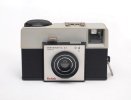
 Scaramanga replied to the thread Claim: Original Calvine UFO Photo.Just for reference...this is the camera. It does not get more basic. No focus settings at all. Very basic mechanical shutter. Just two light settings....sunny or cloudy. If I recall correctly, sunny was 1/40th of a second and cloudy was 1/25th...
 -
-
 GM4AJK replied to the thread Synchronicity - What's your experience of it?.I have come to the conclusion that all synchronic events involving technology "with ears"[1] do not count. ;) [1] With ears meaning anything electronic, you can interact with that is connected to the Internet.
 -
GM4AJK reacted to Todd Feinman's post in the thread Synchronicity - What's your experience of it? with
 Like.
Just went to get ground coffee at local Starbucks drive through. Amazingly as the young punk rock girl handed my bag of coffee to me, I noticed that she had a tattoo of the Bob Dobbs head with his pipe, from the Church of the SubGenius. I...
Like.
Just went to get ground coffee at local Starbucks drive through. Amazingly as the young punk rock girl handed my bag of coffee to me, I noticed that she had a tattoo of the Bob Dobbs head with his pipe, from the Church of the SubGenius. I... -
Scaramanga replied to the thread Claim: Original Calvine UFO Photo.Sure.....but my Lake District image is from a scan of an original 3 inch by 3 inch print...also 35 years old. Kodak basic prints were small in those days. That loses some of the detail and any blur or lack of focus is magnified with it then being...
-
 Gary C replied to the thread IBM: "A computer must not be allowed to make an administrative or executive decision because a computer cannot be held liable.".HAL never bothered me as much as 1970's Colossus: The Forbin Project
 -
 Dave51c replied to the thread Claim: Original Calvine UFO Photo.In analog photography, as you probably know, there are a *lot* of variables which contribute to the quality of the final print independent of the type of camera used. Here are some: lens quality, exposure (within the films dynamic range), film...
 -
Scaramanga replied to the thread Claim: Original Calvine UFO Photo.But if that's the case then you should be able to spot the grain structure give-away in this hoax I made. But I can't, because ( as with the Calvine photo ) the level of blur and poor focus overwhelms the grain structure at the edges of the 'UFO'.
-
-
Scaramanga replied to the thread Rendlesham Forest UFO Incident.Ridpath gets to pick and choose, mix and match, what objects were 'mis-identified' in what would lead to cries of statistical bias or the drawer effect in any proper scientific study. He picks on Sirius....never mind that Jupiter was brighter...
-
Dave51c replied to the thread Claim: Original Calvine UFO Photo.That's one way for sure, but the grain structure under magnification would make that easy to detect, especially along the edges of the stuck on paper.
-
Scaramanga replied to the thread Rendlesham Forest UFO Incident.After 50 years of being an amateur astronomer....I just don't buy that. It was barely a half moon. Jupiter was not only 1.75 times brighter than Sirius but had magnitude 0.8 Saturn just 0.6 degrees away from it. This conjunction would have...
-
Yes indeed. Assuming the jet was traveling at around 400 knots, the photographer would have had only a very brief window to capture the shots:
-
AAndreas replied to the thread Claim: Original Calvine UFO Photo.It is indeed of very poor quality. But the problem is that we simply don't know what the original photo looked like. What we have today is a 35-year-old copy — a photo of a photo. I agree that the poor quality was hardly caused by the picture...
-
Scaramanga replied to the thread Claim: Original Calvine UFO Photo.Well, that is 460mph, which is 674 feet per second. The Harrier is 48 feet. So it would travel 14 times its length every second. Of course, it then depends on what the shutter speed was of the camera. My Lake District photo above had a 1/25th of...
-
Scaramanga replied to the thread Claim: Original Calvine UFO Photo.No need for a dark room at all. Indeed, no need to even go to the original location to create the hoax. You just take your original photo where there's a Harrier flying across the valley, and stick a piece of paper shaped like a UFO onto the...
-
-
AFrame rates of manual cameras with electric winder or motor drive of the time were very slow - 2 to 4 fps typical - the high end Nikon F4 maxed out at 5.7 fps. On a manual wind 35mm SLR maybe one frame every 2 sec if you are quick. Even having...